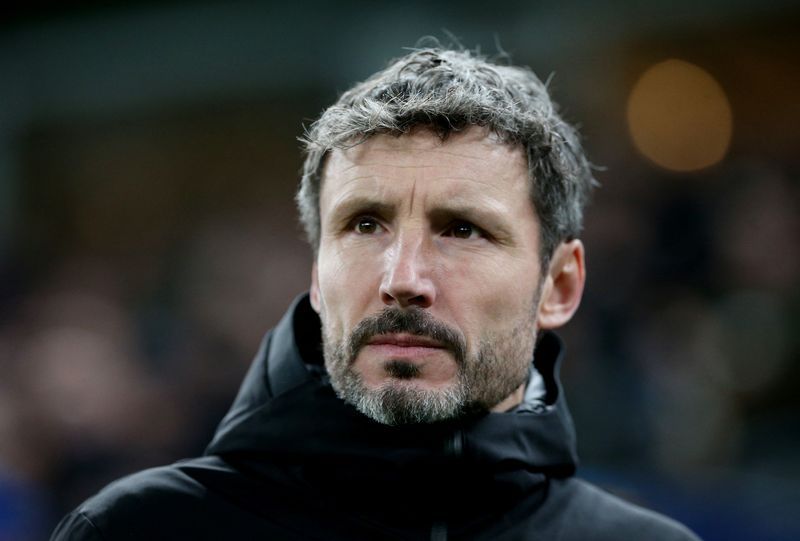
Mark van Bommel has made clear that his decision to accept the Belgium coaching position required no internal debate, despite the tantalising possibility that the Netherlands—his home nation—might eventually come calling. The 49-year-old former defender, who represented the Dutch at the 2010 World Cup final, took the helm of the Belgian national team following Rudi Garcia's departure and presented himself to the media with visible enthusiasm about the appointment, signalling that any speculation about his true preference was entirely misplaced.
Addressing reporters at his inaugural press conference in Brussels, Van Bommel articulated a philosophy centred on seizing elite opportunities as they arise rather than waiting for supposedly better options. He dismissed the premise that a coach should turn down one of the world's top national team positions on the gamble that another might materialise later. This pragmatic stance reflects both his ambition and his realistic assessment of how rarely such opportunities present themselves in international football, where the pool of prestigious vacancies remains perpetually shallow.
The appointment of Van Bommel represented a swift decision by Belgian football authorities following the 2022 World Cup, where Garcia's Belgium reached the quarter-final stage before bowing out. Rather than engage in a protracted search, the federation moved decisively to secure someone with extensive high-level experience. Van Bommel's playing pedigree—he spent formative years at Barcelona, Bayern Munich, and AC Milan—combined with his subsequent coaching credentials, made him an attractive candidate capable of commanding respect in a dressing room filled with world-class athletes.
For Malaysian and Southeast Asian readers, Van Bommel's appointment illustrates broader patterns in modern football governance, where elite nations increasingly pursue coaches with prior experience at top clubs or national teams. Belgium's choice reflects confidence that proven success at the highest club level translates effectively to international management. This mirrors how ambitious football associations across Asia have themselves begun recruiting foreign tacticians with significant pedigree, recognising that navigating the technical and psychological demands of modern international football requires coaches battle-tested in the most demanding environments.
Van Bommel's comments about the inherent appeal of national team coaching reveal something fundamental about elite sport. He characterised the role as among the profession's ultimate honours—the opportunity to work exclusively with a nation's finest players across multiple positions and formations. Unlike club coaching, where budget constraints and commercial pressures often limit choices, international management offers a pure sporting challenge: maximising the talents of the best individuals available within a defined player pool. This philosophical clarity helps explain why established coaches sometimes abandon lucrative club positions for significantly lower salaries at national associations.
The newcomer's initial competitive engagement will come through the Nations League, a competition that has become increasingly significant in European football's calendar. Belgium's schedule in the September-October international window presents immediate stern tests, with fixtures against Italy in Rome, Turkey twice, and France looming. These matches will serve as crucial early indicators of Van Bommel's tactical direction and his capacity to establish working relationships with the squad's experienced contingent. For Belgian fans accustomed to competitive performances, these opening assignments offer both opportunity and pressure to demonstrate that the coaching change represents genuine progress rather than mere transition.
A persistent question surrounding Van Bommel's tenure concerns Thibaut Courtois, the Real Madrid goalkeeper who signalled after the World Cup his desire for a sabbatical from international football. Van Bommel's handling of this situation will test his diplomatic skills and his judgment about player welfare versus competitive necessity. Rather than issuing ultimatums, he outlined a measured approach: direct personal conversation, respect for Courtois's stated position, and willingness to revisit the matter once the goalkeeper resumes full club training. This measured stance suggests Van Bommel understands that forcing a veteran player's hand could prove counterproductive, though he clearly hopes to retain one of Belgium's most valuable assets.
The broader context for Van Bommel's appointment involves Belgium's transitional phase as a national team. The side boasts significant experience and quality, yet many of its leading figures—including Courtois, Eden Hazard, and Toby Alderweireld—are contemplating or entering the twilight stages of their careers. Van Bommel must therefore balance the immediate competitive imperative to leverage remaining time with these established stars against the necessity of integrating younger players who will form Belgium's nucleus across the next World Cup cycle. This delicate equilibrium defines the strategic challenge facing him.
Van Bommel's comments about ambition without overconfidence carry additional weight in this context. He explicitly rejected the tendency of Dutch football culture to casually declare aspirations of winning the World Championship, preferring instead to frame his ambitions in measured terms focused on progressing as far as possible in each competition. This rhetorical positioning may reflect lessons learned from his time in the Netherlands, where grandiose pre-tournament proclamations have occasionally preceded disappointing exits. His acknowledgement that numerous factors beyond coaching influence tournament outcomes suggests maturity and realism.
The appointment also carries implications for Belgian football's standing within European hierarchies. Belgium has long occupied an interesting middle position—consistently competitive, occasionally threatening to reach major final stages, yet rarely achieving the breakthrough moment that would establish it among football's absolute elite tier. Van Bommel's task involves not merely managing these expectations but subtly shifting them. By demonstrating tactical flexibility, developing coherent playing philosophies, and extracting maximum value from the squad's existing talent, he could help Belgium transcend its historical ceiling. Equally, failure to improve upon Garcia's tenure could precipitate a more significant crisis.
For coaches throughout Asia monitoring developments in European football, Van Bommel's appointment and inaugural comments offer instructive lessons. His emphasis on treating national team opportunities as singular, unrepeatable honours provides perspective on recruitment decisions. His measured approach to player management—exemplified by his handling of the Courtois situation—demonstrates that even elite coaches must balance authority with respect for experienced professionals. These principles transcend geography and cultural context, suggesting universal truths about managing sporting organisations at the highest levels.

