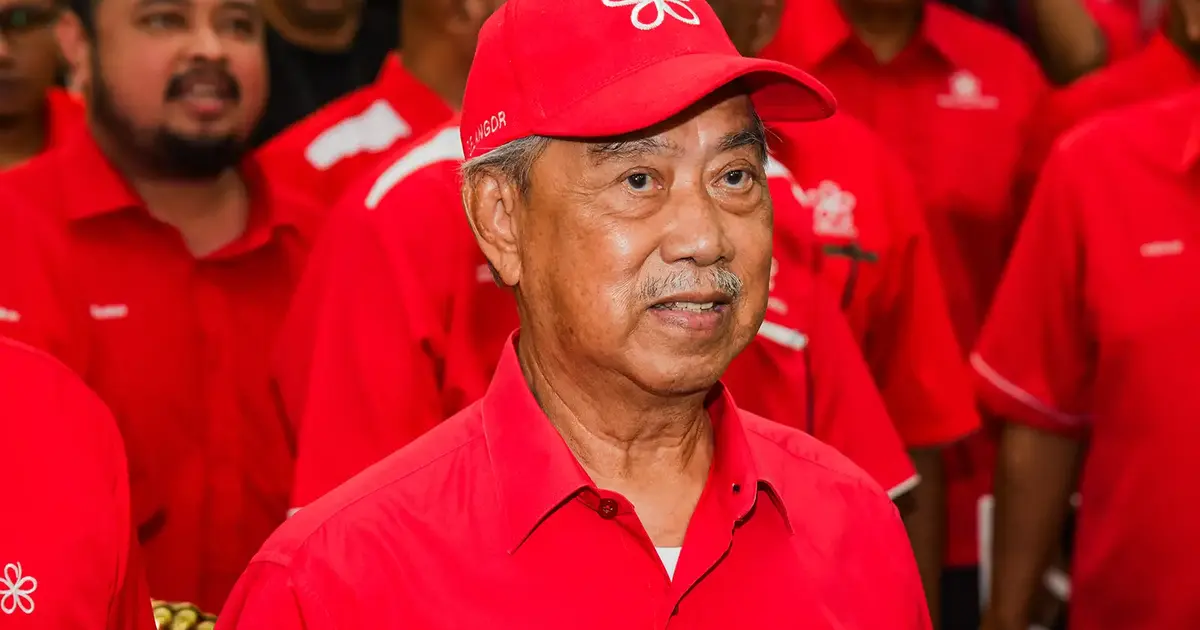
Bersatu president Muhyiddin Yassin has expressed confidence that his party can establish stronger footing among non-Malay voters without relying on its former coalition partner PAS, signalling a shift in the party's strategic positioning ahead of future electoral contests. The statement reflects broader recalibrations within Malaysia's political landscape following the reconfiguration of coalitions in recent years.
Muhyiddin attributed the party's historical difficulty in penetrating non-Malay constituencies to the association with PAS, which he suggested had deterred potential voters through its particular brand of politics. The reasoning underscores how coalition partners can impact electoral performance beyond their individual party support, particularly in diverse, multi-ethnic constituencies where voter sentiment toward coalition partners plays a decisive role in determining voting behaviour.
The Bersatu leader's remarks emerge from a period of considerable political realignment in Malaysia. Following the 2022 general election, Bersatu underwent significant repositioning, initially joining the Anwar Ibrahim-led government before the subsequent departure of some party members. These movements have prompted reflection within the party about its electoral strategy and voter coalition composition.
Non-Malay voters have historically represented a substantial portion of Malaysia's electorate, particularly in urban and semi-urban centres. Their support patterns have often determined which coalitions achieve government formation, making their electoral preferences crucial to any party's long-term viability. Understanding the mechanisms by which these voters make electoral choices thus becomes essential for comprehending contemporary Malaysian politics.
The suggestion that voters harboured reservations specifically about PAS's political methodology rather than Bersatu itself implies that electoral performance is not purely rooted in ethnic or religious identity voting, but also responds to policy positions and political styles. This distinction carries weight for how Malaysian parties approach voter outreach and coalition architecture. PAS's advocacy positions and governance approach have periodically attracted criticism from secular-oriented voters concerned about the trajectory of social and religious policy.
For Bersatu, the assertion suggests the party views itself as occupying a different political space from PAS, potentially offering an alternative path to Malay-Muslim representation that does not necessarily alienate non-Malay constituencies. This positioning reflects broader strategic calculations within Malaysia's divided political marketplace, where parties frequently compete for space between established rivals by offering differentiated appeals.
The party's capacity to translate this confidence into actual electoral performance remains uncertain. Building voter trust requires sustained engagement, coherent policy messaging, and demonstrated responsiveness to constituent concerns. Previous coalition experiences have shaped voter perceptions, and repositioning requires overcoming embedded political narratives that develop over years of partisan competition.
Muhyiddin's confidence also occurs within the context of ongoing evolution within Malay-Muslim representation politics. Multiple parties continue competing for support within this demographic segment, each attempting to carve out distinguishing characteristics. Bersatu's approach differs from PAS's religious orientation and from Umno's established institutional networks, creating theoretical space for a distinct political proposition.
The implications extend beyond Bersatu itself. The party's potential success in building non-Malay support would reshape the broader political equilibrium, potentially affecting coalition possibilities and government formation scenarios. If Bersatu successfully demonstrates capacity to attract diverse voter backing, the political dynamics that have characterised recent elections could shift notably.
For non-Malay voters themselves, the statement represents an invitation to reassess Bersatu as a potential political vehicle for their interests. The party would need to develop substantive policy proposals addressing concerns prioritised by non-Malay communities—whether related to education, economic opportunity, religious freedom, or other salient issues. Generic appeals to ethnic unity carry less weight than specific commitments backed by demonstrated track records.
The timing of Muhyiddin's remarks also reflects awareness that Malaysian coalitions remain in flux. The Anwar government has consolidated support, but political competition continues evolving. Parties routinely adjust positioning to maximise future opportunities, with recent coalition departures and rejoinings demonstrating flexibility in Malaysia's political arrangements. Bersatu's confidence in independent appeal to non-Malay voters represents one component of this broader repositioning.
Regionally, Malaysia's political developments maintain relevance across Southeast Asia. The multi-ethnic, multi-religious composition of Malaysian society means that successful strategies for building diverse electoral coalitions attract attention from politicians in similarly structured democracies throughout the region. How Bersatu approaches this challenge could offer instructive lessons for other parties navigating ethnic and religious pluralism.
Ultimately, transforming confidence into electoral results requires Bersatu to articulate clear positions on issues mattering to non-Malay voters and demonstrate commitment through policy implementation and resource allocation. The party's success in this endeavour will likely prove a significant determinant of future Malaysian political configurations and the precise composition of electoral coalitions heading into subsequent general elections.

