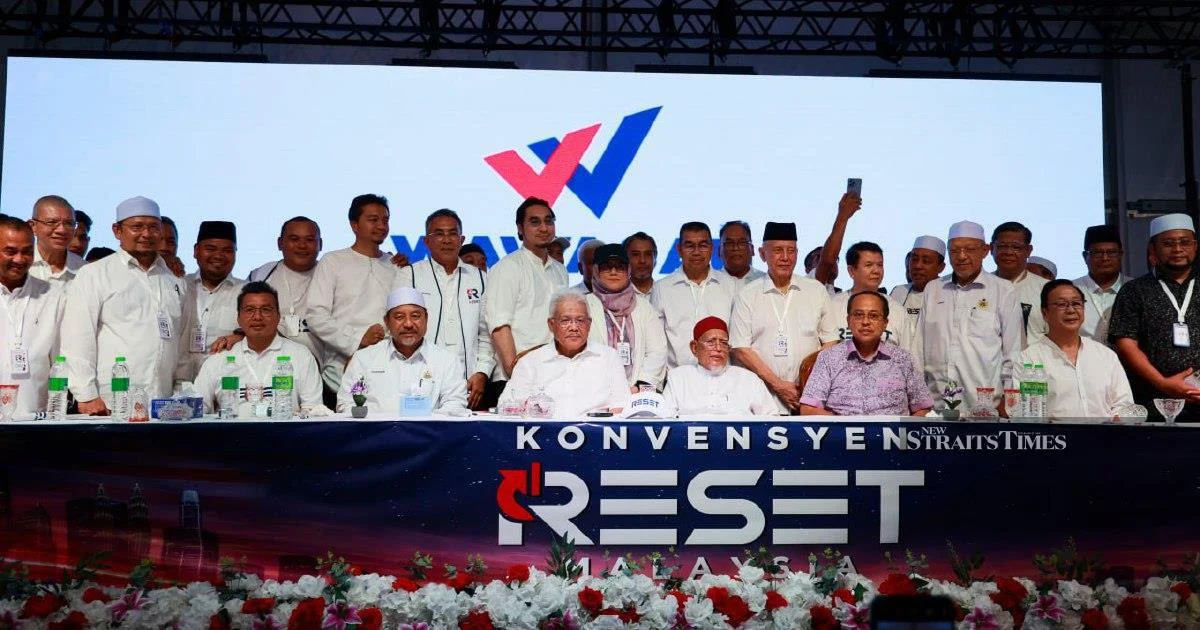
Perikatan Nasional faced a significant internal crisis yesterday as Bersatu publicly contested the constitutional validity of an emergency PN Supreme Council gathering held Monday evening, which approved the admission of Wawasan Orang Asli Bersatu into the coalition. The dispute marks a dramatic deterioration in relations between the two dominant partners within the opposition alliance and signals deepening cracks in PN's unity just as it gears up for upcoming political challenges.
The emergency session, convened with limited notice, approved Wawasan's entry into the PN framework without following standard procedural protocols that typically govern such significant coalition decisions. Bersatu's public questioning of the meeting's legality represents more than a technical objection—it reflects substantive disagreement over the direction of the coalition and the concentration of decision-making authority within its leadership structure. The party's willingness to air grievances publicly rather than resolve them through private dialogue underscores the severity of underlying tensions.
Wawasan Orang Asli Bersatu's admission carries strategic implications for PN's composition and electoral positioning. As a party focused on indigenous rights advocacy, Wawasan's entry theoretically broadens PN's appeal to constituencies historically underrepresented in coalition calculations. However, Bersatu's challenge suggests that component parties were not adequately consulted, or that their concerns about membership expansion were dismissed by PN leadership. This procedural breakdown threatens the consensus-based governance model that coalitions require to function effectively.
The timing of the emergency meeting proved particularly contentious. Rather than scheduling deliberations during regular council sessions with proper advance notice, PN leadership opted for an expedited approach that limited opportunity for thorough discussion or constituency consultation. Such tactics, while sometimes necessary in political crises, risk alienating coalition partners who feel sidelined in critical decisions. For Bersatu, which commands significant parliamentary representation within PN, this marginalization appears intolerable.
Bersatu's legal challenge raises important questions about the constitutional framework governing PN's operations. Coalition agreements typically specify voting thresholds, notice periods, and quorum requirements for decisions affecting membership composition. If the Monday meeting violated these provisions, then Wawasan's admission could theoretically be invalidated, creating legal ambiguity about the party's formal status within the coalition. Such uncertainty weakens PN's organizational coherence at a moment when the opposition alliance needs clarity and unity.
The PN chairman's apparent eagerness to expedite Wawasan's admission without securing broader buy-in suggests either overconfidence in his authority or strategic miscalculation regarding Bersatu's tolerance for unilateral decision-making. In coalition politics, such moves frequently backfire by generating reciprocal resistance and emboldening junior partners to assert their own prerogatives. Bersatu's public stand demonstrates that no coalition partner—regardless of the chairman's preferences—can be taken for granted without risking internal fracture.
For Malaysian politics more broadly, this PN rupture comes at a delicate moment. The coalition has positioned itself as the primary opposition force capable of challenging the current government's dominance, yet internal cohesion problems undermine its credibility as a governing alternative. Voters evaluating opposition options need confidence that coalition partners can manage disagreements professionally without allowing personal rivalries or procedural disputes to paralyze decision-making. The current PN spectacle suggests such confidence may be misplaced.
The dispute also reveals deeper ideological or strategic divergences between Bersatu and PN leadership that were previously masked by public unity. Bersatu's resistance to Wawasan's admission may stem from concerns about diluting the coalition's focus, competition for resources or parliamentary positions, or disagreement over the coalition's overall direction. These underlying tensions, now exposed through public accusation and counter-accusation, will require frank dialogue and potentially structural reforms to PN's governance architecture.
Regional observers watching Malaysian coalition dynamics may draw cautionary lessons from this episode. In Southeast Asia's competitive multiparty systems, opposition alliances frequently collapse or fragment due to poor governance structures and weak dispute resolution mechanisms. PN appeared to be learning these lessons through maintaining disciplined coordination, but the Wawasan controversy suggests that progress was more superficial than substantive. Genuine coalition unity requires institutional mechanisms that enforce consensual decision-making and prevent powerful figures from bypassing agreed procedures.
The pathway forward for PN likely requires either a formal review of the emergency meeting's legitimacy, renegotiation of admission terms acceptable to Bersatu, or broader governance reforms that restore confidence in the coalition's decision-making processes. Simply proceeding as if Bersatu's objections are inconsequential risks further fragmentation and potential defections. The coalition's leadership must recognize that managing diverse partners demands respect for procedures, transparency, and inclusive deliberation—attributes that Monday's emergency session apparently lacked.
Looking ahead, this internal turbulence may influence how opposition parties approach coalition-building before the next general election. If PN's current structures prove incapable of managing membership disputes fairly, alternative opposition configurations may become attractive to smaller parties seeking more equitable treatment. For Malaysia's democratic development, the resolution of this PN crisis will signal whether major political coalitions are maturing toward institutional stability or remaining vulnerable to personality-driven dysfunction.