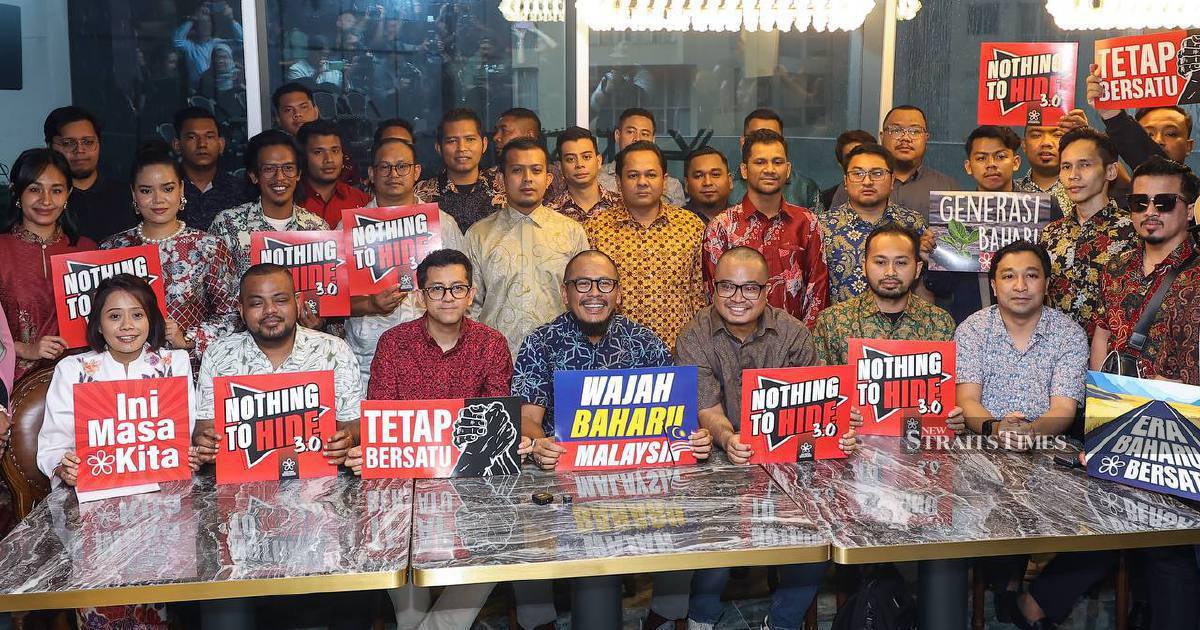
Coalition politics in Malaysia has proven increasingly volatile, and the latest friction between two major components of the Perikatan Nasional alliance offers fresh insight into the fragility of such partnerships. Kota Siputeh assemblyman Mohd Ashraf Mustaqim Abdul Munir has moved to dampen concerns about the durability of the PN project by offering an unexpectedly optimistic assessment of relations between Bersatu and PAS, the coalition's two dominant Malay-Muslim parties. His carefully chosen analogy—comparing recent disputes to the ordinary bickering of a married couple sharing a household—suggests that despite visible strains, the underlying commitment to the alliance remains intact and the tensions are manageable rather than existential.
The comparison carries particular weight in the Malaysian political context, where coalitions have repeatedly fractured over ideological differences, personal rivalries, and competition for resources and influence. PAS and Bersatu, despite their shared Islamist foundations and Perikatan Nasional membership, have found themselves at odds on several fronts in recent months. The assemblyman's metaphor implies that these disagreements, while genuine and occasionally public, do not threaten the fundamental structure keeping both parties within the same political formation. This framing serves to reassure both grassroots supporters and potential coalition partners that the PN arrangement is substantially more durable than the persistent surface-level turbulence might suggest.
Mohd Ashraf's optimism requires contextualisation within the broader landscape of Malaysian coalition politics. The Perikatan Nasional, formed as an alternative to the long-dominant Barisan Nasional, has struggled to present itself as a cohesive governing force despite its electoral gains in recent years. PAS, as the largest component of PN, has leveraged its position to demand significant concessions, while Bersatu, the smaller but historically more politically flexible party, has found itself navigating delicate negotiations. The recent tensions reflect not merely personal antagonism but fundamental questions about power distribution, policy direction, and the coalition's long-term viability.
The significance of this reconciliation signal extends beyond the two parties themselves. For PAS members and supporters, it suggests that cooperation with Bersatu, despite periodic friction, remains the preferred path for advancing their political agenda. For Bersatu, the message conveys determination to maintain coalition stability despite being overshadowed by its larger partner. For voters and neutral observers, such statements indicate that despite tabloid-style headlines about coalition drama, the architects of PN believe they can manage internal disputes without allowing them to spiral into irreversible breakdown.
The married couple metaphor, while domestically resonant in Malaysian culture, also contains implicit assumptions worth examining. It suggests that the relationship, though tested, contains sufficient mutual interest to sustain cohabitation. In political terms, this mutual interest derives partly from electoral calculations—both parties benefit from PN's collective strength—and partly from ideological alignment on core issues. However, the metaphor risks minimising the agency of ordinary members and supporters, who may view coalition tensions not as inevitable friction but as evidence of fundamental incompatibility.
Regional dynamics add another layer of complexity to PN's internal negotiations. The coalition's performance in Malaysian states, particularly Perlis, Terengganu, and Kedah where both parties maintain presence, creates practical incentives for cohesion. State-level administration requires sustained cooperation on appointments, budget allocation, and legislative support. When coalition tensions escalate, they inevitably disrupt these administrative arrangements, creating pressure from below to resolve disputes quickly. Mohd Ashraf's optimistic assessment may reflect this practical necessity as much as any genuine warming of relations.
The international dimension should not be overlooked either. As Malaysia navigates complex regional relationships and competes for economic partnership opportunities, political stability and effective governance are increasingly prized commodities. Coalition governments perceived as perpetually divided struggle to attract foreign investment and execute major development projects. Both PAS and Bersatu leadership understand that projecting internal cohesion serves national economic interests, even if genuine ideological or personal differences persist beneath the surface.
Historically, Malaysian political alliances have proven remarkably durable despite constant friction. The original Barisan Nasional lasted over half a century despite incorporating parties with competing interests. Similarly, the recent Perikatan Nasional arrangement, despite its relative youth and occasional drama, has demonstrated capacity for continuation through crises. Mohd Ashraf's optimism may be grounded less in naive belief that all disagreements have vanished and more in realistic assessment that Malaysian coalition politics rewards persistence, compromise, and strategic ambiguity.
Looking forward, the test of such reconciliation efforts will come in concrete outcomes: whether PAS and Bersatu can jointly navigate state elections without public recriminations, whether they can coordinate federal policy without leaks and counter-leaks, and whether they can manage resource distribution without triggering member defections. The married couple metaphor suggests that such navigation is possible, though as anyone observing actual marriages knows, even couples who remain together often experience considerable turbulence. For Malaysian voters and coalition watchers, the real measure of PN's stability will come not from what leaders say about their unity, but from what they actually accomplish together when under pressure.

