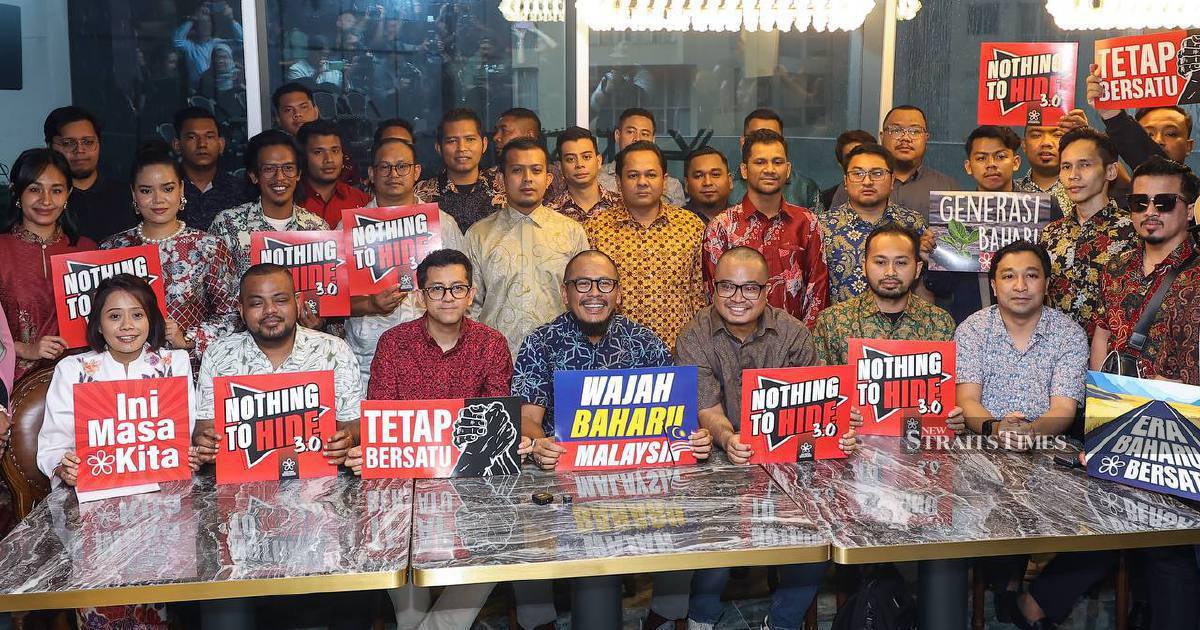
The Perikatan Nasional coalition faces renewed scrutiny over internal cohesion as Kota Siputeh assemblyman Mohd Ashraf Mustaqim Abdul Munir publicly voiced confidence that damaged relations between Bersatu and PAS can ultimately be restored, despite mounting friction between the two principal partners in the ruling bloc.
Mohd Ashraf's assessment carries weight given Bersatu's pivotal position within the PN structure alongside its larger ally PAS, which controls significant parliamentary representation and state-level administration. The timing of his remarks reflects broader concerns about the sustainability of the coalition's working relationship, which has been tested repeatedly over policy disputes, ministerial appointments, and competing political ambitions.
The assemblyman employed a domestic analogy to characterise the current impasse, suggesting that ongoing disagreements between the partners—while undoubtedly frustrating and occasionally acrimonious—do not necessarily signal irretrievable breakdown. In his view, couples sharing a household must navigate periodic conflicts whilst maintaining their fundamental commitment to cohabitation, implying that PAS and Bersatu retain sufficient common ground and mutual dependency to weather present storms.
This optimistic framing becomes significant when considered against the backdrop of Malaysian coalition politics, where ideological differences and resource competition frequently strain multi-party arrangements. The PN structure itself was born from disruption, having emerged partly as a reaction against the earlier Barisan Nasional formula and various political realignments. Within this context, intra-coalition friction, whilst disruptive, has not yet proved catastrophic to PN's hold on federal government.
PAS, as the numerically dominant partner in PN and the dominant political force in several northern and eastern states, wields considerable influence over coalition decisions. Bersatu, despite smaller parliamentary representation, maintains significance through its hold on the prime ministerial position and established networks within the federal bureaucracy. This asymmetry naturally generates tension, as each party navigates competing interests whilst theoretically adhering to PN principles.
Mohd Ashraf's comments suggest that behind-the-scenes diplomatic efforts may be underway to address accumulated grievances. Such reconciliation processes in Malaysian politics typically involve quiet negotiations over resource allocation, policy concessions, and reaffirmations of shared electoral interests. The willingness of senior figures like Mohd Ashraf to publicly express optimism can itself serve a stabilising function, signalling to grassroots supporters and financial backers that coalition collapse remains unlikely.
For Malaysian observers, the stability of the PN coalition carries direct implications for governance continuity and policy implementation. The coalition controls both houses of parliament and numerous state administrations, and any severe fracturing would necessitate major political recalibration that could destabilise markets, delay legislative programmes, and create uncertainty around long-term policy direction on matters from economic reform to infrastructure development.
The regional dimension merits consideration as well. Political uncertainty in Malaysia reverberates across Southeast Asia's investment landscape and influences the country's international standing. Investors monitor coalition stability as one indicator of institutional resilience and governance predictability. Similarly, the PN's approach to economic and foreign policy questions cannot develop coherently if internal divisions remain unresolved.
Historically, Malaysian political coalitions have demonstrated remarkable capacity for institutional survival despite profound internal disagreements. The original Barisan Nasional persisted for decades whilst accommodating vastly different component parties with competing regional interests and ideological orientations. Whether PN possesses similar durability remains an open question, but Mohd Ashraf's measured optimism reflects calculation that current tensions, whilst real and uncomfortable, fall short of the threshold that would trigger dissolution.
The comparison to a married couple also implicitly acknowledges that some degree of ongoing friction may be permanent rather than temporary. If so, the real test becomes whether PAS and Bersatu can establish working mechanisms for managing disagreement without allowing disputes to metastasise into relationship-ending crises. This would require explicit or implicit agreements about acceptable domains for competition versus areas requiring unified presentation.
Government effectiveness ultimately depends on coalition partners maintaining sufficient alignment on major decisions whilst tolerating divergence on secondary matters. For PN, this calibration remains incomplete, but Mohd Ashraf's intervention suggests that both major partners recognise that the alternative—political fragmentation and loss of power—carries unacceptable costs. His optimism may therefore reflect not naive hope but rather hardheaded assessment that PN's contradictions, whilst pronounced, remain manageable within existing institutional frameworks.

