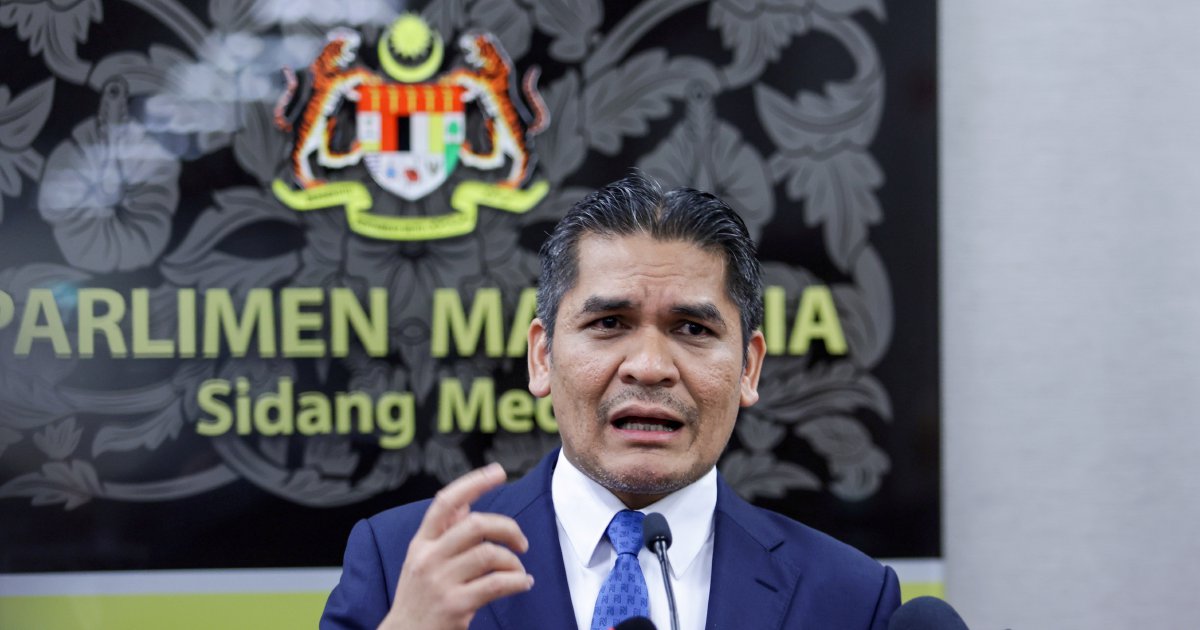
Bersatu's parliamentary contingent will participate fully in today's extraordinary sitting of the Dewan Rakyat dedicated to discussing the Royal Commission of Inquiry findings on Lembaga Tabung Haji, party vice-president Datuk Dr Radzi Jidin confirmed in Kuala Lumpur. The announcement dispels earlier speculation about potential walkouts by government-aligned lawmakers during what promises to be a significant parliamentary proceeding on the controversial hajj fund manager.
The RCI investigation into Tabung Haji represents one of Malaysia's most comprehensive inquiries into the statutory body's governance and financial operations. Lembaga Tabung Haji, which manages savings for Malaysian Muslims intending to perform the hajj pilgrimage, has faced mounting scrutiny over the years regarding its investment decisions, fund management practices, and transparency. The commission's deliberations have reportedly examined decades of operational history, investment strategies, and regulatory oversight mechanisms that may have contributed to controversies surrounding the institution.
Radzi Jidin's explicit assurance carries political significance at a moment when Parliament's stability and government coalition cohesion remain subjects of close observation among analysts and political observers. The Bersatu leadership's commitment to attendance underscores the party's positioning within the current governing structure and its willingness to engage with parliamentary proceedings on sensitive matters affecting rakyat interests. Such demonstrations of unity prove crucial for maintaining the fragile equilibrium that characterises contemporary Malaysian political coalitions.
The special sitting convened to present RCI findings offers Parliament an opportunity to fulfil its constitutional function as guardian of public accountability. Given Tabung Haji's significance to millions of Malaysian Muslims—the fund holds billions in accumulated savings from contributors nationwide—the parliamentary examination of commission recommendations carries direct implications for policymaking surrounding Islamic financial institutions and fund governance standards. The proceedings will likely generate substantial debate concerning regulatory reforms and institutional accountability measures.
Tabung Haji's operational challenges have periodically captured public attention, particularly when investment underperformance or governance lapses become apparent. Controversies have ranged from questions about executive remuneration packages to concerns regarding investment portfolio decisions made during volatile market conditions. The RCI investigation presumably addresses systemic weaknesses, oversight failures, and whether existing regulatory frameworks adequately protect contributors' interests. Such institutional scrutiny often provides catalysts for legislative reforms and enhanced supervisory mechanisms.
For Malaysian observers tracking parliamentary dynamics, the Bersatu stance reflects broader considerations within government coalition management. Different component parties occasionally navigate differing positions on sensitive issues, necessitating careful political choreography to maintain legislative stability. By confirming full attendance and participation, Bersatu signals its commitment to constructive engagement rather than obstructionist tactics, distinguishing its approach from parliamentary manoeuvers that sometimes characterise opposition engagement.
The Dewan Rakyat's examination of the RCI report assumes particular importance given Tabung Haji's embedded role within Malaysia's Islamic financial ecosystem and its significance to religious obligations among Muslim Malaysians. Parliamentary discourse will likely encompass recommendations for institutional restructuring, enhanced transparency mechanisms, improved investment governance standards, and potentially legislative amendments to strengthen the regulatory framework governing hajj savings schemes. Such discussions frequently generate momentum for policy refinements that extend beyond the immediate institution under review.
Bersatu's parliamentary representation, though numerically modest compared to larger coalition partners, maintains symbolic importance in coalition mathematics and legislative outcomes. The party's confirmation of attendance demonstrates acknowledgment of parliamentary proceedings' importance while avoiding the fractious positioning that occasionally emerges when sensitive national matters require legislative consideration. This pragmatic approach characterises the party's recent parliamentary conduct across various substantive issues.
The timing of this special sitting occurs within a broader context of public concern regarding the governance standards applicable to statutory bodies managing substantial public resources. Tabung Haji's experience illuminates broader questions about oversight mechanisms, accountability frameworks, and institutional independence within Malaysia's governance architecture. The parliamentary examination provides opportunity for elected representatives to scrutinise recommendations and consider whether existing legislative provisions adequately address governance gaps the RCI investigation likely identified.
Financial institutions entrusted with public savings face heightened accountability expectations, particularly when managing funds earmarked for religious observance that carries profound spiritual and cultural significance for Muslim communities. Tabung Haji's governance trajectory has demonstrated that even well-intentioned institutions require robust oversight mechanisms, transparent decision-making processes, and regular external scrutiny to maintain public confidence. The RCI process represents this accountability mechanism functioning at the highest investigative level.
Parliamentary consideration of the RCI report will determine whether legislative action becomes necessary to implement recommended reforms. Depending on the commission's findings and recommendations, the government may need to introduce amendments to the Lembaga Tabung Haji Act or related legislation governing Islamic financial institutions. Such legislative measures would crystallise parliamentary engagement with the RCI process, translating investigative findings into tangible governance improvements protecting future contributors' interests and institutional integrity.

