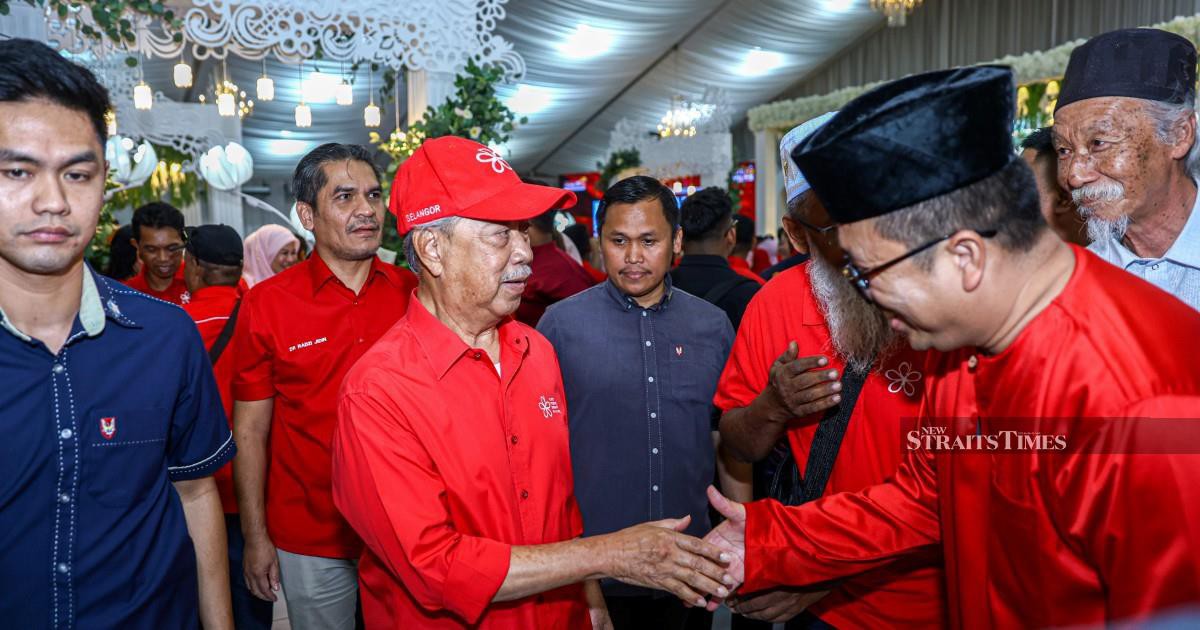
Bersatu appears poised to chart a new political course, with party president Tan Sri Muhyiddin Yassin declaring that the coalition will pursue fresh alliances with multiple parties following the Negri Sembilan state election. The announcement marks a significant turning point for the party, which has been a prominent member of the Perikatan Nasional bloc and raises questions about the stability of Malaysia's broader political landscape as the country heads toward its next electoral cycle.
Muhyiddin's statement reflects deepening tensions within PN, a coalition that has wielded considerable influence in Malaysian politics since its formation in 2020. The Bersatu leader's characterisation of the arrangement as operating under PAS influence suggests fundamental disagreements have emerged between the parties over governance, strategy, and the direction of the alliance. Such friction within opposition blocs is not uncommon in Malaysian politics, where coalition partners frequently struggle to reconcile differing ideological positions and leadership ambitions.
The timing of this announcement carries strategic weight, as it comes immediately before a state-level electoral contest. Negri Sembilan, a crucial battleground state with significant political influence in national affairs, provides Bersatu with an opportunity to test its standing among voters while simultaneously positioning itself for potential alternative partnerships. State elections often serve as barometers for party strength and public sentiment, making Negri Sembilan's outcome a critical metric for assessing Bersatu's electoral viability.
For Malaysian readers, the implications extend beyond internal party dynamics. Coalition formations and dissolutions directly affect governance stability, policy direction, and the quality of political opposition. A fractured opposition landscape could either strengthen the ruling government or create a more fragmented political environment where smaller parties wield disproportionate bargaining power. The Bersatu move thus carries significance for how effectively alternative political voices can challenge the incumbent administration.
PAS, which holds the dominant position within PN, represents a distinctly different political philosophy from Bersatu, particularly regarding governance models and social policy. Bersatu, traditionally positioned as a centrist or pragmatic force in Malaysian politics, may find that its core constituencies and policy preferences align poorly with a coalition structured around PAS's ideological framework. This misalignment, now explicit, suggests that the marriage of convenience that created PN may have run its natural course.
The prospect of Bersatu building a new coalition opens multiple scenarios for Malaysia's political future. The party could potentially align with DAP, PKR, or elements of Umno seeking alternatives to current arrangements, creating entirely new coalitional mathematics. Each possibility carries different implications for governance, representation, and the balance of power between federal and state levels. Such realignments typically require months of negotiation and often remain fluid until formal announcements occur.
Bersatu's decision reflects a broader pattern in Malaysian politics where parties regularly reassess their alliances based on changing electoral prospects, policy disagreements, and leadership dynamics. Unlike more established democratic systems where coalition structures remain relatively stable, Malaysian politics remains characterised by fluid coalitions where parties retain flexibility to pursue new partnerships. This fluidity, while sometimes appearing chaotic to observers, reflects the practical calculations parties must make in a competitive electoral environment.
Regionally, Malaysia's coalition instability occasionally attracts attention from neighbouring governments concerned about unpredictable policy shifts, particularly regarding trade, immigration, and security matters. A significant restructuring of the opposition bloc could potentially influence Malaysia's positioning within Southeast Asian affairs, though such shifts typically manifest gradually rather than immediately.
The Negri Sembilan election thus represents far more than a routine state contest. It will test whether Bersatu can maintain or enhance its electoral support while operating independently of PN, providing crucial data for party strategists planning the next national campaign. Results from this election will likely accelerate or decelerate the timeline for forming new coalitional arrangements and will signal to potential partner parties whether Bersatu remains an attractive coalition prospect.
Muhyiddin's willingness to publicly articulate dissatisfaction with PN's structure and PAS leadership suggests that internal discussions have likely progressed beyond preliminary stages. Party leaders do not typically make such declarations without preliminary groundwork, indicating that informal discussions with potential coalition partners may already be underway. The public announcement serves partly as a signal to these potential partners that Bersatu is serious about exploring alternatives.
For Malaysia's political economy, coalition changes matter considerably. Different coalitions prioritise different policy areas, affecting everything from education and healthcare investment to economic policy and infrastructure development. Investors and analysts closely monitor coalition shifts because they influence regulatory certainty and the likelihood of policy continuity across electoral cycles. Bersatu's repositioning thus warrants attention from those concerned with Malaysia's medium-term governance and development trajectory.
The coming months will prove decisive for determining whether Bersatu's coalition aspirations translate into concrete political arrangements. Successful negotiations typically require concessions on key policy areas, agreed upon positions on sensitive issues, and clear divisions of electoral territory to prevent internal competition. Whether Bersatu can satisfy such requirements while maintaining its existing voter base and negotiating credibly with potential partners remains an open question that will shape Malaysian politics through the next general election cycle.

