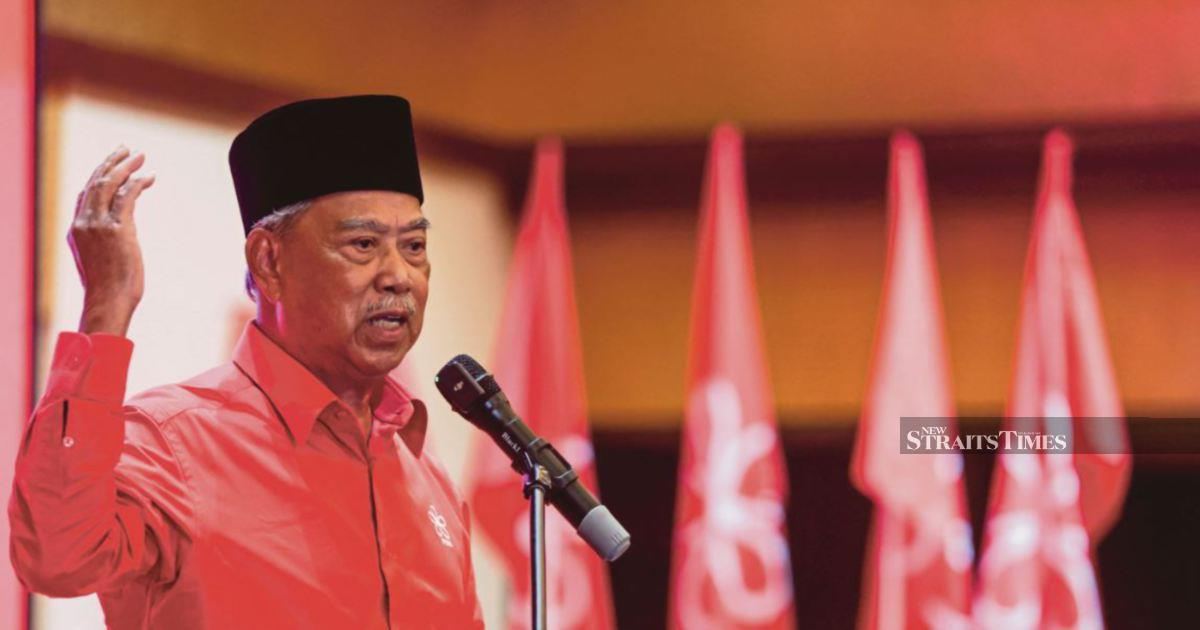
Bersatu has formally declared its intention to contest 24 seats in the forthcoming Negri Sembilan state election, setting the stage for an unusually fractious campaign within Perikatan Nasional as the party prepares to take on two fellow coalition members in overlapping electoral contests. The announcement signals mounting tensions within what was marketed as a unified opposition alliance, with Bersatu positioning itself across multiple battlegrounds while directly competing against Pas and Wawasan in at least eight constituencies—a configuration that underscores the precarious nature of non-Umno alliances in Malaysian state politics.
The decision to field such a substantial slate represents Bersatu's continued assertion of electoral relevance in a state where its historical footprint remains modest compared to Umno, the dominant force in Perikatan. By targeting just under half of Negri Sembilan's available seats, Bersatu is signalling ambitions that extend beyond token representation, attempting to establish itself as a meaningful participant in the state's political landscape rather than settling for a secondary role within the coalition framework. This aggressive stance reflects internal party calculations that the state presents growth opportunities, particularly if the party can consolidate support among certain demographic segments and geographic pockets.
The eight-seat overlap with Pas and Wawasan reveals the mathematical challenge facing Perikatan Nasional in state elections, where component parties often harbour incompatible territorial ambitions. Rather than functioning as a seamlessly coordinated alliance, the three parties have each developed separate organizational infrastructure and candidate lists, suggesting that seat negotiations among coalition members have either broken down or never achieved comprehensive alignment. This pattern has emerged repeatedly in other state contests, indicating a systemic problem within Perikatan's architecture rather than an isolated incident specific to Negri Sembilan.
Pas, as the largest non-Umno component within Perikatan, has historically held significant electoral presence in states with substantial rural populations and Malay-Muslim concentrations. Negri Sembilan, with its mixed urban-rural demographic, presents terrain where Pas could reasonably expect substantial deployment. The party's organizational machinery across the state remains considerably more developed than Bersatu's, stemming from decades of grassroots work and religious networks that extend into village-level politics. Wawasan, the newer entrant to Malaysian politics, brings different appeal centred on economic governance and what it positions as technocratic competence.
For Bersatu specifically, these overlapping contests represent both opportunity and risk. The party under Muhyiddin Yassin's leadership has sought to carve out a distinctive identity within Perikatan, emphasizing itself as a defender of Bumiputera interests and claiming the mantle of principled leadership. The Negri Sembilan campaign allows the party to test this messaging directly against competitors who share broadly similar ideological positioning, essentially forcing voters to choose between different claims to represent Malay-Muslim interests and good governance. Victory in these eight contested seats would substantially boost Bersatu's claims to major-party status, while defeat could relegate it to permanent subordinate status within coalition hierarchies.
The broader implications for Malaysian politics centre on whether Perikatan Nasional can function as a credible alternative to the Barisan Nasional-led government. Internal fracturing of this magnitude—where coalition members compete directly rather than in non-overlapping zones—substantially diminishes the efficiency of opposition mobilization. Voters confronted with multiple Perikatan options in the same constituency face genuine difficulty determining which represents the true alternative to whoever holds power, while the party fragmentation inevitably spreads finite campaign resources more thinly across the state.
Negri Sembilan's particular political configuration makes this contest especially significant. The state has experienced multiple shifts in control over recent decades, suggesting that coalitional arrangement and campaign execution considerably influence outcomes. Neither Umno nor the opposition can take the state for granted, meaning that the performance of each Perikatan component party carries implications extending beyond simple seat counts. Strong Bersatu showings would vindicate the party's leadership decisions and potentially trigger repositioning within the coalition in advance of inevitable federal elections. Poor performance could accelerate faction-building within Perikatan, as stronger components like Pas argue for greater influence in future seat negotiations.
The candidate quality and local ground strength will ultimately determine whether Bersatu's 24-seat strategy translates into actual representation. The party's ability to attract or develop candidates with genuine local credibility in constituencies where it lacks historical presence remains uncertain. Bersatu has sometimes struggled to move beyond its Muhyiddin-centric appeal to build durable institutional presence at state level, relying instead on personality-driven politics that proves vulnerable when specific individuals face challenges or defections.
Sector observers note that the Negri Sembilan election serves as an important testing ground for Perikatan viability before the next federal election becomes inevitable. If the three-party collision in eight seats produces severely fragmented opposition votes that inadvertently benefit the incumbent government, it would raise uncomfortable questions about whether Perikatan can ever function as a coherent governing alternative. Conversely, if one coalition member emerges substantially strengthened, it would reshape internal power dynamics and influence future alliance configurations across multiple electoral contests.
The timing of this announcement also carries significance. By declaring its candidate list early and explicitly claiming contested territory, Bersatu signals confidence that it can compete effectively while simultaneously putting pressure on Pas and Wawasan to justify their own seat claims. This assertive posture contrasts with earlier periods when Bersatu adopted more cautious approaches to seat negotiations, suggesting the party believes it has consolidated sufficient organizational capacity to risk intra-coalition competition. Whether that assessment proves accurate will become clear as the campaign intensifies and voters begin registering preferences across the overlapping Perikatan slate.

