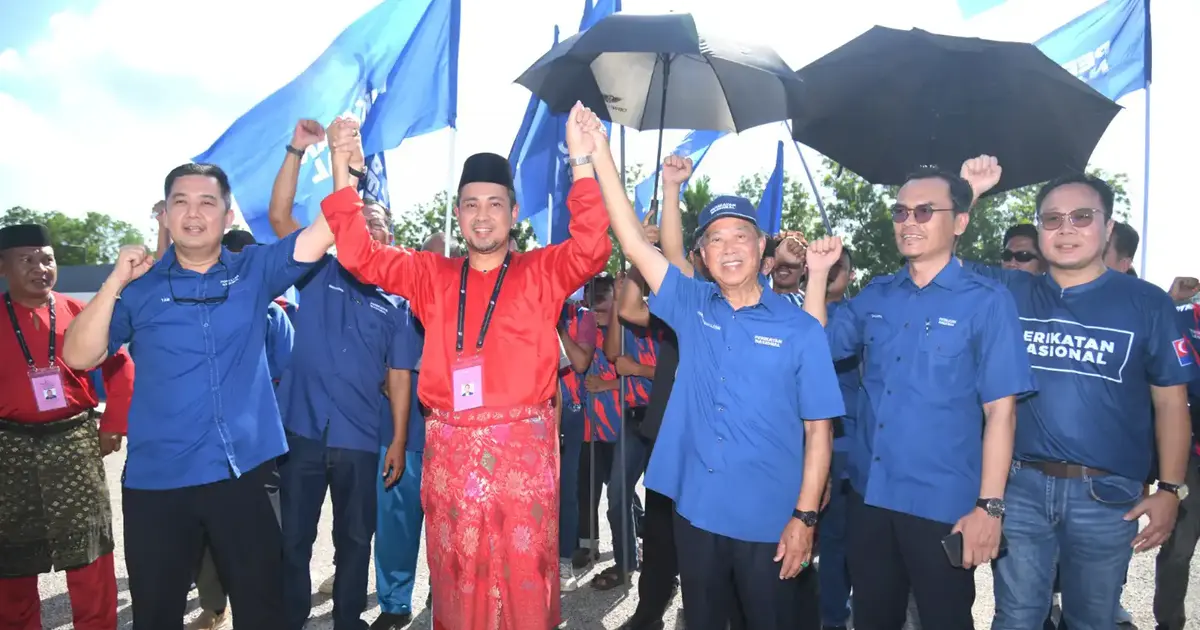
Bersatu's president Muhyiddin Yassin has adopted a measured stance regarding PAS's decision to withhold its organisational support, signalling that the coalition partner's choice sits within the bounds of acceptable intra-alliance dynamics. His comments reflect an effort to manage perceptions of friction within the Perikatan Nasional (PN) framework, a coalition that has faced mounting scrutiny over cohesion and strategic alignment following the 2022 political realignment that reshaped Malaysia's parliamentary landscape.
The refusal by PAS to mobilise its ground machinery represents a notable departure from the coordinated operational support that once characterised the PN alliance. Such institutional backing typically encompasses volunteer mobilisation, logistical assistance, and grassroots participation in party-initiated campaigns or events. Muhyiddin's acknowledgement that this support has not materialised indicates that Bersatu leadership maintains realistic expectations about the limits of coalition collaboration, particularly as the political environment continues to shift.
Muhyiddin's framing emphasises that mutual cooperation and reciprocal assistance form foundational principles within the PN framework. Yet his assertion that Bersatu will not coerce other coalition members into providing such help signals a pragmatic recognition of political boundaries. This stance suggests that while ideological and electoral compatibility may bind these parties, they retain substantial operational autonomy. The distinction between aspiration and enforcement matters considerably in coalition politics, where perceived pressure can deepen fissures rather than bridge them.
The timing of this statement carries significance within the context of Malaysia's ongoing political volatility. Since the collapse of the PN federal government in August 2021 and the subsequent merger of Bersatu's key factions with UMNO-led Barisan Nasional, the coalition has struggled to maintain unified positioning on numerous policy and electoral matters. PAS, as the larger Islamist component within PN, has increasingly asserted its independent priorities, particularly regarding religious affairs, education policy, and candidate selection in competitive constituencies.
PAS's reluctance to deploy machinery may reflect deeper strategic calculations about resource allocation and electoral priorities. The party faces competing demands across multiple states where it holds significant influence, including Kelantan, Terengganu, and Pahang. Deploying machinery across all coalition initiatives could stretch organisational capacity and dilute focus from PAS's core constituencies. Additionally, PAS may harbour reservations about certain Bersatu initiatives or wish to maintain strategic distance to preserve its own brand identity and appeal to its specific voter demographic.
The relationship between Bersatu and PAS has historically remained complex. While both parties aligned within Perikatan Nasional and subsequently against the Anwar Ibrahim administration, they represent distinct constituencies and ideological perspectives. Bersatu draws its base primarily from Malay nationalist and UMNO-dissidents demographics, whereas PAS commands strong support among religiously conservative Malay-Muslim voters and maintains substantial organisational presence in several states. This structural difference inevitably produces varying strategic orientations.
Muhyiddin's unruffled public response serves multiple tactical purposes. By refusing to escalate the narrative into crisis territory, he avoids triggering domestic PN tensions or providing opposition parties with ammunition to exploit coalition fractures. Simultaneously, his assertion that Bersatu respects coalition partners' autonomy positions his party as the reasonable actor, implicitly suggesting that any widening rift stems from others' decisions rather than Bersatu intransigence. This rhetorical positioning matters significantly in maintaining coalition stability, even when underlying cooperation diminishes.
For Malaysian observers and analysts, this episode underscores the persistent fragility of post-2022 coalition arrangements. The transition from electoral cooperation to sustained organisational collaboration has proven considerably more challenging than many anticipated. Successive coalition reshuffles and the competing domestic agendas of member parties have produced a landscape where formal alliances coexist uneasily with substantial operational distance. The machinery withdrawal, while seemingly technical, reflects deeper questions about whether PN genuinely functions as an integrated political force or merely as a temporary electoral alignment of convenience.
The implications extend beyond immediate Bersatu-PAS relations. Coalition stability affects government formation, policy coherence, and Malaysia's political trajectory heading toward potential elections. If PN partners increasingly exercise operational autonomy and withhold institutional support, the coalition's ability to present unified electoral challenge or govern effectively diminishes. Conversely, forced cohesion through coercion generates resentment and accelerates breakaways, as demonstrated repeatedly throughout Malaysia's coalition history.
Muhyiddin's comment also signals realistic assessment of contemporary Malaysian politics. With no coalition commanding obvious parliamentary majority and defections remaining perpetual possibilities, political leaders cannot afford the luxury of aggressive coalition management. The emphasis on respect for autonomy, while potentially masking underlying frustration, reflects understanding that heavy-handed approaches invite reciprocal withdrawal and alliance breakdown. This calibrated approach suggests a maturation in Malaysian coalition politics toward acceptance of looser, more transactional arrangements.
Looking forward, the critical question concerns whether Bersatu-PAS cooperation can stabilise despite operating without comprehensive machinery support. Muhyiddin's equanimous response indicates his party intends to proceed regardless, though this stance requires that Bersatu possesses sufficient independent organisational capacity to sustain initiatives without relying on partners. The sustainability of PN itself may ultimately depend on whether member parties can find sufficient common ground on core electoral and legislative matters to justify continued formal alignment, even amid reduced day-to-day operational integration.

