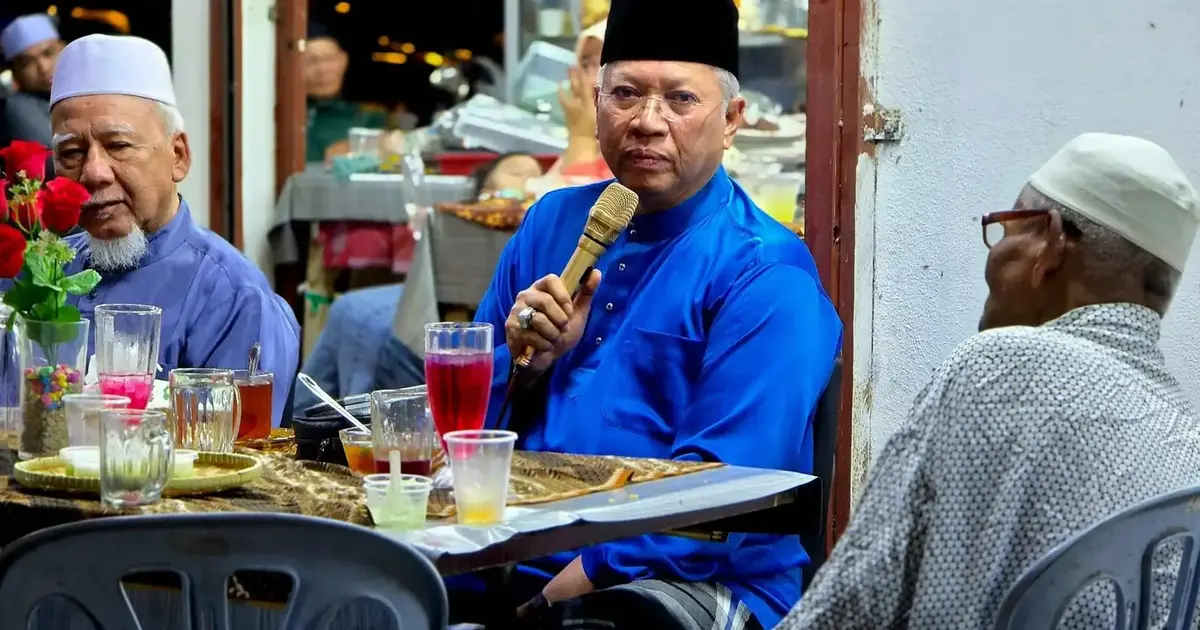
Tensions are mounting within the Perikatan Nasional coalition as PAS openly challenges Bersatu's ambitious seat allocation demands for the upcoming Negeri Sembilan state election, threatening to further strain an alliance already under considerable pressure ahead of crucial ballot contests. PAS information chief Annuar Musa has declared it mathematically and strategically impossible for the Perikatan Nasional to accommodate Bersatu's request for 15 seats in the state assembly election, a significant rupture in coalition dynamics that hints at deeper fractures within the opposition alliance.
Bersatu's bid to secure such a substantial share reflects the party's ongoing struggle to maintain political relevance and parliamentary representation following electoral setbacks and internal reorganisation. The party, which commands limited grassroots machinery compared to its larger coalition partners, has increasingly relied on seat allocations to preserve its political footprint and maintain ministerial representation in state administrations. By pushing for 15 seats in Negeri Sembilan, where Bersatu has historically held limited influence, the party appears to be testing the boundaries of coalition flexibility and challenging the established seat-sharing formula that traditionally favours larger, more established parties.
Annuar's public rejection of these demands carries strategic implications that extend beyond parliamentary arithmetic. By voicing opposition candidly rather than engaging in closed-door negotiations, PAS is effectively signalling to other coalition partners that seat distribution discussions will be constrained by political realities and electoral viability rather than internal party demands alone. This approach contrasts sharply with earlier coalition dynamics, when disagreements were typically resolved through confidential negotiations between party leadership, suggesting a shift towards more transparent but potentially more contentious coalition management.
Negeri Sembilan occupies particular significance in Malaysian electoral politics as a bellwether state where demographic shifts and urban-rural tensions have produced volatile voting patterns. The state has traditionally been a mixed battleground between ruling coalitions and opposition forces, making seat distribution there particularly consequential for broader national political calculations. Any coalition presenting a divided front risks losing momentum in such contested terrain, where swing voters are highly responsive to perceptions of internal discord and weak leadership coordination.
The Perikatan Nasional coalition itself remains an uneasy assemblage of ideologically disparate parties united primarily by opposition to other coalitions rather than shared programmatic vision. PAS brings Islamic conservatism and grassroots religious mobilisation networks; Bersatu contributes former ruling-party defectors and administrative experience; smaller component parties add geographical or ethnic representation. This structural fragility has been exposed repeatedly in recent months through disagreements over candidates, policy direction, and seat allocation across multiple state contests, with each major election triggering fresh disputes that threaten coalition cohesion.
The mathematics of Negeri Sembilan's state assembly—where seats are finite and competition intense—compounds the allocation dilemma. Granting Bersatu 15 seats would necessarily require either PAS or other coalition partners to sacrifice substantially or for the entire coalition to expand into constituencies where it lacks competitive strength. Neither scenario offers an attractive path forward for Perikatan leaders seeking to maximise coalition seat totals and demonstrate effective unity ahead of a critical electoral period that will shape national political alignments for coming years.
For Malaysian observers and regional analysts tracking opposition coalition dynamics, these public disagreements offer sobering lessons about alliance sustainability in competitive political environments. Where coalitions form primarily as tactical responses to electoral threats rather than anchored in deep institutional integration or shared ideological commitment, internal tensions inevitably surface when resources become scarce and individual party survival instincts activate. Bersatu's aggressive seat demands appear rooted in precisely such survival calculations, as the party confronts marginalisation within coalitional structures where its bargaining power remains limited.
The broader implications for Southeast Asian coalition politics merit consideration as well. Across the region, opposition coalitions have repeatedly struggled with similar allocation disputes that expose underlying power imbalances and competing ambitions within nominally united fronts. Malaysia's situation illustrates how technical disputes about seat numbers become proxies for deeper questions about party hierarchy, future ministerial distribution, and long-term coalition viability—issues that can determine whether alliances endure through electoral cycles or fracture under pressure.
Annuar's public stance also reflects PAS's strengthened position within Perikatan Nasional relative to Bersatu, allowing the Islamic party to set coalition parameters and boundaries with greater assertiveness than smaller component parties can achieve. As the coalition's most disciplined and electorally robust component, PAS has increasingly taken the lead in coalition decision-making, particularly on sensitive matters like seat allocation that directly impact electoral outcomes and party survival prospects. This shift in internal coalition balance carries its own complications for overall alliance cohesion and bargaining dynamics moving forward.

