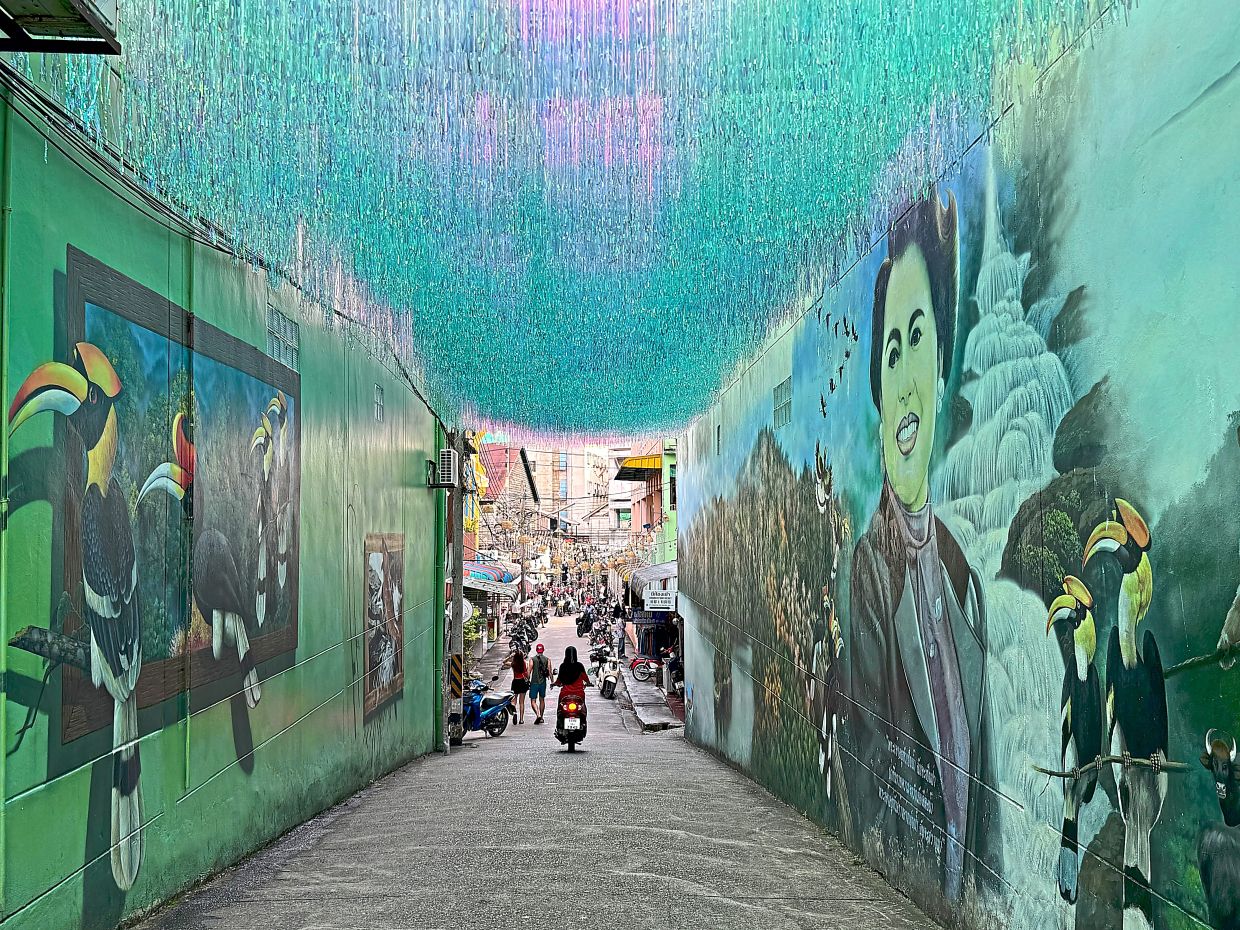
Betong may appear unremarkable at first glance, a modest town nestled in southern Thailand near the Malaysian frontier, but its collection of unexpected attractions makes it an increasingly popular destination for cross-border adventurers seeking something beyond conventional tourism. Located approximately 380 kilometres from Kuala Lumpur—a manageable five-hour drive—this former frontier outpost has quietly curated a distinctive identity that blends historical significance with eclectic charm, making it an ideal weekend escape for Malaysian roadtrippers seeking cultural immersion without venturing far from home.
The town's most distinctive calling card centres on an unusual obsession: the Betong chicken. Oversized bird sculptures perched atop street lamps and two monumental statues bearing the official title "Betong chicken statue tourist attraction" serve as immediate visual cues that poultry holds special significance here. These monuments honour a local breed that has become emblematic of the town itself, inspiring an entire culinary ecosystem built around chicken preparations. Wandering through Betong's establishments, visitors encounter endless variations of this protein—crispy chicken over steaming rice, silky chicken porridge, and countless regional interpretations—suggesting that the local pride in this heritage breed extends deeply into gastronomic tradition and community identity.
Beyond chicken culture, Betong's infrastructure itself tells a story of strategic importance. Travellers ascending Route 410, the winding Pattani-Betong Highway stretching 160 kilometres through mountainous terrain, encounter the Mongkollit Tunnel, Thailand's inaugural mountain tunnel completed in 2001. Daytime traversal reveals little of note—merely a functional engineering achievement. However, evening transformation occurs as brilliant blue illumination bathes the tunnel's interior, drawing crowds to pedestrian walkways where photography enthusiasts and contemplative visitors gather. This atmospheric metamorphosis demonstrates how modest infrastructure can transcend utilitarian purpose to become experiential attraction.
More profoundly, Betong's subterranean heritage extends into Cold War-era history through the Piyamit Tunnel, located approximately 15 kilometres from town. This 1-kilometre passage, constructed during the late 1970s, functioned as a revolutionary sanctuary rather than merely a transportation route. The Communist Party of Malaya utilised this jungle hideaway as air raid shelter, supply depot, and escape conduit during military campaigns. The sophisticated engineering reflects insurgent desperation and ingenuity: a specially designed cooking apparatus channelled charcoal smoke underground, rendering detection by enemy forces considerably more difficult. Today's visitors encounter preserved sleeping quarters, meeting rooms, and communication facilities—physical manifestations of ideological struggle that defined the region's geopolitical landscape for decades.
Understanding this historical layer enriches appreciation for Betong's contemporary character. The Piyamit Histories Museum, positioned at the tunnel entrance following a 15-minute walk along covered pathways, exhibits photographic documentation and artefacts chronicling guerrilla fighters' daily existence. For those seeking broader context, the Chulabhorn Phatthana Village 9 in Mae Wat—120 kilometres distant—offers insight into post-insurgency rehabilitation, housing former communist party members who now participate in cultural preservation activities. These locations collectively constitute a historical narrative largely absent from Malaysian mainstream awareness, providing Southeast Asian visitors opportunity to confront their region's complex revolutionary heritage.
Practical navigation through Betong rewards spontaneity. The compact old town layout accommodates pedestrian exploration, with major attractions positioned within walking distance of accommodation. Parking difficulties actually encourage this slower, more engaged movement through streets and alleyways. A local convention governs parking eligibility through kerb colourisation—black-and-white striping permits parking whilst red-and-white indicates restriction—a system worth memorising to avoid complications. This accessibility contrasts with sprawling Thai tourist destinations requiring vehicle dependency, instead fostering the organic discoveries that characterise rewarding travel experiences.
Wat Phutiwhat temple exemplifies Betong's spiritual dimension, anchoring the town through a towering bronze Buddha statue commanding panoramic views from the entrance. The structure houses Buddhist relics and attracts particularly dense crowds during morning hours, suggesting that early visitation optimises experience quality. This religious installation demonstrates how provincial Thai communities integrate spiritual practice with tourism infrastructure, creating authentic spaces that simultaneously serve devotional and commercial functions without apparent contradiction.
Betong's most delightfully eccentric landmarks centre on communication infrastructure rather than conventional monuments. The town boasts two oversized mailboxes that have achieved local landmark status through sheer architectural improbability. The original, standing 3.2 metres tall near the Betong Clock Tower and dating to 1924, once incorporated a loudspeaker system for government announcements—a technology suggesting how communication technology evolved across eras. A subsequent 9-metre replica erected outside the City Convention Hall along Sukyang Road amplifies this peculiarity into deliberate tourist attraction. These structures embody the kind of whimsical optimism that characterises small-town identity construction, transforming functional objects into sources of civic pride and visitor amusement.
Route 410, also known as the Pattani-Betong Highway, attracts motorcycling enthusiasts through its technically demanding topography. Steep climbs and aggressive winding sections through mountainous passes challenge riders whilst rewarding skilled operators with extraordinary natural scenery. The commercial establishment Betong Route 410, stocked with motorcycle apparel, custom Thai-style registration plates, and branded merchandise, indicates how recreational activity generates economic activity and community gathering spaces. These roadside establishments create informal networks where enthusiasts congregate, transforming solitary pursuit into participatory culture.
Malaysian visitors contemplating Betong expeditions should recognise the town's fundamental appeal lies not in singular attractions but cumulative experience. The chicken statues, illuminated tunnels, revolutionary history, oversized mailboxes, and motorcycle culture coexist without thematic coherence, yet collectively generate charming authenticity. This heterogeneity resists the homogenised tourism packaging increasingly characterising major regional destinations. Betong remains refreshingly unpolished, a frontier town that continues functioning as community space whilst accommodating visitor curiosity. For Malaysian travellers fatigued by commercialised resort environments or major urban congestion, this modest cross-border destination offers genuine discovery—the kind of travel experience that emerges through unplanned wandering rather than itinerary adherence.

