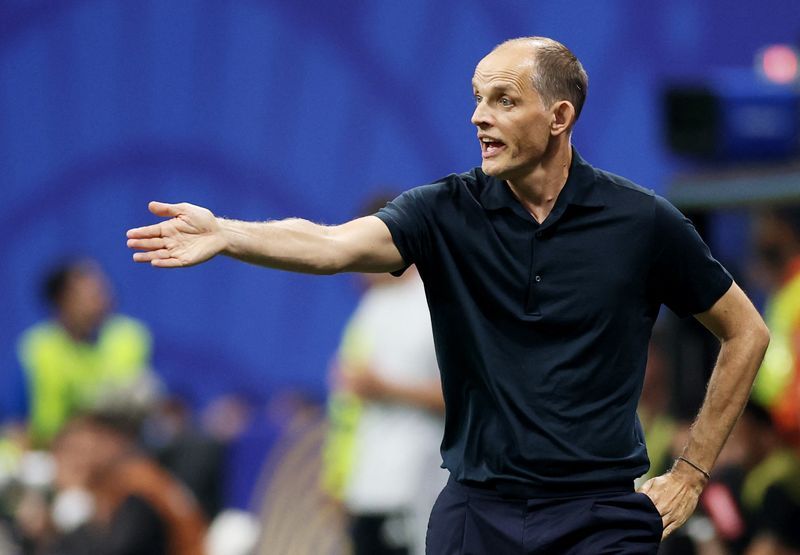
England's World Cup campaign collapsed in the semi-final against Argentina, leaving manager Thomas Tuchel at the centre of a fierce storm of criticism. Yet while tactical decisions have dominated post-match discussion, the reality of what unfolded reveals a far more complex and sobering story for the Three Lions. Tuchel, appointed as Gareth Southgate's successor with considerable fanfare and the promise of finally delivering a second World Cup title, confronted not merely a failure of football philosophy but the raw, uncompromising nature of tournament football at its highest level.
When the Football Association unveiled Tuchel's appointment in October 2024, the optimism was palpable. FA Chief Executive Mark Bullingham framed the decision as the opportunity to build on England's previous near-misses at major tournaments, declaring publicly that the organisation believed Tuchel represented their "best possible chance" at the next World Cup. The German brought impeccable credentials—a Champions League title with Chelsea, multiple domestic trophies, and a reputation as a serial winner at club level. Upon taking the helm in January, Tuchel spoke boldly of adding a "second star on our shirt," invoking the memory of England's sole World Cup triumph in 1966.
The collapse came in the dying moments against Argentina, with Tuchel's defensive repositioning after Anthony Gordon's early lead proving catastrophic. The retreat invited Argentina forward, and the subsequent concession of late goals triggered a torrent of criticism that painted the manager's caution as the primary culprit. Former managers offered scathing assessments, with some suggesting Tuchel had instilled a defensive mentality that ultimately suffocated England's attacking potential. Yet Tuchel himself rejected this interpretation entirely. His post-match analysis centred on something far more fundamental: the absence of structural coherence in possession. He argued that controlling the ball—a hallmark of Spanish, Argentine, and Brazilian football cultures—did not naturally align with English footballing DNA, and no tactical scheme could have remedied that absence in those final, decisive moments.
What this debate often overlooks is the context in which England competed: against the defending world champions, a team galvanised by arguably the greatest player of the modern era. Lionel Messi, at 39 years old, remained the driving force behind Argentina's campaign, a reminder that individual brilliance still shapes tournament outcomes in ways that preparation and tactical discipline cannot entirely counteract. Tuchel's appointment was indeed his first experience at a major international tournament, and while reaching the semi-finals matched Southgate's achievement from 2018, the learning curve associated with tournament football differs markedly from club competition.
Comparative perspective illuminates the unrealistic expectations surrounding Tuchel's early tenure. Didier Deschamps required six years with France before steering Les Bleus to the 2018 World Cup title, subsequently reaching the final in 2022. Aimé Jacquet, who won the World Cup with France in 1998, needed five years to develop his championship team. These timelines suggest that a single tournament run, regardless of outcome, provides insufficient evidence to render definitive judgment on a manager's long-term viability. Tuchel's two-year contract extension signed in February indicated the FA's continued confidence despite the semi-final exit, a decision grounded in the understanding that international football operates on a different temporal scale than domestic competition.
Argentina's path to the final likewise deserves examination, as it undermines any simplistic narrative of English underperformance. Lionel Scaloni's side appeared fragile at times, narrowly surviving group-stage scrutiny before encountering genuine peril in the knockout rounds. Cape Verde pushed them to the limit, while Egypt required three late goals to be dispatched in the last 16. Switzerland, with ten men, forced extra time in the quarter-finals. These were not the performances of a team coasting toward inevitable victory; rather, they reflected a squad whose resilience and refusal to surrender—embodied above all by Messi—carried them through moments of genuine vulnerability.
Messi's performance against England encapsulated this indomitable will. From the 72nd to the 92nd minute, when England attempted only two passes in Argentina's half while their opponents completed 111, the disposition of the match tilted decisively. Messi drifted to the right flank to exploit the congestion in England's defensive formation, ultimately delivering assists for the goals that ended English hopes. Former Barcelona teammate Thierry Henry, speaking from intimate knowledge of Messi's capabilities across three seasons, captured the phenomenon with clarity: awakening Messi's competitive instincts, rather than neutralising them, often proved counterproductive. When the Argentine senses adversity, when his team requires heroics, he elevates his performance to levels that defensive organisation alone cannot contain. That unprovoked switch into an almost transcendent state of performance—what Henry termed being "unstoppable when he goes into that mood"—represents a dimension of elite sport that transcends tactical matrices.
England's retreat, like that of Cape Verde and Egypt before them, inadvertently triggered precisely the response they sought to prevent. Tuchel's defensive adjustment, intended to consolidate advantage, instead invited the opposition forward and activated Messi at the moment when Argentina needed him most. The fundamental challenge posed by facing such a player involves irresolvable tensions: aggressive pressing risks surrendering space to a magician of ball movement, while defensive conservatism invites dominance and creates the psychological conditions under which Messi flourishes. Neither approach offers guarantee of success against a player whose gift for writing "history with his feet," as Henry phrased it, has transcended the merely technical into the realm of the improbable.
The post-mortem discussion surrounding Tuchel's tactics, while understandable given football's nature as a results-driven endeavour, ultimately obscures more fundamental truths. England faced a team of greater tournament experience, led by a player operating at the twilight of a career characterised by transcendent achievement. The semi-final represented not a referendum on Tuchel's managerial philosophy but rather an encounter with the raw cruelty of tournament football, where marginal differences in execution, momentum, and individual brilliance determine outcomes. Whether Tuchel remains the architect of England's long-delayed second World Cup title remains uncertain, but that uncertainty stems less from tactical inflexibility than from the broader complexities inherent in managing at international level.

