The Bharatiya Janata Party has levelled accusations of selective activism against the Cockroach Janta Party, the pressure group that mobilised significant student demonstrations in New Delhi following allegations of irregularities in competitive examinations. Party spokesperson Keya Ghosh questioned why the movement that successfully pressured Education Minister Dharmendra Pradhan to resign has maintained what she characterised as a peripheral stance towards parallel agitations erupting across eastern India's Jharkhand state.
The political dispute underscores deepening tensions within India's protest ecosystem, where grassroots movements increasingly intersect with partisan calculations. While the Cockroach Janta Party emerged as a satirical collective before evolving into a genuine mobilising force, its trajectory has drawn scrutiny from both government defenders and political observers assessing whether such movements maintain ideological consistency or inadvertently serve specific political interests.
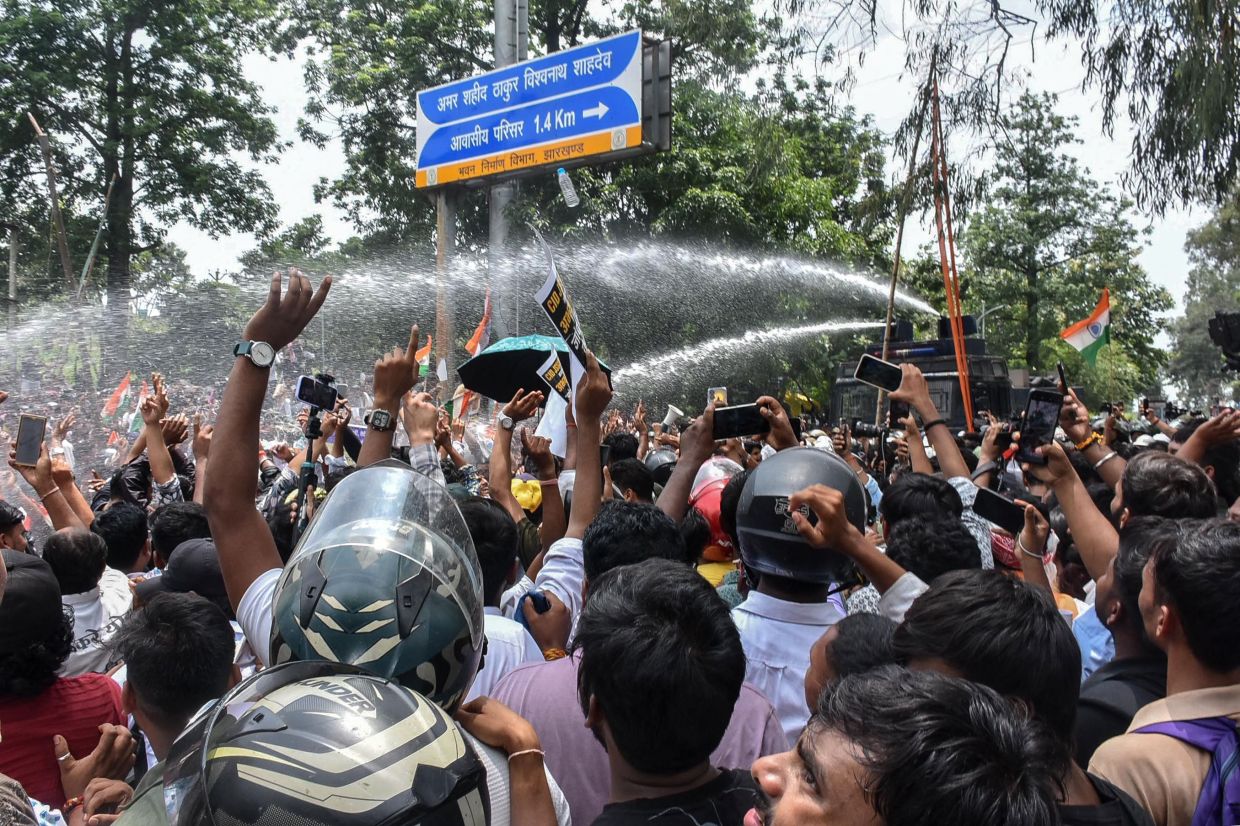
Jharkhand, governed by a coalition led by the Jharkhand Mukti Morcha alongside the Indian National Congress, has emerged as a secondary flashpoint for student grievances. Demonstrators there are pressing for a federal inquiry into suspected manipulation within state recruitment examinations, mirroring the examination malpractice concerns that galvanised Delhi's earlier upheaval. However, the geographic and administrative separation between the two protest sites has created distinct dynamics, with Jharkhand's agitation drawing primarily from local student constituencies rather than established activist networks.
The BJP's critique extends beyond the Cockroach Janta Party to encompass Congress leadership, with Ghosh pointedly questioning why Rahul Gandhi, designated opposition leader, has maintained distance from protest encampments in both locations. This dual-pronged assault reflects the governing party's broader strategy of framing opposition figures as selectively engaged, willing to mobilise against the Modi administration but reluctant to challenge governments aligned with their own political coalition.
Independently, Cockroach Janta Party founder Abhijeet Dipke has issued statements condemning police tactics deployed against Jharkhand demonstrators, specifically referencing the deployment of water cannons and baton charges witnessed during Monday's confrontations. This rhetorical positioning allows the movement to maintain solidarity with students while avoiding wholesale organisational commitment to the eastern state's unfolding crisis. Several CJP members with experience mobilising during the Delhi campaign have individually travelled to Jharkhand, suggesting grassroots participation rather than coordinated institutional involvement.
The distinction between rhetorical backing and substantive organisational presence carries significance for understanding how contemporary Indian activism functions across multiple geographic and political contexts. Movements like the Cockroach Janta Party operate within constraints imposed by resource limitations, volunteer availability, and the geographical distribution of their supporter base. Maintaining visible presence across dispersed protest sites requires logistical capacity that pressure groups typically lack, yet absence invites accusations of selectivity or partisan motivation.
Jharkhand's mineral wealth and agrarian character position it distinctly within India's regional hierarchy, and its governance structure—featuring opposition from Modi's party despite coalition rule—creates a political landscape where the BJP's criticism gains particular resonance. For national-level movements headquartered around Delhi's institutional and media infrastructure, extending operations into eastern states presents genuine organisational challenges even where ideological alignment exists. The geography of protest thus becomes inseparable from questions of commitment and authenticity.
Rahul Gandhi's public statements have acknowledged students' fundamental entitlement to peaceful assembly while advocating dialogue-based resolution pathways. This framing attempts to maintain distance from tactical debates whilst affirming procedural support for demonstrators' constitutional rights. However, the Congress leadership's spatial absence from both protest locations has rendered such statements vulnerable to charges of superficial concern, precisely the vulnerability the BJP exploits through questioning whether opposition leaders prioritise electoral considerations over principled solidarity with aggrieved constituencies.
For Malaysian and Southeast Asian observers, these dynamics illustrate how student activism interacts with competitive party politics across South Asia's largest democracy. India's examination system controversies resonate across the region, where credential inflation and employment uncertainty similarly fuel youth frustrations. The intersection of grassroots mobilisation with elite political competition suggests how apparently spontaneous movements frequently become entangled with pre-existing partisan structures, complicating assessments of authenticity and independent agency.
The Cockroach Janta Party's evolution from satirical commentary into substantive activist force reflects broader patterns whereby humour and irony serve as entry points for political engagement among digitally native constituencies. Yet this transition creates vulnerability to accusations that political comedy becomes political convenience when aligned with movements challenging specific governments whilst remaining absent when equivalent crises affect coalition-governed territories.
Moving forward, the Cockroach Janta Party confronts fundamental questions about whether pressure groups can maintain principled consistency whilst operating within India's polarised political environment. Strategic choices regarding which movements to amplify, how much organisational resources to expend, and where to establish visible presence inevitably generate interpretations regarding underlying motivations. Whether understood as pragmatic limitation or selective activism, reduced presence in Jharkhand has provided rhetorical ammunition for critics questioning the movement's substantive commitment to educational accountability beyond Delhi's political epicentre.

