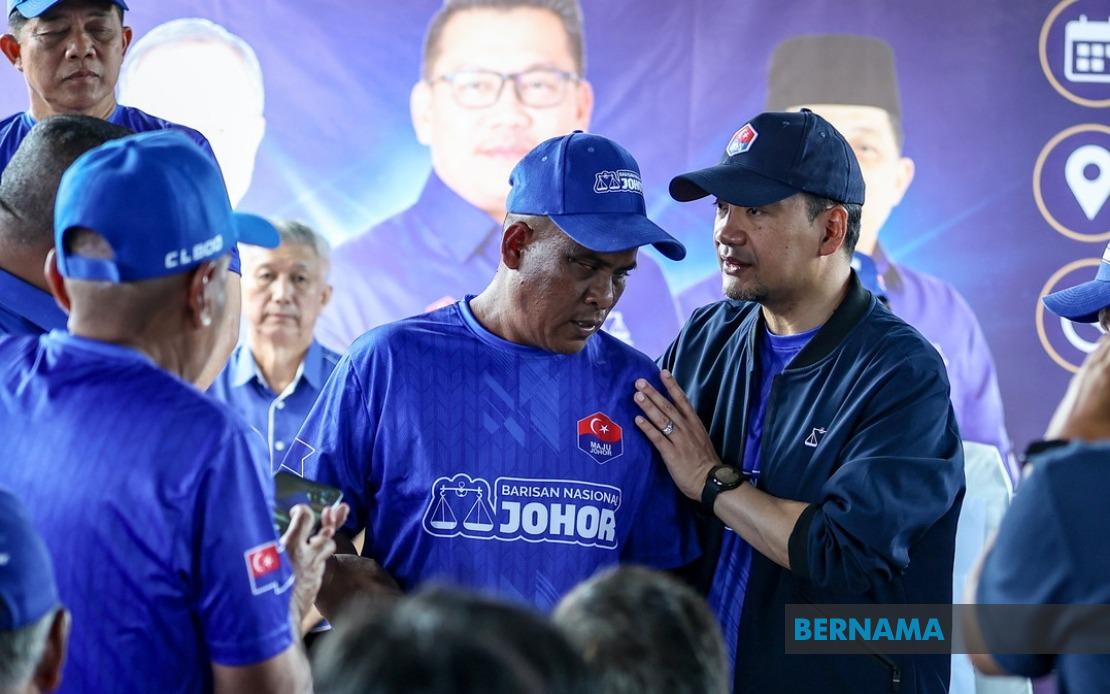
Mohd Hairol Leman has never allowed blindness to interfere with his civic engagement. The 46-year-old from Kampung Sri Pantai in Senggarang has maintained an unbroken voting record for 16 years, participating in every general and state election since 2008. As Johor prepares for its 16th state election on July 11, Hairol exemplifies how Malaysian citizens with disabilities refuse to be sidelined from democratic processes, challenging assumptions about accessibility and political participation.
For someone who has lived without sight since birth, Hairol's consistency is particularly noteworthy. He regards voting not as a burden but as a fundamental responsibility that every citizen should honour. His perspective reflects a deeper understanding of democratic engagement—that casting a ballot represents far more than a procedural exercise. Instead, he views it as an active choice to shape governance and influence decisions that affect his community. This conviction has propelled him to the polls repeatedly, regardless of whether elections concern federal or state matters.
Hairol's journey to the ballot box demonstrates Malaysia's electoral framework can accommodate voters with disabilities, though implementation relies heavily on assistance from Election Commission officials. Each time he votes, EC staff provide the necessary support to ensure his participation remains confidential and meaningful. This collaborative approach has enabled him to exercise his franchise six times—a milestone he approaches with evident pride. His experience underscores both the capacity of our institutions to serve all citizens and the determination required from individuals to claim their rights.
The upcoming July 11 election will see him cast his seventh ballot. Unlike many first-time or casual voters, Hairol arrives at the polls with a carefully considered sense of purpose. He seeks leadership that prioritises welfare programmes, having benefited directly from support provided by the Department of Social Welfare and the Johor State Islamic Religious Council's Baitulmal initiative. His voting calculations are personal and practical—he assesses which candidates and parties have demonstrated tangible commitment to improving circumstances for disadvantaged groups.
Hairol's gratitude toward past leaders extends his motivation to participate. He recognises that various state-led initiatives and cost-of-living assistance programmes have meaningfully impacted his quality of life. Rather than viewing these as entitlements, he treats them as evidence of governance serving its most vulnerable populations. This perspective shapes his electoral choices, as he seeks to reward continuity of such commitments while encouraging parties to expand and deepen welfare provision.
The 16th Johor State Election involves considerable stakes and complexity. A total of 172 candidates are competing for 56 State Legislative Assembly seats, with early voting scheduled for July 7 and main polling day on July 11. This scale of contest means individual voters like Hairol effectively determine which candidates and parties will hold power. Each ballot cast, regardless of the voter's circumstances, carries equal weight in determining election outcomes. Hairol's insistence on participating acknowledges this democratic equality.
His story carries broader significance for Malaysian society. Approximately 3.4 million people live with disabilities in Malaysia, yet many face systemic barriers to full participation in civic life. Hairol's uninterrupted voting record since 2008 suggests that with adequate institutional support and individual determination, participation barriers can be substantially overcome. His example may inspire other citizens with disabilities to engage more actively in electoral processes, while simultaneously challenging election authorities to refine accessibility measures further.
The accessibility arrangements that enable Hairol's participation reflect Malaysia's legal commitment to inclusive democratic processes. The Election Commission has established procedures allowing voters with visual impairments to receive assistance in marking their ballots while maintaining ballot secrecy. Yet Hairol's continued reliance on this assistance—now for his seventh election—suggests opportunities exist to enhance independence through technological solutions or alternative voting methods. Other democracies have experimented with accessible voting technologies that could streamline the process and reduce stigma.
Hairol's motivation transcends individual self-interest. While he clearly values welfare programmes that benefit him personally, he frames his voting participation as a contribution to collective governance. He sees himself as part of a demos—a political community making binding decisions about shared futures. This understanding places him philosophically alongside citizens voting in their own perceived interest or for broader ideological reasons. Democratic legitimacy rests on participation from diverse constituents with varying motivations and circumstances.
As Johor enters its electoral campaign phase, Hairol's quiet determination represents something often absent from election coverage: a substantive articulation of why citizens vote. Amid discussions of campaign machinery, party machinery briefings, and electoral competition, his perspective reminds observers that voting fundamentally concerns hope for better governance. For Hairol, that hope has proven durable enough to survive 16 years of political change, economic shifts, and personal circumstances. His commitment suggests that Malaysian democracy, despite its imperfections, continues offering meaningful channels for citizens to influence their collective destiny.
The election machinery gathering in Rengit where Hairol spoke reflects the logistical preparations underway across Johor. Yet beyond campaign organisation and candidate positioning, the real election involves millions of individual choices. Hairol represents one such choice-maker—someone who has consistently decided that participation matters, that voting constitutes civic duty, and that democratic engagement deserves priority despite apparent obstacles. His persistence offers a powerful counternarrative to discourse that presents electoral participation as burdensome or optional. For him, it represents an affirmation of citizenship.

