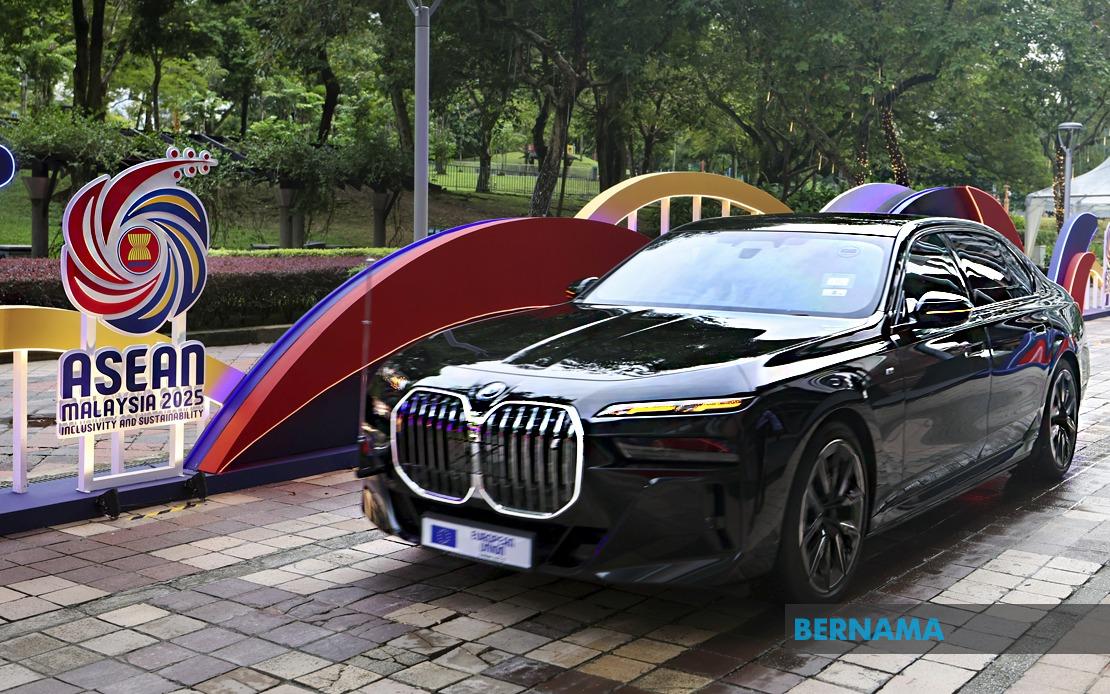
The Prime Minister's Department has moved to dispel growing online speculation about a luxury BMW vehicle used by Prime Minister Datuk Seri Anwar Ibrahim, confirming the automobile is an existing government asset rather than a newly acquired official vehicle. The clarification, issued jointly by the department and its Ceremonial and International Conference Secretariat Division (BIUPA), represents an attempt to contain misinformation that had circulated across social media platforms regarding the status and ownership of the vehicle.
According to the official statement, the BMW falls under BIUPA's purview and serves a highly specialised function within Malaysia's diplomatic and state security infrastructure. The vehicle is specifically designated for the country's official logistics operations and is utilised exclusively to support the complex requirements that accompany state visits by heads of state and heads of government with the rank of president or prime minister when they travel to Malaysia. This distinction underscores the vehicle's role as part of Malaysia's hospitality apparatus for international dignitaries rather than as personal transportation for the Prime Minister.
The specifications of the vehicle reflect the stringent demands of contemporary security architecture. The BMW has been engineered to meet internationally recognised ballistic protection standards and is designed to withstand threats ranging from high-calibre firearms to explosive devices and emerging security challenges such as drone-based attacks. These capabilities, while expensive to implement, represent standard provision across countries that regularly host high-level international delegations, placing Malaysia alongside established protocols observed by other nations in the region and globally.
The temporary deployment of this particular vehicle stems from a practical operational circumstance rather than any policy shift regarding prime ministerial transport. The Prime Minister's regular official vehicle, which was provided as a gift by the Yang di-Pertuan Agong, is currently undergoing scheduled maintenance and routine servicing. During this maintenance window, the security apparatus has determined that the BMW should temporarily assume the role of the Prime Minister's transport, ensuring continuity of the security protocols that surround his movements and official engagements.
The decision to utilise the BMW was made on the formal recommendation and security assessment provided by the Royal Malaysian Police (PDRM). This procedural involvement of the police force is significant as it demonstrates that the choice was not arbitrary but based on institutional security considerations. The coordination between the Prime Minister's Department and law enforcement reflects the layered approach Malaysia takes to protecting its chief executive and maintaining the integrity of state functions in an increasingly complex security environment.
The clarification addresses a phenomenon increasingly common in Malaysian public discourse: the rapid proliferation of unverified claims on social media platforms regarding government assets and official practices. The circulation of speculation about the BMW vehicle highlights the speed with which information—and misinformation—can spread through digital channels, often outpacing official communications. The government's response, while somewhat delayed, follows a pattern where agencies must now proactively counter narratives that accumulate online before they become entrenched in public perception.
This incident reflects broader questions about government transparency and the management of information flows in the digital age. For Malaysian citizens and observers, understanding the rationale behind state vehicle deployments and security protocols enhances appreciation for the complexity of governing and protecting high office. The existence of vehicles with specialized security features is not unique to Malaysia but represents a necessary accommodation to contemporary risks facing national leaders across democracies and developing nations alike.
The maintenance of the Yang di-Pertuan Agong's gift vehicle is itself noteworthy, as it underscores the ceremonial significance of official state automobiles. The gifted vehicle carries symbolic weight as a representation of the relationship between the monarchy and the executive branch. Its periodic servicing and upkeep are not merely mechanical necessities but are part of maintaining the dignity and functionality of an asset that embodies institutional respect and constitutional protocol.
For Malaysian observers concerned with matters of government expenditure and asset management, the clarification provides assurance that no extraordinary procurement was undertaken. The deployment of an existing asset, held within government inventory for its intended purpose, represents efficient use of public resources rather than the acquisition of new luxury vehicles. This distinction carries weight in a context where public scrutiny of government spending has intensified and transparency in financial matters remains a priority in national discourse.
The security dimension of this episode deserves particular attention for Southeast Asian readers. The threats referenced—ballistic attacks, explosions, and drone threats—reflect real vulnerabilities that contemporary security planners must address. Malaysia's proactive approach to equipping diplomatic and state vehicles with such capabilities demonstrates the country's serious approach to protecting its leadership and hosting international visitors safely. The region has experienced security incidents affecting state figures, making such precautions not theoretical but practically grounded in regional security realities.
Moving forward, the incident serves as a reminder that government agencies may benefit from more rapid and transparent communication regarding routine operational matters. Public speculation about official vehicles and their use can be minimised through timely, clear communication that explains the practical and security rationales behind specific decisions. In an environment where citizens increasingly scrutinise government actions through digital platforms, such proactive communication strategies become valuable tools for maintaining confidence in institutional decision-making.

