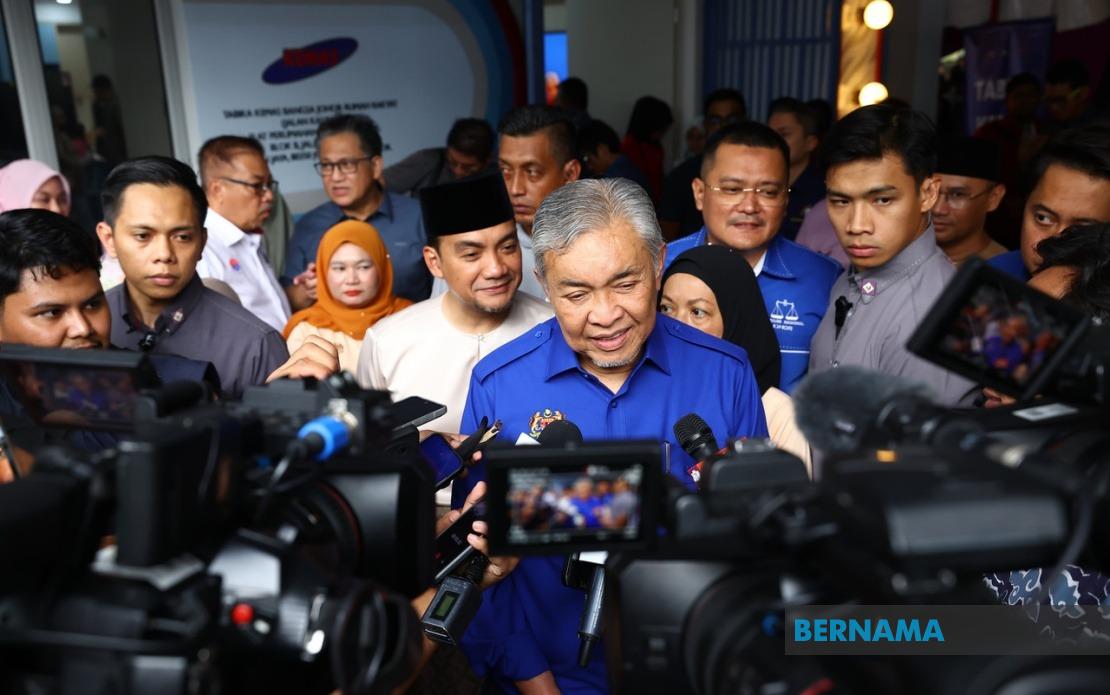
Barisan Nasional has publicly acknowledged the election proposals put forward by Pakatan Harapan for the upcoming Johor state poll, with party chairman Datuk Seri Dr Ahmad Zahid Hamidi stating that BN respects the opposition coalition's manifesto commitments. Speaking in Johor Bahru on July 3, the Deputy Prime Minister emphasised that a functioning democracy requires openness to competing ideas, and that BN welcomes the range of policy initiatives being offered by rival candidates seeking voter support across the state's 56 contested seats.
The BN acknowledgement came shortly after Pakatan Harapan unveiled its ten-point manifesto, which centres on expanding healthcare access through a dedicated Johor Health Scheme, easing property ownership barriers for first-time buyers through deposit assistance programmes, and channelling RM500 million towards youth employment and skills development. The opposition coalition has also prioritised educational improvements across all levels, signalling that economic opportunity and social welfare form the backbone of their campaign strategy for voters in Malaysia's southern-most peninsula state.
Ahmad Zahid, who also serves as Rural and Regional Development Minister, used the occasion to counter-position BN's own campaign platform, emphasizing that the ruling coalition's manifesto rests on demonstrated government performance. He pointed to BN's track record in Johor's previous administration, noting that the state government had delivered on more than 90 per cent of its prior electoral promises, a claim intended to establish BN as a reliable steward of public resources and development initiatives.
The BN manifesto framework, according to Ahmad Zahid, extends benefits throughout the entire lifecycle of residents, beginning with support for pregnant women and extending through childhood, schooling, tertiary education, and into adulthood for single parents. By framing policy as universal rather than selective, BN's messaging strategy attempts to neutralise criticism that development initiatives favour particular communities or demographic groups, instead positioning welfare spending as inclusive of all Johor residents regardless of ethnicity or social background.
Ahmad Zahid reiterated a commitment to sustained investment in Johor's long-term growth and infrastructure development, pledging that his ministry would continue prioritising the state's advancement for as long as he holds office. This personal commitment from a senior federal minister underscores the national government's stake in securing BN's electoral victory in Johor, a strategically important state that contributes substantially to the ruling coalition's parliamentary strength and regional influence.
The remarks were delivered during a community engagement session at Larkin Court 1 flats, where Ahmad Zahid met with parents of Tabika Kemas Bangsa Johor, a government early childhood development programme. Johor Menteri Besar Datuk Onn Hafiz Ghazi and BN's candidate for the Larkin state seat, Mohd Hairi Mad Shah, accompanied the BN chairman, reinforcing the integration between federal and state-level party machinery ahead of the election.
The political contest encompasses 172 candidates vying across 56 state assembly seats in what represents the 16th electoral cycle for Johor's legislative body. Early voting has been scheduled for July 7, with general polling day set for July 11, providing a compressed campaign window during which both BN and PH must mobilise voters and articulate their competing visions for the state's future direction.
For Malaysian observers, the civility expressed by BN towards PH's manifesto reflects the broader competitive dynamics at play in Johor politics, where genuine ideological and policy differences compete alongside questions of administrative competence, resource allocation, and demographic representation. The state has historically served as a testing ground for national political trends, and the outcome carries implications for federal government stability and Opposition momentum heading into the next national election cycle.
Pakatan Harapan's emphasis on healthcare expansion and youth employment addresses tangible concerns among working-age and younger voters facing cost-of-living pressures and limited job prospects in sectors beyond traditional economic hubs. The deposit assistance scheme for first-time homebuyers similarly targets a demographic increasingly priced out of property markets, a grievance that cuts across ethnic lines and generational divides throughout urban and peri-urban Johor.
BN's counter-narrative of proven delivery and inclusive development attempts to capitalise on voter preferences for continuity and measurable track records, though opposition campaigns increasingly highlight unmet promises and questions about equitable resource distribution between development-concentrated urban areas and peripheral rural constituencies. The competing framings of past performance versus transformative potential will likely dominate campaign messaging during the weeks leading to the July 11 polling date.

