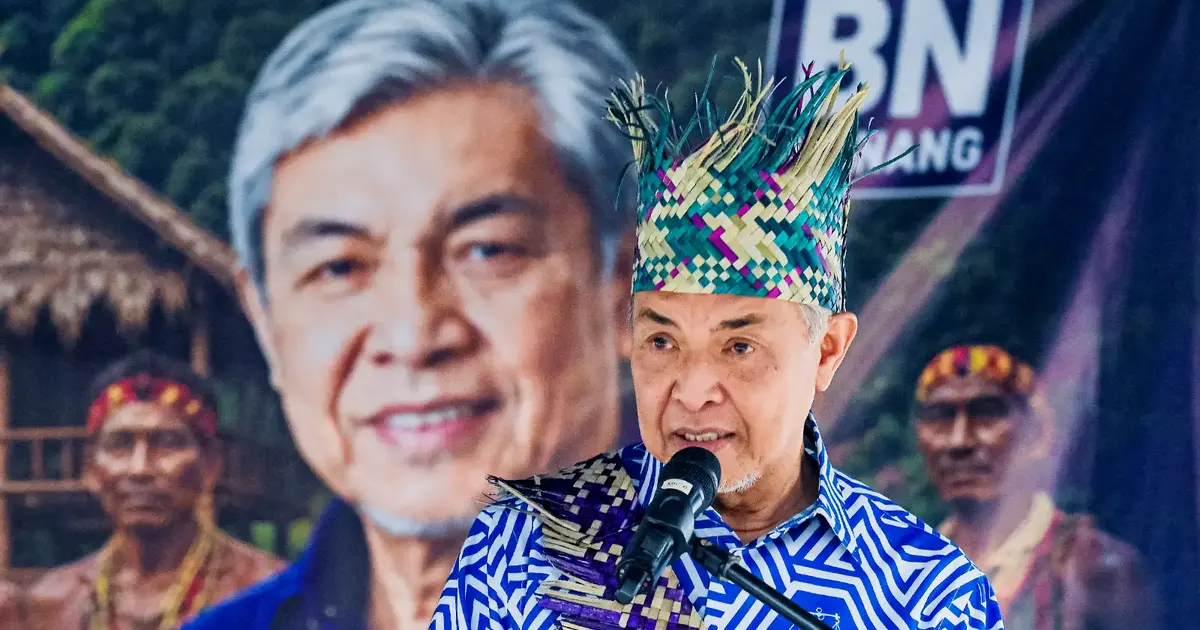
Barisan Nasional has signalled its commitment to indigenous affairs by pledging to create a new specialised officer position dedicated to Orang Asli matters, contingent on the coalition winning upcoming elections. Coalition chairman Ahmad Zahid Hamidi outlined the proposal, emphasising that the initiative would be housed within the office of the Negeri Sembilan menteri besar and could be operationalised through existing administrative frameworks without requiring substantial legislative changes.
The announcement reflects growing political attention to the concerns of Malaysia's indigenous populations, who have faced longstanding marginalisation across economic, educational, and social spheres. By specifically anchoring this commitment to Negeri Sembilan's state leadership, BN appears to be targeting regional development priorities and signalling responsiveness to local constituencies where Orang Asli communities represent a meaningful demographic and electoral presence.
Ahmad Zahid's emphasis on administrative implementation rather than statutory creation suggests BN's intention to move swiftly on the initiative without navigating extended parliamentary procedures. This approach would allow rapid establishment of the post following an electoral mandate, potentially demonstrating early policy delivery. However, it also raises questions about the officer's formal authority, budgetary allocation, and whether administrative designation alone would provide sufficient institutional weight to influence broader government policy affecting indigenous communities.
The timing of this pledge, anchored to post-election implementation, reflects standard opposition and coalition strategy during campaign periods. Nevertheless, the specificity of proposing a dedicated officer role—rather than integrating Orang Asli affairs into existing departments—suggests BN recognises the distinct nature of indigenous policy concerns and the political value of demonstrating differentiated attention to these communities.
For Orang Asli communities across Peninsular Malaysia, the effectiveness of such a position would depend heavily on its reporting lines, resource allocation, and mandate scope. A ceremonial or advisory role with limited budgetary control would produce minimal substantive change. Conversely, an officer with direct access to the menteri besar and authority over resource distribution could meaningfully advance indigenous development priorities including land rights recognition, educational access, healthcare provision, and economic opportunity creation.
Negeri Sembilan carries particular significance for indigenous affairs, as the state hosts substantial Orang Asli populations, particularly among the Semelai, Temuan, and Mah Meri communities. These groups have historically navigated complex relationships with state development initiatives, land claims, and cultural preservation efforts. A dedicated state-level officer position could theoretically coordinate responses to community-specific challenges while maintaining focus on state-level policy implementation.
The proposal also sits within broader Southeast Asian dynamics around indigenous rights and representation. Regional peers including Thailand, Indonesia, and the Philippines have faced persistent scrutiny from international human rights bodies regarding indigenous land rights, education equity, and resource access. Malaysia's establishment of even a symbolically significant administrative position could position the country as demonstrating commitment to addressing these longstanding concerns, though substantive implementation would remain the critical determinant of credibility.
For voters evaluating coalition programmes, the Orang Asli officer pledge represents a measurable commitment amenable to post-election accountability. If implemented following a BN victory, the public appointment of a named individual, clear terms of reference, and visible engagement with indigenous communities would constitute verifiable delivery. Conversely, non-appointment or appointment of a figurehead lacking operational authority would represent broken commitment. This transparency factor distinguishes specific officer creation from broader, harder-to-quantify policy pledges.
The proposal also intersects with Malaysia's broader governance architecture regarding state autonomy and federal-state relations. By anchoring the officer position to the menteri besar's office rather than proposing federal-level indigenous affairs mechanisms, BN acknowledges state-level responsibility for indigenous affairs implementation whilst potentially preserving federal authority over certain regulatory domains. This federalism angle remains implicit in Ahmad Zahid's announcement but carries real implications for how comprehensively the officer role could address indigenous concerns spanning multiple policy domains.
Critical observers may question whether a single officer, regardless of access and authority, represents sufficient institutional capacity to address the multifaceted challenges confronting Orang Asli communities—from land tenure security to intergenerational poverty to cultural preservation. However, such a position could serve catalytic functions: elevating indigenous affairs within state government, facilitating coordination across departments, and providing a focal point for community engagement and grievance resolution.
The pledge's credibility ultimately hinges on implementation details that remain unstated: will the officer position be fulltime and senior-level, or part-time and junior? What budget accompanies the role? Which specific policy domains fall within the officer's purview? Will appointment be merit-based or politically connected? Will the officer report directly to the menteri besar or through intermediate bureaucratic layers? Answers to these questions would substantially determine whether the initiative represents genuine institutional innovation or symbolic gesture.

