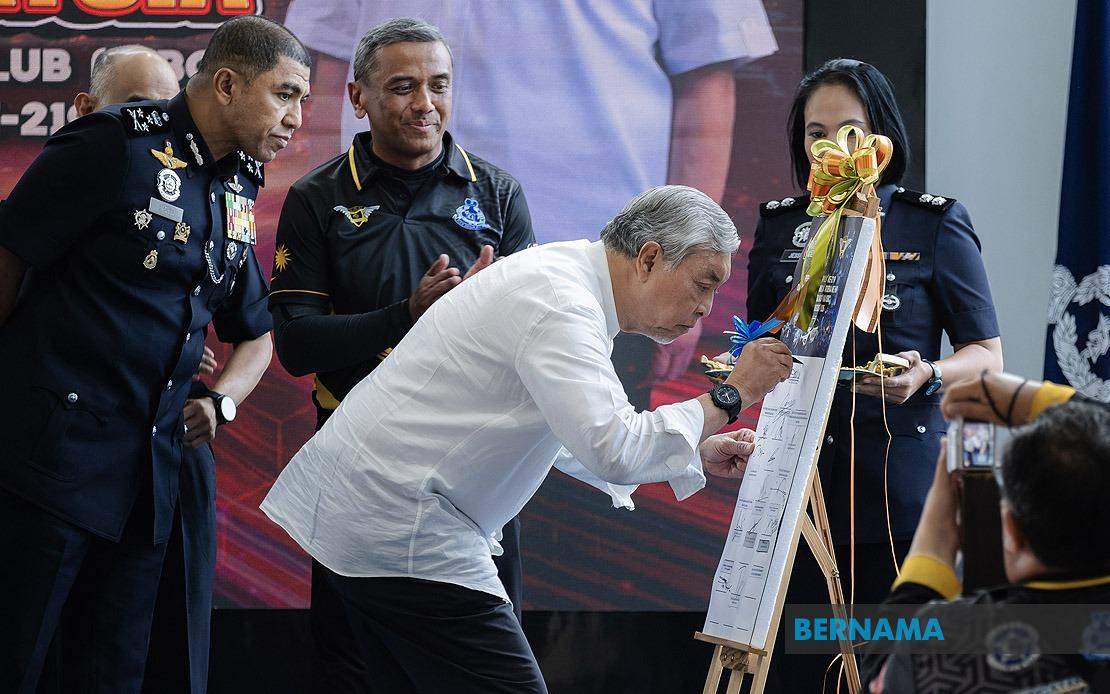
Barisan Nasional will need to develop a political formula specifically tailored to Melaka's distinctive geopolitical environment as it prepares for the state election, according to the coalition's chairman Datuk Seri Dr Ahmad Zahid Hamidi, who is also Malaysia's Deputy Prime Minister. Speaking after a police charity event in Kuala Lumpur, Ahmad Zahid clarified that BN's winning blueprint from other recent state elections cannot simply be imported wholesale into Melaka, signalling that the party recognizes the need for contextual adaptation rather than a one-size-fits-all approach.
The Deputy Prime Minister's remarks come at a time when BN is consolidating power following triumphs in Johor and Negeri Sembilan, victories that have bolstered confidence within the coalition. However, Ahmad Zahid's emphasis on crafting a state-specific strategy suggests awareness that Melaka presents a distinct political calculus that requires careful calibration. He underscored that any negotiations with coalition partners must weigh both advantages and disadvantages meticulously, ensuring that gains substantially exceed potential costs. This measured language reflects the complexity of managing multiple stakeholder interests within Malaysia's broader political ecosystem.
Central to Ahmad Zahid's message is an insistence on transparency and integrity throughout the negotiation process. He emphasized that BN must approach all discussions with honesty and commitment, pledging that agreements reached will be honored rather than abandoned once formal arrangements are concluded. This statement carries particular weight given Malaysia's political history, where coalition arrangements have occasionally fractured due to disputes over implementation of agreed terms. By highlighting these principles publicly, Ahmad Zahid is attempting to establish credibility and demonstrate that BN takes its commitments seriously.
The mandat to conduct negotiations has been delegated to Melaka Chief Minister Datuk Seri Ab Rauf Yusoh, who simultaneously serves as Melaka BN chairman. This institutional arrangement reflects a common practice in Malaysian politics whereby state-level leaders take the lead in local negotiations, with outcomes subsequently referred to the federal level for broader strategic alignment and formal approval. Ahmad Zahid indicated that whatever formula emerges from discussions in Melaka will be subject to detailed examination and finalization at the national tier, ensuring consistency with federal political objectives and broader BN strategy.
The significance of Ahmad Zahid's position extends beyond merely explaining electoral mechanics. He articulated a broader vision connecting state-level political cooperation to national stability and unity government dynamics. By framing Melaka's negotiations within the larger context of federal-level collaboration, Ahmad Zahid positioned the state election as part of a comprehensive effort to strengthen Malaysia's overall political architecture. This perspective reflects the government's Investment in maintaining the Unity Government framework established at the federal level, where multiple political movements operate within the same administration.
The Melaka state government currently commands a substantial majority, having secured 21 of the 28 seats in the 15th state election. Pakatan Harapan holds five seats while Perikatan Nasional occupies two seats. Notably, the state executive council includes members from Pakatan Harapan as well as BN representatives, mirroring the power-sharing arrangement that characterizes the federal government. This composition demonstrates how Malaysia's political landscape has evolved, with coalition partners now regularly sharing executive responsibilities rather than operating purely as opposition forces.
The timeline for the upcoming election carries particular importance. Melaka's state government mandate is scheduled to expire on December 31, creating a defined window for electoral preparations and political negotiations. This deadline structure provides all stakeholders with clear parameters for decision-making and allows political actors to plan accordingly. Ahmad Zahid's emphasis on completing negotiations and finalizing arrangements suggests that BN intends to move purposefully toward the election, avoiding the uncertainty that might arise from prolonged political discussions.
Ahmad Zahid's comments also reflect a maturation in how BN approaches coalition politics at the state level. Rather than assuming that formulas effective elsewhere will automatically transfer to Melaka, the party leadership is demonstrating flexibility and contextual awareness. This approach acknowledges that different states possess varying demographic compositions, historical voting patterns, and political dynamics that must be considered when constructing winning coalitions. Melaka's position as a Malay-majority state with distinct historical and cultural characteristics may require different alliance strategies compared to more diverse states like Johor.
The emphasis on whole-of-government coordination and inter-ministerial collaboration further illustrates how contemporary Malaysian politics operates across multiple levels simultaneously. By highlighting these mechanisms, Ahmad Zahid conveyed that political cooperation transcends the symbolic gestures of cabinet representation, extending into substantive operational collaboration aimed at delivering public services and maintaining governance coherence. This sophisticated understanding of political management reflects the complex demands of leading a government comprising multiple distinct political movements.
For Malaysian observers and stakeholders, Ahmad Zahid's statements suggest that BN recognizes the importance of sustainable coalitions built on genuine agreement rather than imposed hierarchies. The party's willingness to delegate negotiations to the state level while maintaining federal oversight demonstrates trust in local leadership combined with attention to national coherence. This balanced approach may provide a model for managing multi-party governance structures in Malaysian politics going forward.
The broader implications for Malaysia's political landscape are substantial. As elections approach in various states, the precedent being established in Melaka regarding negotiation processes and coalition management will likely influence how other political movements approach similar situations. Ahmad Zahid's public commitment to honoring agreements and conducting transparent negotiations establishes expectations that extend beyond Melaka, potentially reshaping norms around political cooperation throughout the country. Whether these principles translate into consistent practice will significantly affect public confidence in political institutions and the stability of Malaysia's democratic systems.

