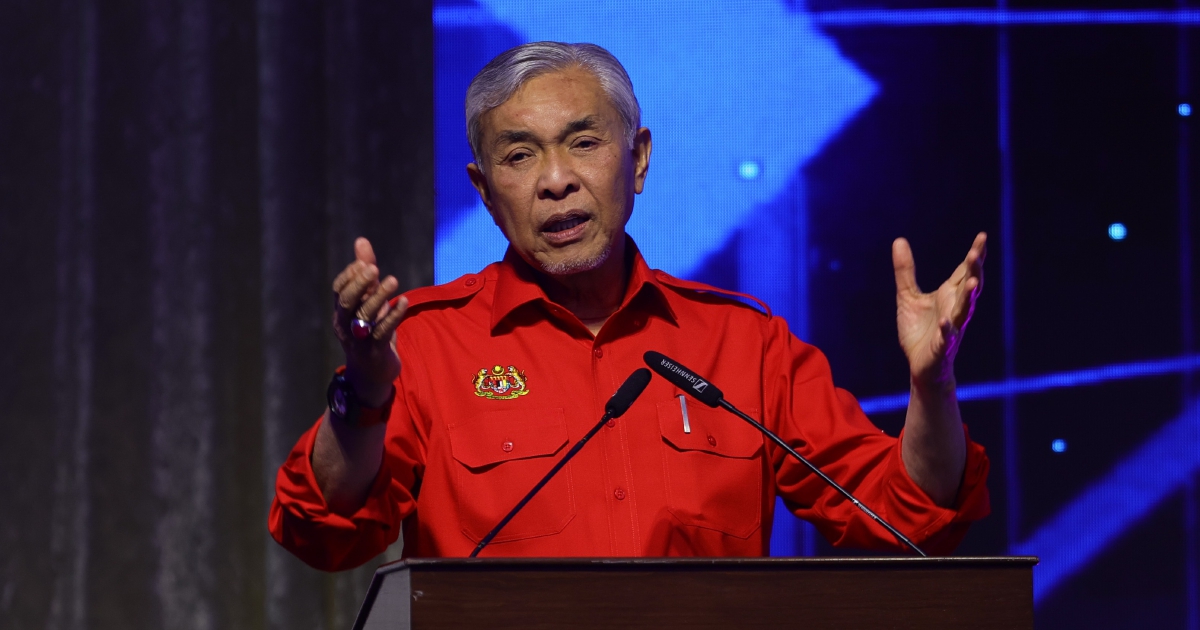
The Barisan Nasional coalition has signalled its readiness to accommodate Prime Minister Datuk Seri Anwar Ibrahim's personnel decisions, with party chairman Datuk Seri Dr Ahmad Zahid Hamidi indicating during remarks in Seremban that BN ministers hold their positions conditionally, subject to performance assessments conducted by the country's chief executive.
Zahid's statement carries significance for understanding the current power dynamics within Malaysia's ruling government structure. The Barisan Nasional, which returned to federal cabinet positions following the 2023 general election after nearly two decades in opposition, has emerged as a crucial component of the federal administration. The coalition's willingness to accept ministerial dismissals at the Prime Minister's behest suggests a pragmatic approach to governance and a recognition of Anwar's authority over cabinet composition.
This flexibility represents a notable shift in how coalition partners typically negotiate their representation in government. Historically, component parties have maintained protective stances toward their appointed ministers, often defending members against removal or public criticism. By explicitly accepting that underperformance could trigger dismissal, BN leadership appears willing to prioritize administrative efficacy over protecting appointments on party patronage grounds alone.
The backdrop to Zahid's comments reflects ongoing discussions within Malaysia's political circles about ministerial accountability and institutional performance. Since taking office, the Anwar administration has faced multiple governance challenges, ranging from economic management to institutional reform. The Prime Minister has previously signalled his commitment to performance-based governance, and Zahid's statement appears to validate this approach at the coalition level.
For Barisan Nasional specifically, the positioning carries domestic implications. The coalition has been undertaking a process of renewal and repositioning after its significant electoral losses in 2018, culminating in its return to power through the broader Madani coalition framework. Ministers from BN component parties, particularly from UMNO which holds the largest number of cabinet positions within the coalition, represent the party's ability to deliver tangible benefits and influence to their constituencies. However, maintaining these positions requires demonstrable effectiveness, and Zahid's acknowledgement of this reality suggests BN is willing to subject its representatives to contemporary governance standards.
The statement also carries implications for inter-coalition dynamics. Malaysia's federal government comprises multiple coalition blocs—Barisan Nasional, PKR, Amanah, and other supporting parties—each holding various ministerial portfolios. By accepting that performance metrics could determine ministerial tenure, Zahid may be establishing precedent that encourages similar accountability across all coalition components. This could strengthen the overall administration's institutional credibility, particularly if the government can demonstrate that dismissals occur based on objective performance assessment rather than political manoeuvring.
Regionally, Malaysia's experience with coalition governance and ministerial accountability may offer lessons for other Southeast Asian democracies navigating similar power-sharing arrangements. Thailand, Indonesia, and the Philippines all grapple periodically with questions of ministerial performance and coalition stability. Malaysia's approach—if implemented with consistency—could provide a model for balancing political coalition management with effective governance.
However, the practical implementation of performance-based dismissal remains uncertain. Establishing objective criteria for ministerial performance presents inherent difficulties, and determining which metrics should drive removal decisions involves subjective judgement. Malaysia's political environment has historically seen disagreements over what constitutes satisfactory performance, with opposition parties and critical commentators often questioning whether removal decisions reflect genuine performance shortcomings or partisan advantage. The credibility of any such system depends heavily on transparent criteria and perceived fairness in their application.
For Barisan Nasional ministers themselves, Zahid's statement may create both reassurance and uncertainty. The reassurance comes from the coalition leadership's apparent confidence in its appointed ministers' capabilities to meet whatever performance standards the Prime Minister applies. Conversely, the public acknowledgement that dismissal remains a possibility could create pressure on ministers to demonstrate tangible achievements and administrative effectiveness. Ministers from BN parties may find themselves subject to heightened scrutiny from both the Prime Minister's office and their own party leadership.
The timing of Zahid's comments also merits consideration. Coming as Malaysian politics continues adjusting to the power-sharing arrangements established through the Madani coalition, the statement appears intended to project stability and cooperation between the Prime Minister and one of his major coalition partners. By voluntarily accepting PM authority over ministerial appointments, Zahid may be attempting to demonstrate BN's commitment to collaborative governance and its role as a stabilizing force within the ruling alliance.
Looking forward, whether performance-based ministerial accountability becomes a defining feature of the Anwar administration depends on how the Prime Minister exercises this tacit authority from BN. If ministerial changes occur based on documented underperformance and transparent criteria, the approach could elevate standards of administrative responsibility throughout government. Conversely, if dismissals appear politically motivated despite performance justifications, the system's credibility would suffer significantly and potentially damage the coalition arrangement itself.
Zahid's statement ultimately reflects a broader maturation of Malaysian coalition politics, where power-sharing arrangements increasingly incorporate performance expectations alongside political representation. Whether this translates into improved governance outcomes will become apparent through the administration's implementation of these principles in coming months.

