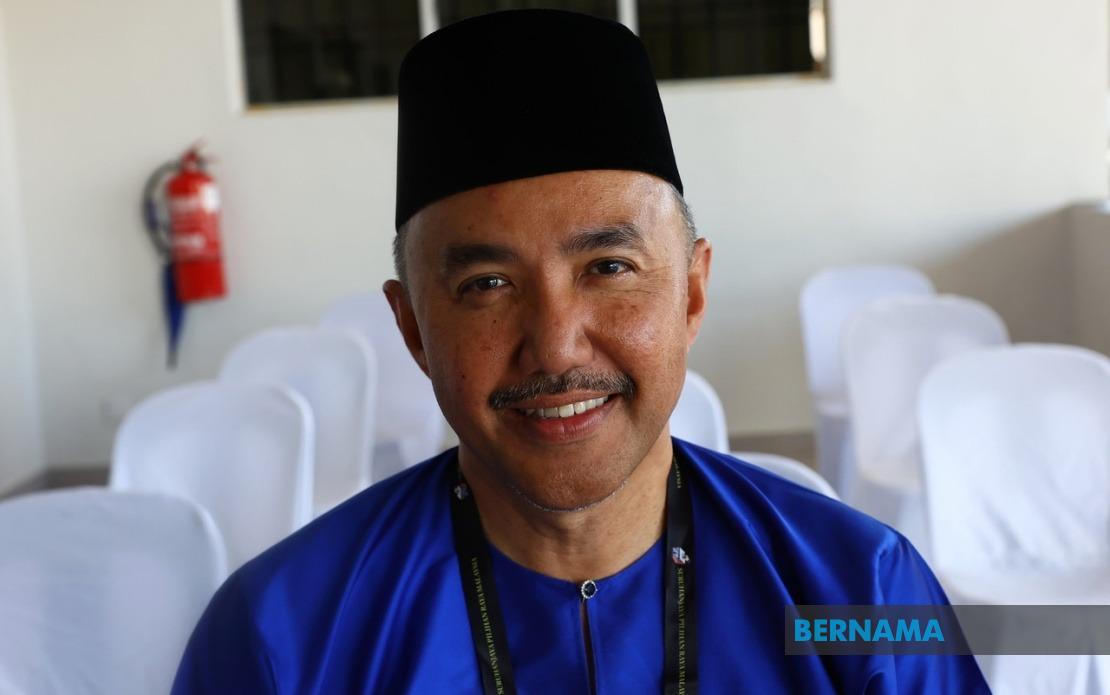
Barisan Nasional faces a critical test of its political standing among rural and semi-rural communities as the 16th Johor state election draws near, with the coalition's leadership expressing confidence in reclaiming strong support from Federal Land Development Authority settlements in the Kulai parliamentary constituency. The coalition's optimism centres on four FELDA villages that collectively represent a significant voting bloc, reflecting broader efforts to rebuild credibility among settler communities whose backing has become increasingly unpredictable in recent electoral cycles.
Datuk Mohd Jafni Md Shukor, the Kulai BN chairman who is simultaneously contesting the Bukit Permai state seat, identified the four settlements as the cornerstone of the coalition's Kulai strategy. FELDA Taib Andak, FELDA Inas, and FELDA Bukit Permai fall within the Bukit Permai state constituency and together account for approximately 7,000 registered voters, while FELDA Bukit Batu sits within its namesake state seat. This concentration of FELDA voters across multiple state constituencies underscores how settlement communities can materially influence outcomes across broader geographical areas, a dynamic that assumes heightened importance in a competitive three-cornered or four-cornered contest.
The foundation of BN's confidence rests substantially on the track record of Menteri Besar Datuk Onn Hafiz Ghazi's administration over the past four years, according to Jafni's assessment. He attributed the coalition's expectations to demonstrable improvements in the state government's approach towards FELDA welfare and community development, marking a strategic pivot from the electoral disappointments of 2018 when settler support eroded significantly. The acknowledgement of the 2018 setback and subsequent recovery in 2022 suggests a measured, realistic appraisal rather than unbridled optimism, reflecting an understanding that FELDA communities have become more discerning voters willing to shift allegiances based on tangible delivery.
Central to BN's narrative is the expansion of targeted assistance programmes aimed specifically at FELDA beneficiaries and their families. The Johor Education Foundation, or YPJ, has emerged as a visible mechanism through which the state government channels educational support to settler children, addressing a longstanding need within communities where income levels remain relatively modest. Such initiatives represent incremental but meaningful improvements in the living standards of FELDA families, particularly regarding access to educational resources that can determine socioeconomic mobility across generations. The emphasis on education aid signals recognition that FELDA voters increasingly prioritise practical benefits affecting their families' future prospects over abstract political narratives.
A second pillar of BN's outreach involves the resolution of protracted administrative grievances that have festered for decades within FELDA communities. Land title disputes represent a particularly acute concern for settlers whose livelihoods and sense of security depend on clear ownership documentation. The state government's claim that 99.9 percent of land ownership applications have now been settled addresses a fundamental point of contention that previously generated substantial political resentment. If substantiated, this achievement represents tangible evidence of governmental responsiveness to settler concerns and contrasts markedly with historical periods when such disputes languished in bureaucratic limbo. For FELDA voters contemplating their electoral choices, resolution of land titles carries symbolic weight beyond its administrative significance, signalling respect for community interests and willingness to address legacy problems.
The broader political context surrounding the Johor election reveals intensifying competition for the rural vote, with multiple political entities contesting constituencies that once represented BN bastions. Jafni faces opposition from Muhammad Aidil Riduan Mohd Yusof of Parti Bersama Malaysia, Mohamad Shafwan Ani representing Pakatan Harapan, and M. Lina Manoh of Perikatan Nasional in the Bukit Permai contest. This four-way contest fragmentises the opposition vote but equally demonstrates the multiplicity of political options now available to voters, including FELDA settlers. Each competing faction will articulate its own narrative regarding rural community welfare and settler interests, forcing BN to justify its stewardship rather than simply assume inherited loyalty.
Jafni's explicit appeal for a second term reflects the electoral mathematics confronting BN across the state, where the coalition must defend existing seats whilst simultaneously targeting opposition-held constituencies. The framing of a second term as necessary to complete development initiatives implicitly acknowledges that four years of governance represents an incomplete project requiring continuation. This narrative approach seeks to position BN as a stabilising force committed to long-term investment in rural constituencies, contrasting with opposition parties characterised as untested alternatives. However, the success of such messaging depends critically on whether FELDA voters perceive the government's development agenda as directly benefiting their communities rather than merely providing window-dressing around an unchanged fundamental relationship.
The three state seats encompassing the Kulai parliamentary constituency—Bukit Permai, Bukit Batu, and Senai—will collectively determine the coalition's success in recapturing parliamentary ground in this region. While Jafni is defending Bukit Permai with its significant FELDA voter concentration, BN's ambitions extend to winning Bukit Batu, which also contains a FELDA settlement. The simultaneous pursuit of multiple seats within a single parliamentary constituency suggests a coordinated campaign strategy targeting incremental gains, though such ambitions risk spreading limited campaign resources across contested terrain. The outcome in Kulai will provide important signals regarding BN's capacity to recover rural support and whether FELDA communities have genuinely shifted back towards the coalition or whether they remain in electoral play.
Polling is scheduled for July 11, with early voting designated for July 7, providing a defined timeline for both BN's campaign activities and voter deliberation. The compressed campaign period typical of Malaysian elections limits opportunities for comprehensive voter engagement, placing a premium on efficient grassroots mobilisation and earned media coverage. For FELDA communities that may experience inconsistent access to campaign messages compared to urban constituencies, the clarity and repetition of BN's development narrative will prove critical to persuading settlers that the coalition merits renewed support. Whether the education assistance programmes, land title resolutions, and welfare initiatives outlined by Jafni resonate sufficiently to overcome potential voter fatigue or attraction to alternative political offerings will only become apparent once election results are tallied.

