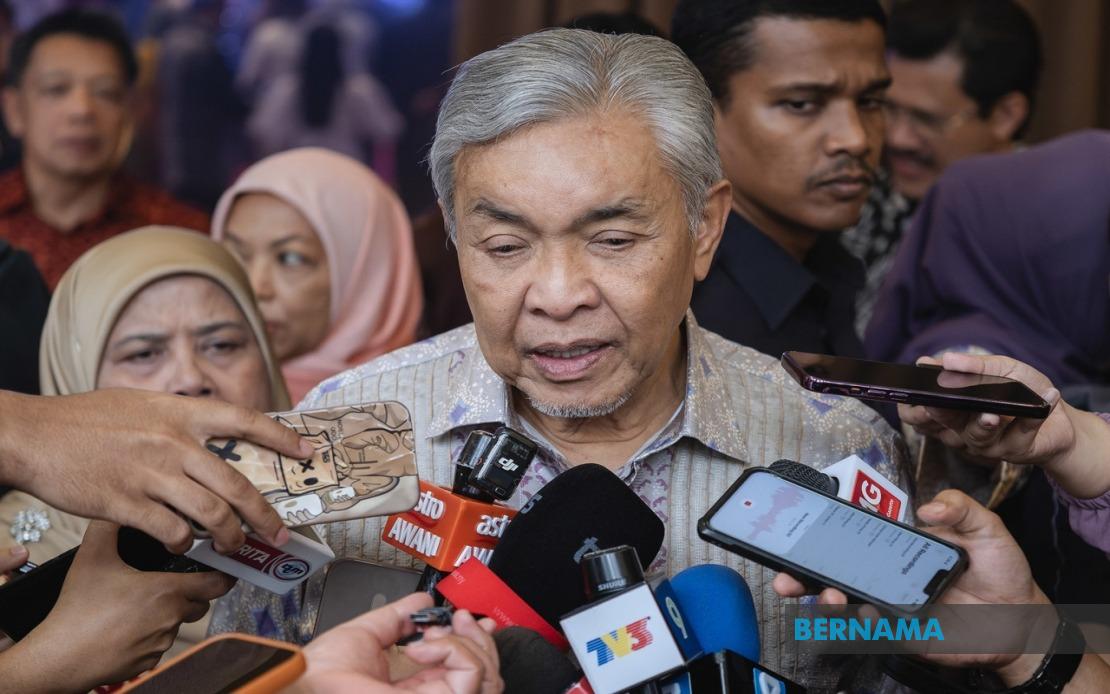
Barisan Nasional has drawn a clear boundary between its political campaign machinery and the state institutions of Negeri Sembilan, pledging to refrain from intervening in affairs related to the royal palace or the Negeri Sembilan Council of Justice and Laws as the coalition prepares for upcoming state elections. Deputy Prime Minister Datuk Seri Dr Ahmad Zahid Hamidi, who doubles as UMNO president, made this declaration following meetings with party leadership focused on electoral strategy for the contest scheduled for August 1.
The explicit assurance underscores BN's determination to navigate a delicate political landscape where institutional sensitivities remain paramount. In Malaysia's constitutional framework, state rulers wield considerable authority over governance and legal matters, particularly through bodies like the DKU, which advises on matters concerning Islamic law, sovereignty, and state protocol. Ahmad Zahid's statement reflects an understanding that any appearance of political pressure on these traditional institutions could undermine public confidence and provoke constitutional concerns.
During his remarks at the Ministry of Rural and Regional Development's service recognition ceremony in Kuala Lumpur, Ahmad Zahid stressed that BN's operational focus must remain strictly confined to party consolidation and electoral mobilisation. He characterised the preservation of institutional independence as a fundamental principle guiding BN's campaign approach, emphasising that legal and constitutional spheres must remain insulated from partisan political calculations.
The coalition's approach to this election marks a significant departure from its strategy during the 15th Negeri Sembilan state election, when BN collaborated extensively with Pakatan Harapan component parties. That collaborative framework has been abandoned entirely for the upcoming contest, compelling BN to recalibrate its organisational machinery and messaging. This shift necessitates renewed emphasis on internal party cohesion as a substitute for the electoral advantages previously gained through multi-coalition arrangements.
Ahmad Zahid identified achieving and maintaining unity across all levels of BN's party hierarchy as the immediate strategic priority. The 36 state seats contested in Negeri Sembilan represent a concentrated electoral battleground where organisational discipline and member commitment directly translate into seat gains. Without the institutional support network that PH collaboration previously provided, BN must rely heavily on its own grassroots mobilisation capacity and the persuasive power of its campaign messaging.
For Malaysian observers tracking coalition dynamics, this development illuminates the broader repositioning occurring within BN's political strategy. The decision to contest independently, rather than through formal alliances with other component parties, reflects confidence in UMNO's capacity to lead and competing calculations about seat distribution and credit-claiming. It also suggests tactical calculations about maximising BN's negotiating leverage in post-election state government formation, where clear mandates prove more advantageous than coalition partnerships.
Negeri Sembilan holds particular significance within Malaysia's electoral landscape because of its swing state characteristics and the influence wielded by its royal institution. The Yamtuan Besar, the state's paramount ruler, commands deep respect within the state's political culture and exercises meaningful discretion over government formation and constitutional matters. Any perceived overreach by BN into spheres traditionally reserved for the palace could backfire electorally by generating sympathy for opposition parties positioned as defenders of institutional integrity.
The timing of Ahmad Zahid's assurance also reflects awareness that pre-election periods can generate heightened sensitivities around institutional boundaries. During campaign seasons, political parties sometimes face temptation to exploit ambiguities in institutional authority or to mobilise grievances involving the palace or legal councils. BN's explicit commitment to remain outside these domains serves both as a safeguard against reputational damage and as a signal of institutional respect that could resonate with voters concerned about governance standards.
The specificity of Ahmad Zahid's commitment to non-interference deserves attention because it suggests prior discussions or consultations between BN leadership and Negeri Sembilan's institutional actors. Political parties do not routinely announce their intention to avoid interfering in legal or royal matters unless specific concerns or precedents have generated pressure to clarify boundaries. The statement implicitly confirms that BN has internalised lessons from previous electoral cycles where institutional friction complicated political campaigns.
As Negeri Sembilan moves toward August 1 polling, the electoral dynamics will unfold against a backdrop of intensified BN organising focused on the party structure rather than coalition-building arrangements. This approach requires BN to present a more cohesive and unified front, potentially strengthening internal discipline but also removing the flexibility that coalition arrangements provide. Campaign effectiveness will depend substantially on BN's capacity to mobilise its traditional supporter base and convince swing voters without external coalition reinforcement.
The election also takes place within the broader context of Malaysian politics trending toward more fragmented coalitions and clearer institutional boundaries between political and constitutional actors. BN's commitment to respecting Negeri Sembilan's royal and legal institutions aligns with this broader pattern, positioning the coalition as a defender of constitutional propriety rather than as an actor eager to consolidate power across all available domains. This repositioning could prove electorally advantageous if voters perceive it as evidence of BN's institutional maturity and respect for constitutional constraints.

