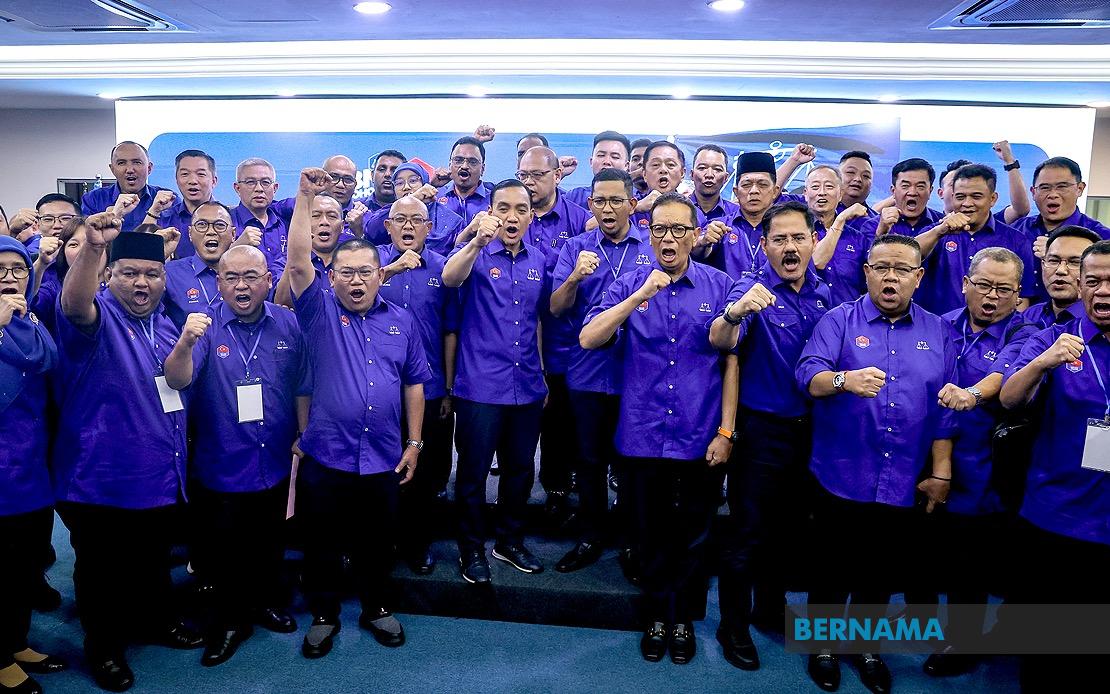
Johor's ruling Barisan Nasional coalition unveiled its full slate of 56 candidates for the state's upcoming election on June 24, presenting a blend of established political heavyweights and newcomers seeking to extend the coalition's grip on Malaysia's second-largest economy by population. The announcement, presided over by Johor BN chairman Datuk Onn Hafiz Ghazi, revealed a carefully calibrated distribution designed to balance continuity with renewal across the peninsular state's legislative constituencies.
The coalition's composition reflects UMNO's dominance within the Barisan framework in Johor, with the party providing 37 of the 56 candidates. The MCA, long a reliable junior partner in the alliance, contributed 15 candidates, while the Malaysian Indian Congress secured four positions. This arrangement underscores the traditional power dynamics within the coalition, where UMNO's superior organisational reach and grassroots presence commands the lion's share of electoral opportunities. The distribution signals confidence in the existing partnership structure, despite periodic tensions between coalition members at the national level.
A significant development emerged in the nomination of former health minister Datuk Seri Dr Adham Baba to contest the Pasir Raja seat, marking his return to state-level politics after a gap of six years. Adham's career trajectory reflects the shifting fortunes of Malaysian politics in recent years—he had previously represented Pasir Raja for two consecutive terms between 2008 and 2018, before transitioning to federal politics as Member of Parliament for Tenggara across two separate mandates. His redeployment to the state assembly represents a recalibration of his political role, potentially positioning him for ministerial responsibilities if the coalition secures a decisive victory. As Tenggara UMNO division chief, Adham maintains considerable organisational influence within the Johor party structure, making his candidacy symbolically important beyond his individual electoral prospects.
Menteri Besar Onn Hafiz Ghazi confirmed his intention to defend the Machap constituency, a seat he captured during the 2022 state election. His decision to contest represents a statement of confidence in his administration's performance and signals continuity in the state government's leadership direction. The choice to field an incumbent Menteri Besar is standard practice across Malaysian states, as the position commands substantial executive authority and symbolic weight that extends beyond individual constituency politics. Onn Hafiz's prominence in the campaign narrative will likely dominate the electoral period, with his government's record on economic development, infrastructure investment, and service delivery becoming central to BN's campaign messaging.
The coalition demonstrated substantial retention of experienced legislators, with nine of ten former executive councillors who contested in 2022 returning to defend their constituencies. This high rate of renomination reflects satisfaction with the performance of the outgoing administration and suggests minimal internal upheaval or political realignment within the coalition's state structure. The sole exception was Khairin-Nisa Ismail @ Md On, the former State Women, Family and Community Development Committee chairman, who was not renominated for the Serom seat. Her exclusion may indicate either performance-related considerations or demographic and electoral calculations regarding the particular constituency's voting patterns and candidate selection priorities.
A notable transition occurred in Benut, where veteran politician Datuk Seri Hasni Mohammad, the previous Menteri Besar and incumbent assemblyman, was excluded from the candidate list. His replacement by UMNO working secretary Datuk Mohd Sumali Reduan suggests a deliberate generational shift within the coalition's leadership pipeline. Hasni Mohammad's departure from electoral politics—potentially reflecting his advanced political tenure or internal coalition dynamics—creates space for younger cadres to advance, though his experience and networks will likely remain valuable to the party machinery during the campaign period.
In addressing the assembled candidates, Onn Hafiz framed their nominations as responsibilities rather than rewards, emphasising that the honour carried obligations to serve with integrity and conduct campaigns that reflected the values Johor residents held dear. This rhetorical framing serves multiple purposes: it establishes ethical standards for campaign conduct, attempts to inoculate the coalition against accusations of money politics or unethical practices, and reminds candidates that their individual behaviour directly impacts the coalition's broader image and electoral prospects. The emphasis on courteous and prudent campaigning reflects persistent concerns within Malaysian politics about electoral malpractice and the erosion of institutional norms during competitive contests.
The candidate selection process itself carried the implicit approval of Barisan Nasional chairman Datuk Seri Dr Ahmad Zahid Hamidi, according to Onn Hafiz's statement. This invocation of national party leadership validation serves to insulate state-level selection decisions from internal criticism and demonstrates that the Johor nominations received scrutiny and endorsement from the coalition's highest levels. The centralisation of legitimacy in this manner reflects UMNO's hierarchical decision-making culture and ensures that national party interests and strategic considerations inform even ostensibly local candidate selection processes.
For Malaysian political observers, the Johor state election represents a crucial test of Barisan Nasional's capacity to maintain electoral dominance in a state where it has governed continuously since independence. The coalition's candidate slate, balancing experience with fresh blood while emphasising ethical campaigning, suggests confidence in its competitive position. However, Johor's political landscape has grown more fragmented in recent election cycles, with opposition parties mounting increasingly sophisticated challenges in selected constituencies. The composition and messaging of BN's candidate lineup will require evaluation against the quality of opposition contenders and broader shifts in voter sentiment regarding economic performance, development priorities, and governance standards.
The retention of most incumbent legislators provides the coalition with built-in advantages in name recognition and incumbency benefits, though these can prove double-edged swords if voters hold assemblypersons responsible for service delivery failures or unresolved local grievances. The inclusion of former federal ministers and senior party figures suggests BN's intention to deploy high-profile campaigners to anchor efforts in key constituencies and generate momentum in marginal areas. Whether this carefully constructed slate can translate organisational advantages and political seniority into a convincing electoral mandate will become evident when Johor voters cast their ballots.

