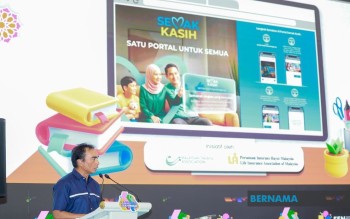
Bank Negara Malaysia has taken a significant step toward improving financial security for Malaysian families by launching the 'Semak Kasih' portal, a digital platform designed to help beneficiaries identify and claim unclaimed insurance policies and takaful certificates. The initiative was announced at the Terengganu Financial Literacy Carnival, reflecting growing recognition that many Malaysian families remain unaware of life protection coverage their relatives have arranged for them.
The central bank's move addresses a pressing gap in the financial safety net that exists across the nation. According to joint estimates from the Life Insurance Association of Malaysia and the Malaysian Takaful Association, approximately 50,000 insurance policies and takaful certificates involving death benefits remain unclaimed by their entitled beneficiaries. This represents a substantial amount of financial protection that families could access during their most vulnerable moments, yet remains locked away simply due to lack of awareness. BNM Deputy Governor Adnan Zaylani Mohamad Zahid emphasised that the new portal democratises access to this information, making it straightforward for beneficiaries to verify coverage and initiate the claims process without navigating complex procedures or bureaucratic hurdles.
The practical implications of unclaimed benefits extend far beyond mere numbers on a spreadsheet. Insurance and takaful products exist fundamentally to provide families with financial lifelines when they face catastrophic events—unexpected medical emergencies, house fires, vehicular accidents, or the sudden loss of a breadwinner. When claims go unpaid simply because beneficiaries lack knowledge of their existence, families forgo essential resources at precisely the moments when they need them most. For Malaysian households already grappling with rising living costs and economic uncertainties, the difference between claimed and unclaimed benefits can determine whether families maintain stability or spiral into financial crisis.
The development of the portal reflects collaborative efforts between Bank Negara Malaysia, insurance providers, and takaful operators who have previously attempted to contact beneficiaries through conventional channels. Companies have sent letters and deployed agents to identify and reach entitled parties, yet these efforts have proven insufficient to close the awareness gap. The digital platform represents an evolution in strategy—rather than waiting for beneficiaries to be found, the portal invites families to proactively search for coverage they may not know exists. This shift from a push model to a pull model recognises the reality that many beneficiaries simply do not know where to begin looking or that such benefits might exist in their family circumstances.
For Malaysian and Southeast Asian readers, the Semak Kasih initiative carries broader significance within the context of financial inclusion and consumer protection. Many families in the region maintain informal or incomplete knowledge of their relatives' financial arrangements, particularly in communities where financial matters are discussed infrequently or where language barriers exist. The portal's development as a user-centric digital tool represents an attempt to bridge these gaps through accessible technology. That the launch occurred specifically in Terengganu underscores BNM's commitment to ensuring that financial services literacy extends beyond urban centres and reaches all Malaysian states.
Beyond the immediate purpose of claims identification, the portal launch forms part of a broader BNM strategy to strengthen financial resilience across society. Deputy Governor Adnan Zaylani contextualised the initiative within a wider agenda encompassing microfinance support for small enterprises, specialised financing programmes responding to international crises, and comprehensive financial education initiatives. The central bank has allocated RM5 billion under the SME Stabilisation Relief Facility to support businesses affected by the West Asia conflict, offering working capital financing up to RM750,000. Simultaneously, the iTekad initiative has already benefited more than 14,000 participants nationwide, including approximately 600 in Terengganu, demonstrating tangible improvements in income and living standards.
The launch of the portal coincides with concerning behavioural patterns among Malaysian consumers regarding digital finance. Research data presented at the carnival reveals that approximately 37 per cent of Malaysians engage in impulsive online shopping, while 26 per cent acknowledge carrying unsustainable debt burdens. These figures highlight a population increasingly exposed to financial risks through digitalisation while potentially lacking the literacy to navigate these risks prudently. The Semak Kasih portal itself exemplifies the double-edged nature of financial digitalisation—it opens pathways to benefits while simultaneously requiring users to develop competence with digital tools and understand insurance concepts.
Addressing these behavioural and knowledge gaps, BNM has committed to expanding financial education from early childhood through adulthood. The Financial Education Forum initiative aims to develop an inclusive, accessible website serving as a comprehensive financial education hub, with particular attention to reaching persons with disabilities. Collaborations with institutions like Universiti Malaysia Terengganu through the FEN Proaktif 2.0 Programme seek to equip students with strong financial management foundations before they enter the workforce. These interventions recognise that sustainable financial security depends not merely on access to products and benefits, but on individuals developing the knowledge and discipline to make sound decisions throughout their financial lives.
Deputy Governor Adnan Zaylani articulated a philosophy of personal financial empowerment that extends beyond any single policy intervention. While global economic conditions and technological disruption remain beyond individual control, he noted, the daily financial decisions made by Malaysians shape their long-term security. The emphasis on early and consistent savings practices reflects evidence that compound returns over time generate substantially greater wealth than ad-hoc or reactive financial management. For younger Malaysians and future generations, this message carries particular weight given economic headwinds and employment uncertainty they face.
The broader context for these initiatives is the escalating cost of living across Malaysia and the region, which has intensified household financial pressures and made robust insurance and takaful coverage increasingly vital. Many families operate with minimal financial buffers, making unexpected events potentially catastrophic. When insurance protection exists but remains unclaimed, the failure represents a systemic breakdown in financial security rather than individual oversight. By simplifying access to benefit information, the Semak Kasih portal removes bureaucratic barriers that prevent entitled families from accessing resources intended specifically to protect them during hardship.
Implementation and effectiveness of the portal will likely determine its long-term impact on the unclaimed benefits landscape. BNM's success depends not only on the platform's technical functionality but on sustained awareness campaigns ensuring Malaysians know the portal exists and understand how to use it. The presence at the launch of executives from both LIAM and the Malaysian Takaful Association signals commitment from private sector providers to cooperate with the claims process once beneficiaries identify coverage. However, translating awareness into actual claims requires that consumers find the portal intuitive and that insurance and takaful companies respond promptly to inquiries and claims filed through it.
Looking forward, the portal represents a model that Southeast Asian regulators and financial institutions elsewhere might adapt. Many countries across the region grapple with similar challenges of unclaimed benefits, unbanked populations, and financial literacy deficits. Malaysia's experience with Semak Kasih could inform regional approaches to leveraging digitalisation for consumer protection and financial inclusion. The initiative also signals that while financial institutions must innovate and modernise, they simultaneously bear responsibility for ensuring that technological advances serve ordinary families and don't create additional barriers to accessing fundamental protections.

