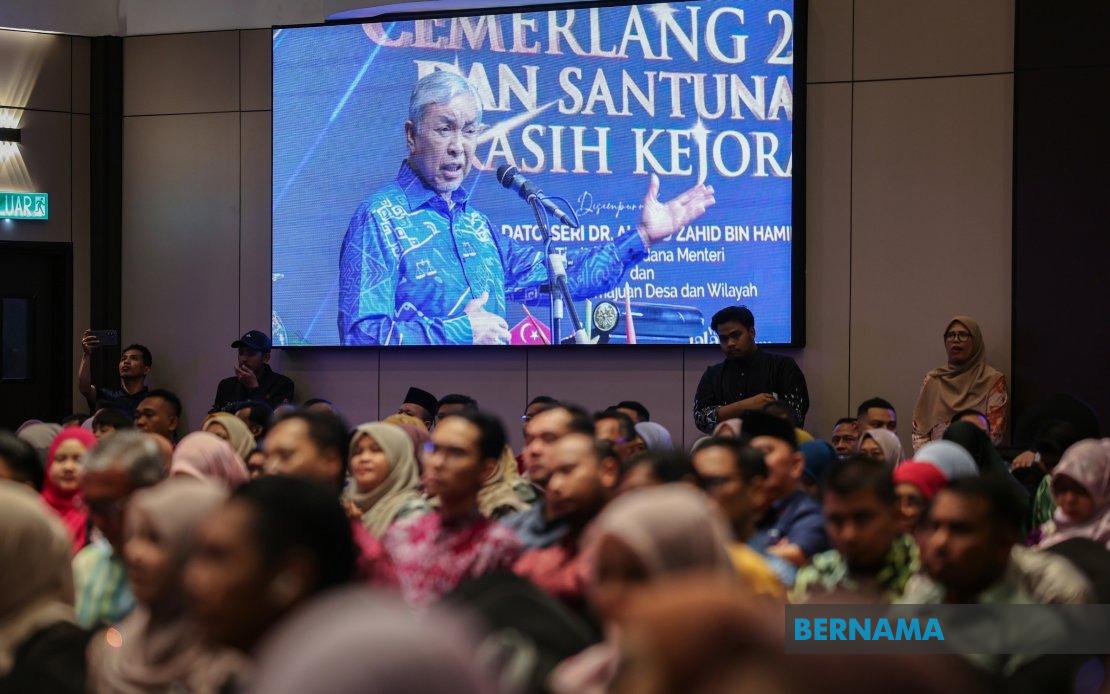
Barisan Nasional (BN) is mounting a vigorous campaign effort ahead of the Johor state election, according to coalition chairman Datuk Seri Dr Ahmad Zahid Hamidi, who dismissed recent commentary suggesting the party machinery had lost momentum. Speaking in Kota Tinggi on July 2, Zahid emphasized that perceptions of a subdued campaign do not align with observable realities on the ground, where he said BN representatives are actively engaging voters across the state's constituencies.
The characterization of campaign intensity, Zahid explained, ultimately reflects the political perspective of whoever is making the assessment rather than any objective measure of organizational activity. He acknowledged that rival coalitions maintain their own viewpoints regarding BN's performance, but stressed that such external commentary does not undermine the coalition's confidence in its efforts. The coalition's focus remains on translating its campaign work into electoral success when voters go to the polls on July 11.
Zahid emphasized BN's appreciation for endorsements and assistance from various quarters, suggesting that momentum generated throughout the campaign period should culminate in strong electoral returns for the coalition's candidates across all 56 contested seats. The upcoming vote is being framed as a referendum on the coalition's stewardship and a mandate for continued governance in the state, with BN targeting a decisive outcome that would strengthen its parliamentary position and policy-making authority.
One significant narrative that has emerged during the campaign period concerns the impact of federal-level cooperation between BN and Pakatan Harapan (PH) through the Unity Government framework. Critics have suggested that this alliance at the national level might confuse traditional BN voters in Johor, potentially fragmenting the coalition's base. However, Zahid rejected this concern, pointing out that Johor's political configuration differs from the federal arrangement, as the state administration was established independently before the national Unity Government came into being.
The Deputy Prime Minister argued that cooperation between state and federal governments, particularly among members of the federal Unity Government, operates on a professional and constructive basis that should not generate voter anxiety. The existence of collaborative frameworks at different levels of governance, according to his assessment, does not create inherent contradictions or policy conflicts that would disadvantage either BN or the state. This explanation seeks to address concerns among traditional BN supporters who might view the party's partnership with PH as inconsistent with historical electoral competition.
Zahid highlighted the economic performance of the Johor state government under Menteri Besar Datuk Onn Hafiz Ghazi's administration as a tangible achievement worthy of electoral endorsement. The state government recorded revenue of RM2.26 billion in the previous year, Zahid noted, positioning Johor as the highest revenue-generating state among Peninsular Malaysian jurisdictions. This financial strength, he suggested, demonstrates effective administration and justifies BN's campaign message that voters should return the coalition to strengthen its mandate for continuing development initiatives.
The coalition's development agenda, as outlined in its campaign manifesto, encompasses a five-year program that builds upon achievements already accomplished under current leadership. Zahid framed the election as an opportunity for voters to authorize BN to pursue ambitious projects and policy initiatives that require sustained governmental authority. The emphasis on development outcomes reflects BN's strategy of directing voter attention toward concrete governance records rather than engaging in the rhetorical dimensions of electoral competition.
A noteworthy dynamic within the broader electoral landscape involves statements from Perikatan Nasional's leadership, particularly PAS president Tan Sri Abdul Hadi Awang, who has called for voters to decisively reject PH across all contexts, including scenarios where straight fights pit BN against PH candidates without Perikatan participation. Zahid indicated that BN maintains a professional stance toward such competition, focusing on the merits of its own candidates rather than engaging in the combative rhetoric that characterizes PAS's approach. This distinction in campaign tone may reflect BN's confidence in its electoral positioning as well as its preference for maintaining coalition unity at the federal level.
The Johor state election field encompasses considerable fragmentation across the political spectrum, with multiple coalitions and independent candidates contesting the 56 seats. BN and PH each field full slates of 56 candidates, while Perikatan Nasional presents 33 candidates, Bersama puts forward 15, and smaller parties including MUDA (four), Parti Orang Asli Malaysia or Asli (one), and Parti Sosialis Malaysia (one) also participate. Additionally, six independent candidates are running, creating a complex electoral environment where vote fragmentation could prove decisive in numerous constituencies.
For Malaysian observers and political analysts, the Johor election carries significance beyond state-level governance considerations. As the first major electoral test since the formation of the federal Unity Government, the results will provide important indicators regarding voter sentiment toward the BN-PH collaboration at the national level. The outcome will also reveal whether rural and semi-rural constituencies that traditionally support BN remain loyal to the coalition despite its formal partnership with PH at federal level, a question that carries implications for stability within the government coalition.
Early voting is scheduled for July 7, allowing civil servants and other eligible voters to cast ballots before the main polling date. This staged voting process provides an initial indication of turnout patterns and voter sentiment that may inform campaign adjustments during the final campaign period. The election outcomes will shape not only Johor's state administration for the next term but potentially influence calculations regarding the durability and trajectory of the federal Unity Government framework that has defined Malaysian politics since 2020.

