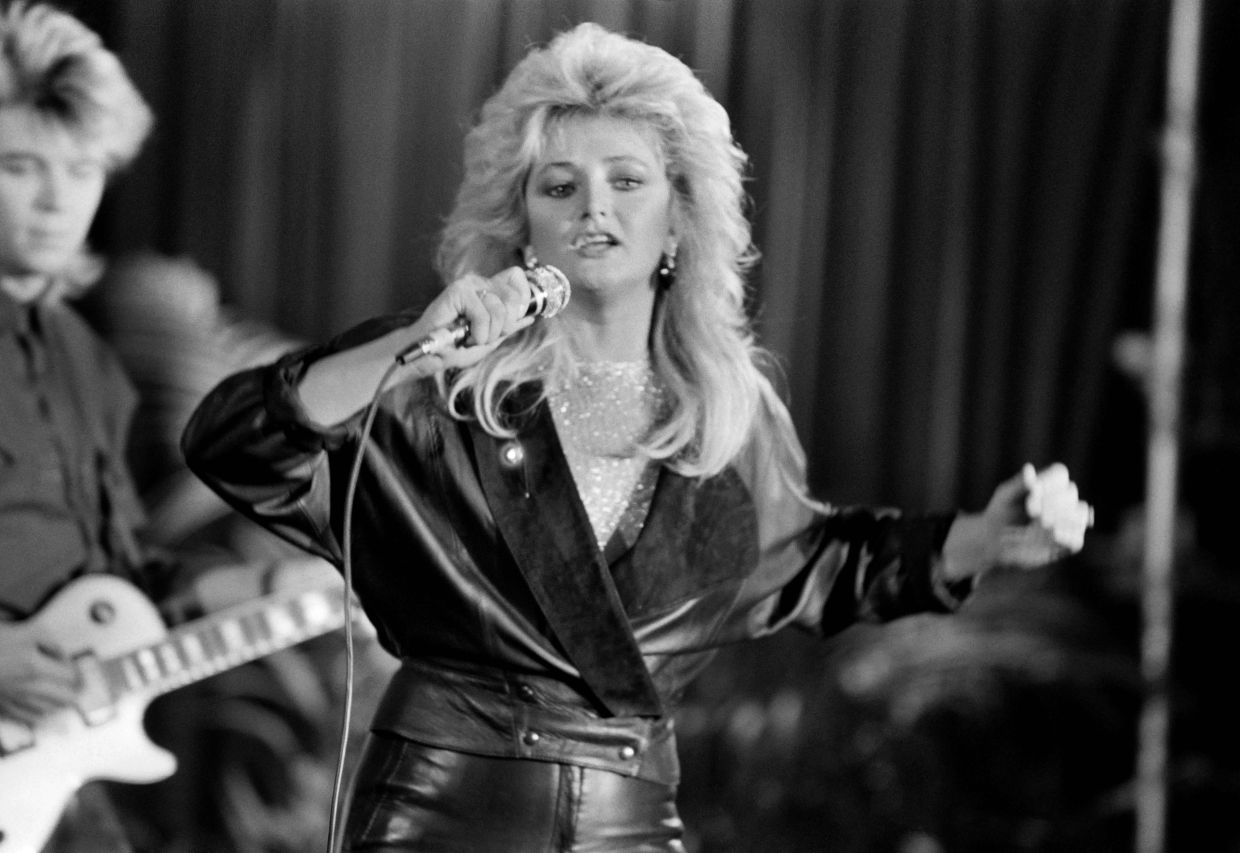
Bonnie Tyler, the distinctive-voiced Welsh pop musician whose 1983 power ballad 'Total Eclipse of the Heart' became an enduring cultural phenomenon and viral sensation across multiple generations, has died at 75. She passed away unexpectedly in a hospital in Portugal on Thursday, where she had been undergoing treatment for an illness. The artist had been hospitalised in May in Faro, the coastal city where she maintained a home, after requiring emergency intestinal surgery and subsequently entering an induced coma.
Tyler's death marks the end of a remarkable career that transcended the typical arc of pop stardom. Though she achieved success across multiple decades and genres, her artistic legacy remains inextricably bound to a single composition that has proven virtually immortal. 'Total Eclipse of the Heart' spent four weeks at number one on the charts and generated more than one billion streams, with its accompanying music video accumulating over one billion views. The track's resurgence during the 2017 and 2024 solar eclipses demonstrated how a song can achieve renewed cultural relevance through circumstances entirely beyond an artist's control, introducing her work to audiences born decades after its original release.
The impact of 'Total Eclipse of the Heart' extended far beyond chart performance. When Stereogum critically reassessed the song in 2020, the music publication described it as an 'extinction-level event rendered in musical form', praising its operatic theatricality and emotional intensity. The composition arrived at a moment when popular music was embracing maximum spectacle and cinematic ambition, featuring contributions from E Street Band members Roy Bittan on piano and Max Weinberg on drums alongside producer Jim Steinman's signature wall-of-sound production approach. The accompanying video, filmed in a former Surrey asylum with a deliberately gothic aesthetic, became a fixture on MTV during its early years and spawned countless homages and parodies that only amplified its cultural penetration.
Tyler's achievement earned her three Grammy nominations and recognition from the British music establishment, including an MBE awarded by Queen Elizabeth II in 2023 for her contributions to music. She represented the United Kingdom at the Eurovision Song Contest in 2013, finishing in 19th position with 'Believe in Me', a country-influenced ballad that showcased her willingness to explore musical territory beyond her signature bombastic style. This career trajectory revealed an artist willing to experiment with different genres rather than remaining artistically calcified around past success.
Born as Gaynor Hopkins in 1948, Tyler emerged from modest circumstances in Skewen, Wales, a small community situated seven miles outside Swansea. Her father worked as a coal miner, and her childhood home in public housing featured an outside toilet, circumstances far removed from the glittering stages she would eventually command. She was raised alongside three sisters and two brothers in this working-class Welsh environment. Her early musical influences ranged widely, from the Beatles to soul and blues artists including Janis Joplin, Nina Simone, Tina Turner, Wilson Pickett and Otis Redding. She has described singing into a hairbrush for extended periods as a child, attempting to replicate the vocal qualities of her favourite performers, a practice that proved formative in developing her artistic sensibility.
A pivotal moment arrived in 1976 when throat surgery to remove vocal nodules unexpectedly produced the distinctive husky tone that became her signature characteristic. Rather than diminishing her capabilities, the procedure paradoxically enhanced her artistic distinctiveness. Following her discovery by talent scout Roger Bell, who facilitated her transition to London for professional demo recordings, she adopted the stage name Bonnie Tyler under RCA Records' sponsorship. Her 1977 debut album 'The World Starts Tonight' produced her initial chart success with 'Lost in France' and earned her consideration for a breakthrough artist award at the BRIT Awards, establishing her as an emerging talent worthy of industry attention.
Despite achieving a number three hit with 'It's a Heartache' in 1978, Tyler's early career momentum subsequently plateaued, forcing her to reassess her artistic direction. A transformative moment occurred when she observed Meat Loaf performing 'Bat Out of Hell' on BBC television. Impressed by the theatrical grandeur and emotional commitment evident in that performance, she determined that she should collaborate with the song's architect, producer and songwriter Jim Steinman. This professional decision proved consequential, as Steinman had already composed 'Total Eclipse of the Heart', a composition designed for his unrealised musical adaptation of the classic vampire narrative 'Nosferatu'.
Steiman's original inspiration for the song's most famous lyrical hook, 'Turn around, bright eyes', derived from his 1969 student musical 'The Dream Engine', composed while attending Amherst College in Massachusetts. He introduced Tyler to the composition and presented it as her debut single for her fifth studio album, 'Faster Than the Speed of Night'. According to Tyler's 2023 interview with The Guardian, Steinman's production methodology involved recording multiple vocal takes over orchestral arrangements before selecting the optimal version and subsequently augmenting it with additional layers of instrumentation, a technique reminiscent of Phil Spector's legendary maximalist approach to record production.
The resulting composition functioned as a meditation on romantic loss and emotional devastation, its lyrics chronicling the descent from passion into darkness. The accompanying video, directed with deliberately theatrical sensibility in a genuinely unsettling gothic setting, featured such surreal visual elements as suspended doves, dancing ninjas, fencers, gymnasts, and wind machines creating an overall aesthetic of haunting excess. The production's gothic horror atmosphere reportedly unnerved the guard dogs on the asylum grounds so thoroughly that they refused to enter the basement rooms where electroconvulsive treatment had historically been administered to psychiatric patients.
While 'Total Eclipse of the Heart' and its parent album earned Grammy nominations, Tyler failed to achieve similar commercial heights with subsequent releases. However, she maintained professional visibility through soundtrack contributions including 'Holding Out for a Hero' from the 1984 film 'Footloose', demonstrating her capacity to craft compelling compositions for cinematic contexts. Her 2019 album 'Between the Earth and the Stars' featured collaborative duets with established British artists Rod Stewart and Cliff Richard alongside Status Quo's Francis Rossi, and she concluded that year by performing at a Vatican Christmas concert in the presence of Pope Francis, an unusual platform that underscored her transcendent status within popular music history.
Tyler's experimental foray into country music in 2013 produced the Nashville-recorded album 'Rocks and Honey', which included the composition 'What You Need from Me' featuring American country artist Vince Gill. This artistic diversification revealed an performer fundamentally uninterested in calcifying her artistic practice around established formulas. The resulting Eurovision entry 'Believe in Me', composed collaboratively by American songwriter Desmond Child and British writers Lauren Christy and Christopher Braide, allowed her to represent her homeland at the contest with a piece that reflected her matured artistic sensibility while retaining the emotional directness characteristic of her most successful work.
Tyler's cultural significance extends beyond conventional measures of commercial success or chart performance. 'Total Eclipse of the Heart' has achieved a peculiar species of immortality through its integration into the global cultural consciousness, its unexpected resurgence during genuine astronomical events transforming it into a composition whose relevance seems to transcend temporal boundaries. The song's repeated appearances in films, television programmes and cover versions by artists ranging from Westlife to One Direction ensured its constant circulation throughout popular media, introducing it perpetually to audiences unaware of its original 1980s context. For Malaysian audiences and Southeast Asian readers more broadly, Tyler's journey from working-class Welsh origins to international celebrity represents an archetypal narrative of artistic ambition and creative persistence rewarded across decades, a legacy that extends substantially beyond the single composition for which she achieved greatest recognition.

