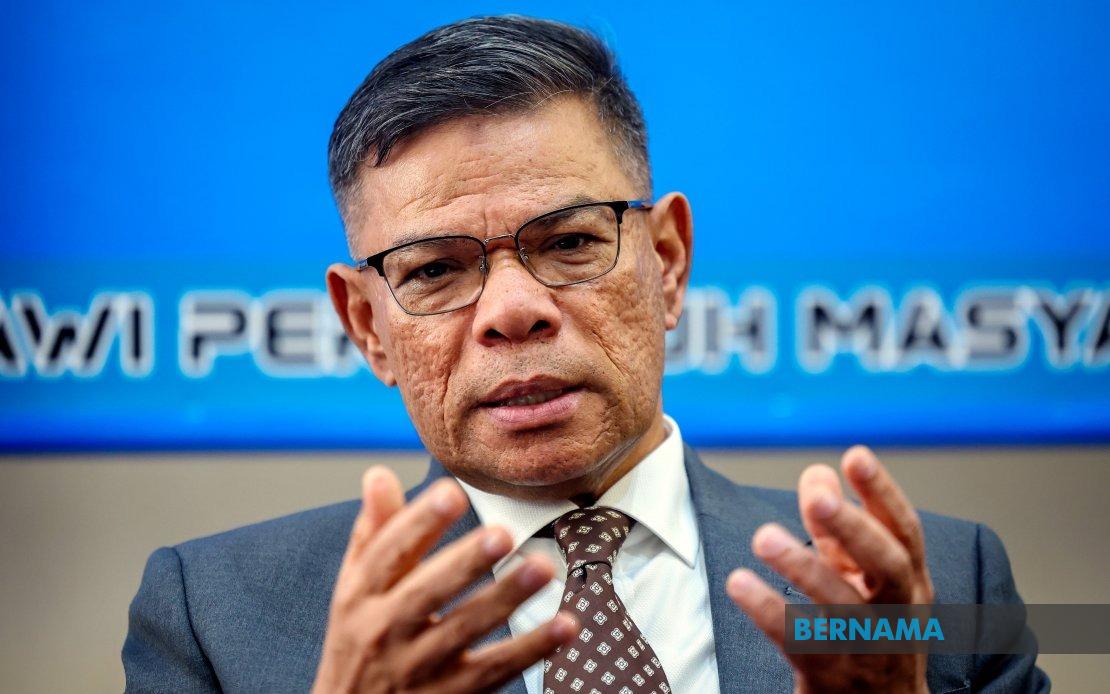
Authorities managing the Malaysia-Singapore border crossings reported unimpeded traffic flow on polling day for the 16th Johor state election, with Home Minister Datuk Seri Saifuddin Nasution Ismail confirming that operations at the two primary entry points remained orderly and efficient throughout the morning. The sultan Iskandar Building (BSI) and Sultan Abu Bakar Complex (KSAB) processed steady streams of returning voters without significant delays, according to updates from the Malaysian Border Control and Protection Agency (AKPS), which oversees traffic management at these critical cross-border corridors.
The AKPS had anticipated substantial congestion given that approximately 2.6 million eligible voters were expected to cast their ballots across Johor's 56 state assembly constituencies. To accommodate this anticipated surge, the agency had implemented a comprehensive traffic management strategy in the days preceding the election and extended it through polling day itself. The preparations reflected recognition that cross-border voter movement, particularly from Singapore's significant Malaysian population, could create bottlenecks at these essential transit points if not carefully coordinated.
Enhancing capacity at both crossing points, AKPS activated special dedicated lanes that operated continuously from midnight through 6 pm on election day. The agency also deployed hybrid counters—processing stations capable of handling both routine immigration checks and expedited passenger flows—while establishing contra-flow arrangements that reversed normal traffic patterns during peak periods. These measures represented a departure from standard operations, designed specifically to prioritise the movement of voters eager to participate in the electoral process. The special lanes had commenced operations the previous day and were maintained for the full 24-hour period leading up to polling.
Home Minister Saifuddin Nasution acknowledged the coordination efforts in a social media post accompanied by video documentation of both border crossing points. The footage provided visual confirmation of orderly queues and functioning check-in procedures, lending credibility to assertions that the border management team had successfully executed their operational plan. His public recognition of the AKPS team's performance underscored the government's investment in ensuring that logistical considerations did not impede citizens' ability to exercise their democratic rights, a particularly significant consideration for voters resident in Singapore who must traverse international borders to participate in Malaysian elections.
The Johor state election represented a substantial electoral undertaking, with 172 candidates competing across the 56 assembly seats that comprise the state legislature. Electoral authorities had prepared 1,076 polling centres equipped with 4,889 ballot channels—individual voting booths—to process voters efficiently. The Election Commission had established a target voter turnout of approximately 70 per cent, suggesting expectations of robust public participation in what constitutes one of Malaysia's most electorally significant states. The simultaneous opening of all voting channels at 8 am reflected careful coordination to prevent queuing and bottlenecks within polling facilities.
The election schedule had been structured to permit vote counting to commence immediately upon poll closure, with the Election Commission projecting that comprehensive results would be available by 10 pm. This accelerated timeline depended partly on smooth voter flow throughout the day, making the border crossing operations integral to the broader electoral administration. Delays at Singapore-Malaysia entry points could have compressed the available voting window and created congestion at polling facilities, potentially depressing voter participation or extending the counting process.
For Malaysian voters residing in Singapore—a substantial demographic given the city-state's role as a regional financial and business hub—cross-border participation in domestic elections requires advance planning and travel coordination. Many Malaysians work and maintain residency in Singapore while retaining electoral rights in their home states. The expansion of border crossing capacity, therefore, represented direct government acknowledgment of this transnational voter population and their practical participation challenges. The successful management of July 11 traffic flows suggested that authorities had calibrated their approach appropriately to this demographic reality.
The smooth operations at both crossing points also carried broader implications for Malaysia-Singapore relations and cross-border commerce. These entry points process not only voters but also daily commuter traffic, business travellers, and commercial freight moving between the two nations. Successfully managing election-day surges while maintaining overall border security and immigration protocols demonstrated the technical and organisational capacity of Malaysian border management agencies. Such operational competence contributes to the region's reputation for efficient infrastructure and reliable governance.
Singapore's Malaysian diaspora constitutes a particularly engaged electoral constituency, with voting participation rates often exceeding those of domestically resident populations. The geographic proximity of Singapore to Johor—separated merely by the Straits of Johor—makes cross-border voter participation logistically feasible for those willing to travel on election day. The investment by Malaysian authorities in facilitating this cross-border voting through expanded border capacity reflects democratic principles of maximising voter accessibility and recognising the electoral rights of citizens regardless of where they reside within the national diaspora.
The coordination between AKPS and other government agencies involved in election administration highlighted the multi-institutional nature of modern electoral management in Malaysia. Border security, traffic management, voter identification, and polling administration all required synchronised effort to achieve the outcome of efficient, unimpeded polling day operations. The transparency with which authorities communicated about these efforts—through the Home Minister's public updates and video documentation—also suggested a government comfortable publicising its operational success and willing to credit the frontline personnel executing these arrangements.

