Boustead Holdings Bhd is charting an ambitious growth trajectory that will fundamentally reshape the century-old Malaysian conglomerate, targeting a near-threefold increase in group revenue to RM30 billion within five years. The Georgetown-based company, which currently generates approximately RM12 billion in annual revenue, is repositioning itself as a cornerstone enterprise in the country's emerging defence industrial ecosystem. This strategic pivot marks a significant departure from the company's historical roots in agriculture, warehousing and commodity trading, reflecting both a broader national imperative and shareholder expectations for transformation.
The transformation represents a deliberate alignment with Malaysia's National Defence Industry Policy, which was formally launched in January this year. According to Datuk Dr Ahmad Sabirin Arshad, group managing director of Boustead Holdings, the company has been tasked with spearheading the development of a robust domestic defence manufacturing capability. This mandate extends beyond manufacturing itself; the company is expected to cultivate an entire ecosystem of local suppliers and technology partners. The vision encompasses creating at least 400 vendors within Malaysia's defence industry supply chain, effectively establishing a new industrial segment that can generate long-term economic value and employment opportunities for the nation.
A cornerstone of Boustead's strategy is the commitment to achieving a minimum 30 per cent local content threshold in defence industry technology products by 2030. This target is not merely a commercial benchmark but reflects a deliberate policy choice to build genuine domestic technological capacity rather than relying solely on foreign procurement. The emphasis on local content is particularly significant for Southeast Asian policymakers watching Malaysia's approach, as it suggests a practical methodology for transitioning defence procurement from pure imports to domestically-supported production. By wedding foreign technology transfer with Malaysian manufacturing expertise, the company aims to balance military capability development with industrial advancement.
Boustead has been assigned leadership responsibility for four flagship national defence projects that underscore the breadth of this industrial ambition. These initiatives encompass satellite development capabilities, the production of rolling chassis for armoured vehicles, light weapons manufacturing, and the creation of a Combat Management System. Each project represents a different technological tier, from indigenous space capabilities to advanced electronics integration, demonstrating that Malaysia's defence industrial vision extends across multiple domains. For regional observers, this portfolio suggests that Malaysia is attempting to build comprehensive defence self-sufficiency rather than focusing narrowly on any single capability area.
Beyond pure defence manufacturing, Boustead is simultaneously undertaking a massive urban development project that carries strategic significance for Malaysia's capital city. The company has been mandated to lead development of the Batu Cantonment strategic development project in partnership with the Armed Forces Fund Board. This initiative requires the relocation of nine existing military camps, freeing substantial urban land within Kuala Lumpur for conversion into a modern commercial hub. The project exemplifies how defence industry transformation can intersect with urban regeneration, creating valuable real estate while enhancing the operational efficiency of Malaysia's military infrastructure. For property investors and urban planners, this represents one of the largest coordinated military-to-civilian land conversions planned in Malaysia's recent history.
The company's growth strategy is not monolithic but rather diversified across complementary business domains. While defence manufacturing and major infrastructure projects form the strategic core, Boustead intends to leverage and strengthen existing operations in tourism and insurance sectors. This diversification approach provides both financial stability and operational flexibility. The tourism subsidiaries, including Boustead Hotels and Resorts operations, generate steady revenue streams that can cushion the company against cyclical variations in defence spending, while insurance operations offer risk management capabilities and financial services synergies. This multi-sector positioning distinguishes Boustead from pure-play defence contractors and suggests a more resilient long-term business model.
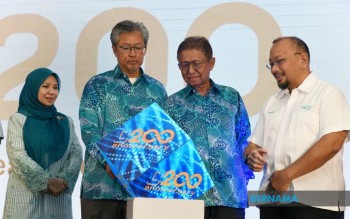
The company's transformation occurs against the backdrop of Boustead's bicentennial milestone, which the conglomerate will celebrate in 2028. This 200-year journey—from colonial-era agricultural commodity trader to modern defence industrial champion—carries symbolic weight in Malaysia's national narrative. General (Rtd) Tan Sri Abdul Aziz Zainal, serving as chairman, emphasised that the transformation must be executed with rigorous accountability and governance standards to honour the company's historical legacy while securing returns for stakeholders, particularly contributors and members of the Malaysian Armed Forces. This emphasis on fiduciary responsibility is particularly important given that the Armed Forces Fund Board maintains substantial interests in the company, making defence and military personnel welfare considerations integral to corporate strategy.
International partnerships represent a critical enabler of Boustead's defence industry ambitions. The company plans to pursue strategic alliances with credible international defence partners to facilitate technology transfer and capability development. This approach acknowledges a fundamental reality: Malaysia lacks the indigenous technological base to develop advanced defence systems entirely from first principles. By carefully selecting international partners and structuring technology transfer agreements that emphasise local capacity building, Boustead seeks to overcome this constraint while maintaining strategic autonomy. The selection criteria for international partners will prove crucial; partnerships structured around genuine knowledge transfer and local production will yield more sustainable industrial development than arrangements focused solely on assembly operations.
The revenue growth target of RM30 billion represents an aggressive but arguably achievable goal within Malaysia's current strategic context. Current global defence spending trends, regional security dynamics, and Malaysia's own modernisation requirements create favourable demand conditions. However, realising this target will require not only successful execution of the four major national projects but also the gradual maturation of the 400-vendor defence supply chain. Supply chain development typically proceeds slowly as smaller companies acquire necessary certifications, quality standards, and technological capabilities. Boustead's ability to mentor and support this supplier ecosystem will largely determine whether the RM30 billion target becomes reality or remains aspirational.
For Malaysian investors and stakeholders, Boustead's transformation signals confidence in the country's commitment to building genuine defence industrial capabilities. The breadth of projects and partnerships suggests that this is not a temporary initiative but a sustained national strategy. The company's positioning as the primary vehicle for executing this strategy provides potential investment upside, particularly for investors with long-term horizons. However, investors must recognise that defence industry development involves inherent risks, including policy shifts, geopolitical changes, and the complexity of technology transfer initiatives. Success will ultimately depend on execution excellence across multiple concurrent initiatives—a challenge that even well-resourced companies sometimes struggle to manage effectively.
Regionally, Malaysia's defence industrial ambitions carry implications for Southeast Asia's evolving security architecture. As ASEAN nations increasingly seek to reduce foreign defence dependencies and develop indigenous capabilities, Malaysia's approach offers a potential template. The emphasis on transparent technology transfer, local content targets, and supply chain development could influence how other regional nations structure their own defence industrial policies. Whether Boustead's model proves successful and replicable will shape how Southeast Asian countries approach defence self-sufficiency over the coming decade.

