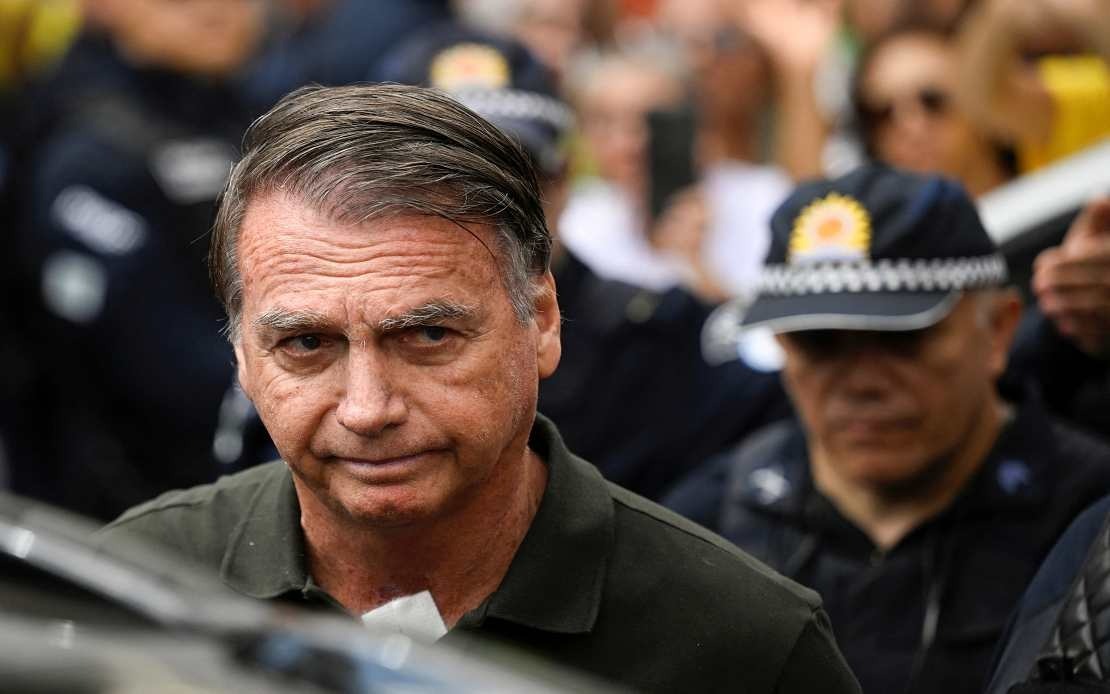
A Brazilian judicial ruling has prevented Argentine President Javier Milei from visiting former Brazilian president Jair Bolsonaro at his Brasília residence, marking a significant moment in the intensifying political drama surrounding South America's most prominent right-wing figures. Judge Alexandre de Moraes rejected the request to allow the scheduled July 25 meeting, citing newly implemented restrictions on Bolsonaro's house arrest that were imposed just one day earlier.
The blocked visit underscores the deepening legal constraints now governing Bolsonaro's daily life as he awaits trial on serious charges. Convicted of orchestrating an attempted coup, Bolsonaro currently serves a sentence exceeding 27 years, though authorities have permitted him to remain under house arrest citing health considerations. This arrangement, however, comes with increasingly stringent conditions that effectively isolate him from political allies and sympathisers during Brazil's crucial electoral period.
Milei's planned trip carried clear political significance for multiple stakeholders in Brazilian politics. The Argentine leader intended not merely to show solidarity with his ideological ally, but specifically to demonstrate support for Flávio Bolsonaro's presidential ambitions. This endorsement from a neighbouring country's sitting president would have carried symbolic weight, particularly among conservative constituencies who view Milei as a successful standard-bearer for the libertarian right in Latin America.
The timing of Judge Moraes's decision to tighten house arrest conditions reveals the judiciary's determination to control the messaging environment as Brazil approaches its October presidential election. The trigger for these new restrictions was surprisingly mundane yet politically charged: Bolsonaro had written a handwritten letter expressing support for his son's candidacy, which Flávio subsequently published across social media platforms. The court deemed this communication a violation of existing house arrest protocols, despite the restrictions having been imposed only the previous day.
The new conditions now prohibit Bolsonaro from receiving visits of any political or electoral nature until the presidential election concludes. Additionally, the court has barred him from disseminating political messages through intermediaries, effectively muting his ability to influence the campaign despite remaining a towering figure in Brazilian conservative politics. Judge Moraes characterised the defence's request to permit Milei's visit as "moot," indicating that the court considered the matter already resolved by the tightened restrictions.
This judicial intervention occurs within the context of an intensely polarised Brazilian political landscape. Incumbent President Luiz Inácio Lula da Silva is preparing to seek re-election, and the electoral mathematics suggest that Flávio Bolsonaro represents the most serious challenge from the right. The Bolsonaro family's enduring influence among conservative voters continues to concern the government, which has deployed judicial mechanisms to restrict their organisational capacity during the campaign period.
For regional observers, the case illuminates broader questions about the relationship between judicial power and electoral politics in Latin America. The restrictions imposed on Bolsonaro represent an unusual exercise of judicial authority, raising fundamental questions about whether courts should actively shape the electoral environment through restrictions on candidates' family members. The decision to bar a visiting foreign leader, while legally justified through house arrest conditions, carries implications beyond the immediate situation and suggests that Brazilian authorities view the coming election as presenting existential stakes.
Milei's cancellation of his planned visit also reflects the Argentine president's careful navigation of international relations. While ideologically aligned with Bolsonaro and the broader conservative movement, Milei must maintain diplomatic relations with Lula's government, which controls key economic levers in South America's largest economy. The blocked visit, while frustrating for the Argentine administration, may ultimately spare Milei from deeper friction with Brazilian authorities.
The episode demonstrates how electoral competition in contemporary Brazil intersects with ongoing legal proceedings against the former president. Bolsonaro faces multiple indictments relating to alleged coup plotting, document mishandling, and other charges, creating a complex legal situation that constrains his political activity regardless of his family's electoral aspirations. The house arrest regime thus serves simultaneously as a criminal sentence and as a mechanism for regulating his political influence during the campaign.
For Malaysian and Southeast Asian observers, the situation illustrates how judicial bodies in large democracies can become entangled in electoral politics, raising questions about institutional independence and the proper boundaries of executive, legislative, and judicial power. While Brazil's circumstances differ substantially from those in Southeast Asia, the underlying tensions regarding judicial impartiality during politically sensitive periods resonate across democratic systems throughout the region.
The case also highlights Milei's emerging role as a spokesman for Latin American conservatism, particularly among younger, market-oriented constituencies seeking alternatives to traditional right-wing establishments. His aspiration to meet Bolsonaro reflected a broader effort to consolidate solidarity among ideologically similar leaders, even as legal systems constrain their collaboration and movement. The Brazilian court's decision, in effect, disrupted this emerging transnational conservative coalition at a crucial moment before the election.

