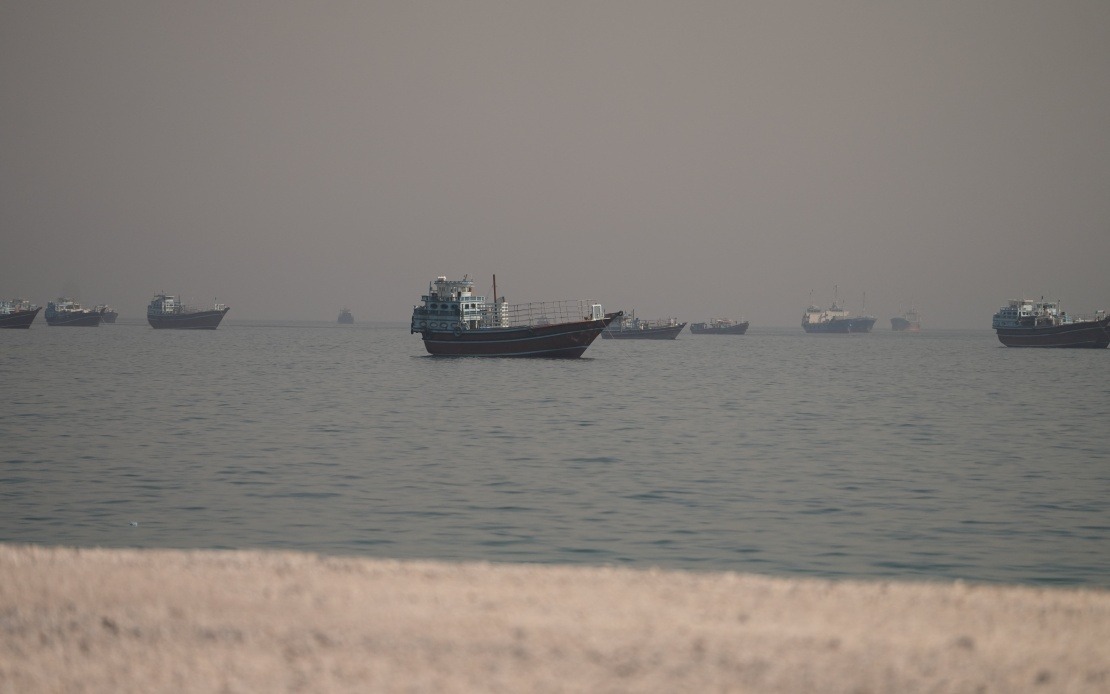
Britain and France have signalled their intention to assemble a multinational military presence in the Strait of Hormuz, one of the world's most economically consequential shipping channels, despite persistent objections from Tehran. Prime Minister Keir Starmer and President Emmanuel Macron outlined their commitment in a joint statement released on Friday, emphasizing that ensuring unobstructed passage for all nations through this waterway constitutes a matter of international significance rather than a regional concern alone.
The Strait of Hormuz represents a critical chokepoint in global energy infrastructure, with approximately one-third of all seaborne traded oil transiting through its narrow passages annually. For Southeast Asian economies, particularly energy-dependent nations like Singapore, Malaysia, and Thailand, any disruption to this corridor carries immediate ramifications for fuel costs, manufacturing competitiveness, and inflation pressures. The Anglo-French initiative thus carries implications extending far beyond European strategic interests, touching the economic lifelines of trading partners throughout Asia-Pacific.
Central to the European powers' proposal is the cooperation of Oman, which controls territorial waters flanking the strait. By securing Muscat's agreement to facilitate the multinational mission, London and Paris have navigated around a significant diplomatic obstacle. Oman's position as a non-aligned regional actor with relatively neutral standing between competing powers renders its consent particularly valuable for lending legitimacy to the operation. The sultanate's willingness to host or support such activities suggests a calculation that stability in these waters serves its own commercial and security interests.
The joint declaration represents a coordinated response to what British and French officials perceive as escalating risks to maritime security. Beyond rhetorical commitments to freedom of navigation and international law, the announcement signals concrete military readiness. European navies possess the technical capabilities, surveillance assets, and logistical infrastructure to conduct sustained operations in distant waters, capabilities that would form the backbone of any multinational mission. The framework outlined by Starmer and Macron appears designed to institutionalize what might otherwise be ad-hoc interventions by individual nations.
Iran's response to foreign military presence in the strait has historically proven uncompromising. Tehran maintains that littoral states—those whose territories directly border the waterway—possess sole responsibility for its security. This position reflects both nationalist sentiment and practical security calculations; Iranian officials argue that the presence of extra-regional powers, particularly those perceived as hostile, threatens rather than enhances stability. Previous Iranian actions, including harassment of commercial vessels and drone deployments, underscore the seriousness with which leadership takes perceived violations of what it considers sovereign waters.
The escalating friction between Tehran and Western powers reflects deeper geopolitical fractures rooted in the 2015 Joint Comprehensive Plan of Action and its subsequent collapse. The nuclear agreement's unravelling removed institutional frameworks for dialogue and mutual restraint, leaving maritime security issues to be negotiated in an atmosphere of mistrust. For regional states, this instability presents an uncomfortable dilemma: access to critical shipping lanes depends partly on great power stabilization efforts, yet those same interventions risk triggering Iranian responses that could threaten commerce more directly.
Malaysia and other Southeast Asian maritime powers occupy an awkward middle ground in this dynamic. As trading nations with significant commercial interests in unobstructed Hormuz transit, they benefit from international efforts to maintain freedom of navigation. Yet excessive military escalation, whether by Western powers or Iran, creates risks of miscalculation and incident that could disrupt commerce or draw neutral nations into unwanted entanglement. Singapore's strategic position as a major shipping hub alongside the strait and its role as a regional financial centre mean that any significant disruption would ripple throughout Southeast Asian economies.
The multinational framing of the British-French initiative seeks to distribute the burden of security provision and provide diplomatic cover by suggesting collective, not unilateral, action. However, the composition of any resulting force remains unclear from the announcement. European states possess the capabilities, but participation from Asian-Pacific nations—whether Japan, Australia, or regional Southeast Asian countries—could substantially alter the political calculus and reduce perceptions of Western overreach. The absence of such participation so far suggests that Asia-Pacific powers may prefer to support freedom of navigation rhetorically while avoiding direct military involvement that could provoke Iranian retaliation.
The timing of the Anglo-French announcement also warrants attention. Coming amid reports of heightened tensions and after incidents involving Iranian forces and commercial shipping, the declaration appears partly responsive to specific security events. However, it also reflects longer-term strategic thinking about safeguarding critical infrastructure. European policymakers increasingly recognize that energy security and trade depend on stable transit routes, making investment in maritime security architecture a rational response to perceived threats.
For Malaysia specifically, the implications extend beyond economics to regional stability and diplomatic positioning. As a moderate Muslim-majority nation with interests in both Western trade partnerships and regional cooperation frameworks, Malaysia must navigate carefully between supporting maritime security principles and avoiding alignment with moves that Tehran might view as encirclement. The country's participation in regional maritime forums and ASEAN mechanisms provides platforms for articulating these concerns without direct confrontation.
The success of any multinational mission will depend substantially on whether it can prevent incidents while avoiding escalatory spirals. Effective maritime security operations require sophisticated rules of engagement, communication channels with Iranian forces, and mechanisms for de-escalation. The British and French announcement provides strategic intention but leaves crucial operational details unresolved. How quickly such a force deploys, what nations contribute, and how it interacts with Iranian activities will determine whether the initiative enhances or destabilizes the region.
Looking forward, the diplomatic dimension may prove as significant as military capabilities. If Britain and France can frame their mission as supporting legitimate commerce rather than challenging Iranian sovereignty, and if they can secure broader international participation beyond European powers, the initiative might achieve its stated objective of ensuring safe transit. Conversely, if the operation becomes perceived as Western military confrontation with Iran, it risks exactly the disruptions to Hormuz traffic that the mission aims to prevent. For Southeast Asian stake holders, careful diplomatic engagement supporting principled positions on freedom of navigation, while encouraging restraint from all parties, represents the optimal strategic posture.

