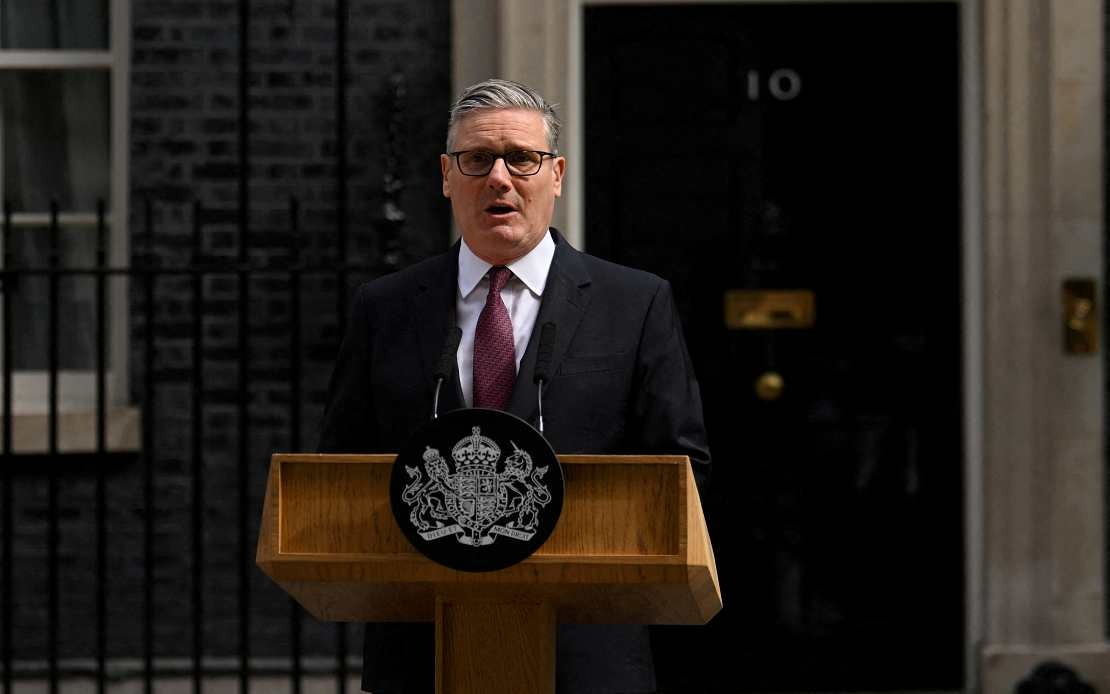
British Prime Minister Keir Starmer has made an urgent appeal for the renewal of ceasefire efforts between the United States and Iran, citing escalating tensions that threaten vital shipping corridors in the Persian Gulf. Speaking at a joint press conference in Paris with leaders from France, Germany and Ukraine on Monday, Starmer emphasised that the current standoff over navigation rights through the Strait of Hormuz demands immediate diplomatic intervention to prevent further destabilisation of global commerce and regional security.
The British leader offered a sharp rebuke of recent Iranian actions, declaring his unequivocal condemnation of strikes targeting commercial vessels and attacks against allied Gulf states. Starmer's statement underscores growing Western frustration with what officials view as provocative Iranian military operations that endanger shipping lanes and the livelihoods of seafarers from numerous nations. The Prime Minister's forceful language reflects British determination to protect its maritime interests in one of the world's most strategically important waterways, through which roughly one-third of seaborne traded oil passes.
Starmer signalled British willingness to support diplomatic resolution whilst simultaneously preparing for potential military action. He declared that Western powers stand ready to deploy naval assets capable of ensuring safe passage for commercial shipping, a thinly veiled reference to the possibility of military escorts through contested waters. This dual approach—combining negotiation with the credible threat of force—represents the Western coalition's strategy to pressure Iran into compliance without triggering a broader regional conflict.
The British government has positioned itself as an advocate for renewed negotiations, urging all parties to return to the bargaining table. Starmer explicitly called for restoration of the ceasefire framework and a resumption of talks addressing outstanding disputes, whilst simultaneously insisting upon what he termed unrestricted freedom of navigation throughout the Strait of Hormuz. This framing presents Britain as a voice of moderation seeking compromise, even as it maintains firm red lines regarding maritime access.
The current crisis emerged from a rapid escalation of US-Iran hostilities over the weekend, during which both nations conducted military strikes against each other. United States President Donald Trump announced that America would reinstate its economic blockade on Iran and demanded payment from vessels seeking safe passage through the waterway. Such pronouncements have raised international concerns about the militarisation of a vital economic chokepoint and the potential for accidental escalation that could draw in regional powers and complicate trade routes affecting Asia-Pacific economies.
The underlying conflict traces its origins to the US-Israeli military campaign that commenced in late February against Iranian and allied forces in the region. During that period, Iran utilised its control over the Strait of Hormuz as leverage, effectively restricting waterway access and creating shipping bottlenecks. Hopes for normalisation emerged in June when parties signed a memorandum of understanding intended to conclude the military hostilities, with expectations that the strait would reopen fully to international commerce. The recent breakdown of that agreement has shattered those optimistic projections and revived fears of prolonged disruption to energy supplies and trade flows.
For Malaysia and the broader Southeast Asian region, the situation carries significant economic implications. The Strait of Hormuz represents a critical transit point for petroleum destined for Asian markets, including Malaysia. Protracted instability threatening the waterway could drive up fuel costs, disrupt supply chains dependent on Gulf energy, and increase insurance premiums for vessels navigating the region. Malaysian shipping companies and energy importers therefore have a substantial stake in diplomatic resolution and the restoration of reliable passage through these waters.
The convergence of British, French, German and Ukrainian leaders at the Paris coalition meeting reflects broader Western anxiety about the trajectory of Middle Eastern conflicts and their potential to destabilise global trade networks. Britain's particular emphasis on urgent ceasefire restoration suggests recognition within British government circles that prolonged confrontation carries unacceptable risks for international commerce and regional stability. By convening with European and Ukrainian counterparts, Starmer sought to project unified Western commitment to diplomatic solutions whilst demonstrating collective resolve against what Western governments characterise as Iranian aggression.
The timing of Starmer's intervention proves significant, arriving at a juncture when diplomatic channels risk closure and military posturing dominates rhetoric on both sides. By vocally championing ceasefire resumption whilst simultaneously pledging military support for shipping protection, Britain has attempted to occupy diplomatic middle ground—pursuing negotiated settlement whilst credibly signalling capacity for military response should diplomacy fail. This strategy aims to provide both Iranian and American decision-makers with pathways to de-escalation that preserve national dignity and strategic objectives.
Looking forward, the success of such mediation efforts remains uncertain. The memorandum signed in June proved insufficient to establish durable peace, and recent escalations suggest deeper structural disagreements persist between the antagonists. Britain's coalition partners, particularly France and Germany, bring their own economic and strategic interests to these discussions, though their precise leverage with either Washington or Tehran remains unclear. For maritime-dependent economies like Malaysia, the coming weeks will prove crucial in determining whether diplomatic channels can prevent further deterioration into sustained regional conflict that would severely impact global energy markets and trade.

