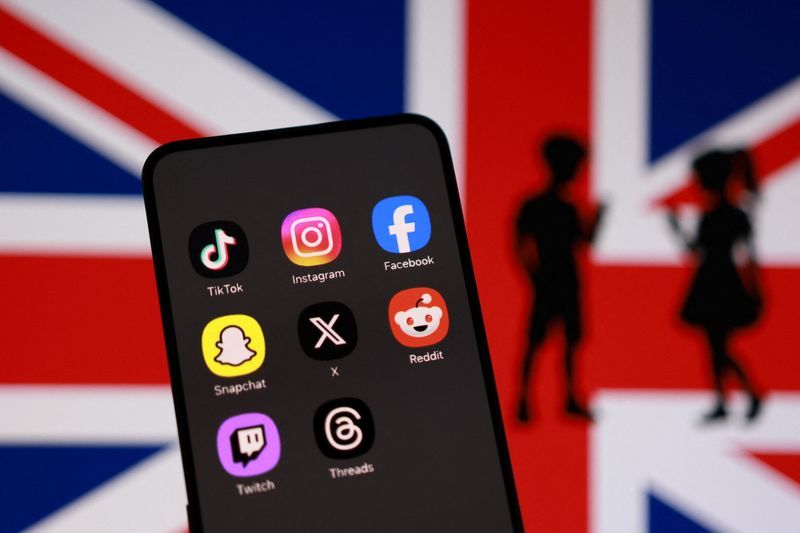
Britain is moving to restrict social media access for older teenagers through a default overnight curfew system, marking the latest escalation in government efforts to protect young people from the effects of excessive screen time. Under the planned safeguarding rules unveiled this week, users aged 16 and 17 will find themselves unable to access platforms between midnight and 6am unless they deliberately change the default settings on their accounts. The measure represents a middle ground between the government's more sweeping proposal announced a month earlier to ban social media outright for anyone under 16, extending protective controls to an older demographic while preserving parental authority and user choice.
The approach reflects mounting international pressure on technology companies to address widespread concerns about how their platforms affect adolescent mental health, sleep patterns, and academic performance. Technology minister Liz Kendall framed the initiative as essential for helping teenagers obtain adequate rest, maintain focus on their studies, and strengthen relationships with family members. The government's framing suggests that enabling healthier sleep cycles and reducing compulsive use patterns could yield tangible improvements in young people's wellbeing during critical developmental years. By deploying a default-off mechanism rather than an absolute prohibition, policymakers appear to be calculating that inconvenience will deter most users from circumventing the restriction, while respecting the autonomy of those who wish to remain active during late-night hours.
Online safety minister Kanishka Narayan has signalled that this will not be a voluntary arrangement. Technology companies will face legal requirements to implement the curfew across their platforms, with Narayan explicitly stating on LBC Radio that the government is compelling compliance rather than requesting cooperation. The regulatory framework carries significant teeth: platforms that fail to conduct robust age verification procedures will face what Narayan termed "very severe regulatory sanction." This threat carries particular weight given the growing body of evidence suggesting that tech firms have been inadequate in preventing underage access to their services, a problem that has proven especially acute in jurisdictions attempting to enforce age-based restrictions.
The enforcement timeline indicates the government's serious intent, with parliamentary presentation of the initial regulations expected by year-end and implementation planned for spring 2027. This extended runway provides technology companies with substantial lead time to redesign their systems, though it also suggests the complexity of retrofitting existing platforms with age-verification and automated curfew functionality. The delay may prove significant for Malaysian and regional policymakers watching how Britain manages this transition, as Southeast Asian governments including Singapore and Australia have been exploring similar protective measures and will likely observe whether the British model proves technically feasible and genuinely effective at scale.
Meta, which operates Instagram, along with ByteDance, the parent company of TikTok, and Google, which owns YouTube, have not provided formal responses to the government's announcement. Their measured silence suggests these companies are assessing the regulatory landscape and considering how compliance might reshape their business models and user engagement metrics. The reluctance to commit publicly to such measures likely reflects concern about implementation costs and the precedent this sets for other jurisdictions. Already, technology executives have faced mounting pressure from investors and regulators across multiple continents to address youth protection issues, yet the fundamental profitability of youth engagement on these platforms creates an inherent tension with government-mandated restrictions.
Opposition Conservative Party education policy chief Laura Trott has dismissed the plan as fundamentally incoherent, arguing that a curfew users can easily bypass represents nothing more than performative regulation. Her critique touches on a genuine vulnerability in the government's approach: if the measure is easily circumvented, it functions primarily as a minor inconvenience rather than a substantive barrier to late-night usage. This vulnerability points to a broader challenge facing regulators attempting to constrain technology use through design features rather than architectural restrictions. The distinction matters considerably—a default setting that requires positive action to override differs markedly in its effect from a technical inability to access services.
The British government's experience will be instructive given the cautionary tale from Australia, which became the first nation to implement a comprehensive ban on social media for children under 16. An advisory team examining Australia's rollout discovered that platforms proved unable to execute even basic age-verification checks reliably, fundamentally undermining the regulatory objective before the restrictions could take effect. This implementation gap represents perhaps the most serious obstacle facing any government attempting to mandate age-based content restrictions. The lesson suggests that technical and commercial constraints may render well-intentioned regulations ineffective if they require capabilities platforms have not yet convincingly demonstrated they possess.
Recent legal settlements underscore the stakes involved in youth protection disputes. Both Google and TikTok have settled US lawsuits brought by minors alleging that social media platforms caused mental health damage, suggesting that technology companies face mounting legal and reputational costs from unaddressed youth welfare concerns. These settlements, though not admissions of wrongdoing, signal industry recognition that youth protection is becoming a non-negotiable expectation. For Malaysian platforms and the domestic users of international services, the British regulatory framework may foreshadow the global trajectory: increasingly stringent age-verification requirements, algorithmic restrictions designed to limit engagement among younger users, and heightened liability for platforms failing to implement safeguards.
The regional implications for Malaysia and Southeast Asia warrant careful consideration. As Britain, Australia, and other developed nations implement increasingly restrictive frameworks, their technical solutions and regulatory approaches will likely influence how Malaysian authorities address their own social media governance challenges. Malaysian policymakers have shown growing interest in youth protection measures, and the British model offers a compromise position between outright prohibition and unregulated access. Whether the default curfew approach proves technically feasible and genuinely protective will shape policy discussions across the region for years to come, particularly as evidence mounts regarding social media's effects on adolescent development and academic outcomes in societies increasingly reliant on digital connectivity.
The broader trajectory visible across these initiatives suggests a fundamental reordering of how major democracies regulate technology's interaction with youth. Rather than accepting technology companies' self-regulatory assurances, governments are progressively imposing explicit legal obligations and designing digital systems that prioritize protection over commercial engagement. For Malaysian stakeholders—whether policymakers, parents, educators, or technology entrepreneurs—understanding how Britain's experiment unfolds will provide valuable intelligence about whether such interventions can effectively improve adolescent outcomes without creating unintended consequences or driving youth toward less-regulated platforms. The coming years will reveal whether default restrictions represent a sustainable policy tool or merely a gesture toward youth protection that ultimately proves insufficient against the scale and sophistication of modern attention-capturing technologies.

