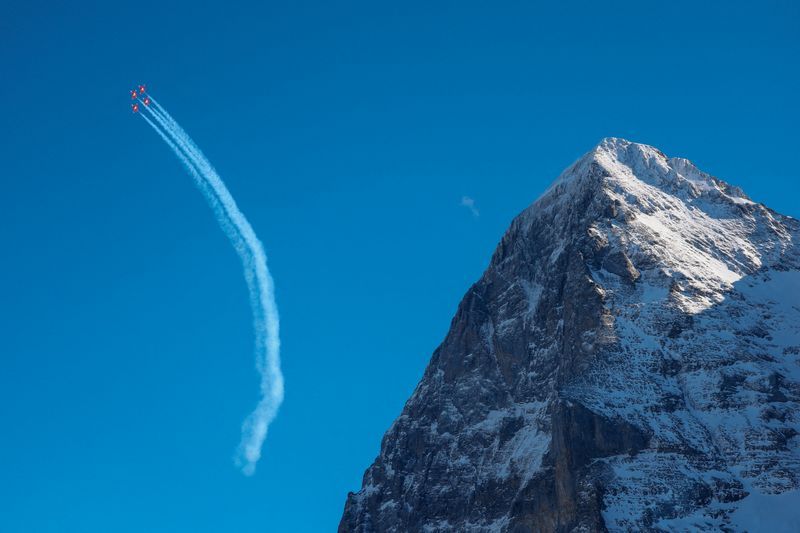
British alpinist Fay Manners has etched her name into mountaineering history after spending 13 days establishing a previously unclimbed route on the Eiger North Face in the Swiss Alps. Working alongside Swiss climbing partner Roger Schaeli, Manners created "Solar Eclipse," a challenging 2,952-foot (900-metre) route comprising 33 pitches that ascends one of Europe's most formidable and treacherous rock walls. Her achievement carries particular significance as she becomes the first British woman to have opened an entirely new route on the legendary North Face, an accomplishment that resonates far beyond the climbing community.
The Eiger North Face stands as one of the world's most unforgiving vertical challenges, a 5,900-foot expanse of rock and ice subjected to relentless weather and constant rockfall hazard. The wall's fearsome reputation was forged through decades of tragedy before a German-Austrian expedition achieved the first successful ascent in 1938. The mountain has claimed countless lives and continues to demand respect from even the most experienced mountaineers. For Manners, the wall held particular magnetism following her ascent of the Heckmair Route four years earlier—an encounter that sparked her determination to return and leave her own mark on the mountain.
The fundamental difference between repeating an established route and establishing a new one cannot be overstated. When climbers follow existing paths, they benefit from accumulated knowledge: guidebooks describe difficulty levels, documented hazards alert them to dangers, and established protection points guide their ascent strategy. Route establishment strips away these certainties entirely. Manners faced the daunting prospect of navigating previously unexplored terrain where each pitch represented an unknown quantity. She grappled with unpredictable rock quality, uncertain protection placements, and the sobering reality that the route might ultimately prove unclimbable. This uncertainty distinguishes creative mountaineering from the more circumscribed challenge of repetition climbing.
Manners articulates a perspective that extends beyond personal achievement into the realm of representation and cultural messaging within climbing communities. She observes that guidebooks—the foundational texts that shape climber aspirations and define the sport's historical narrative—systematically reflect male dominance in route development. When women consult these references and encounter exclusively male names attached to new route establishment, they absorb a subtle but potent message about who belongs in this rarefied sphere of mountaineering creativity. The psychological impact of such marginalisation accumulates over time, potentially steering women away from the most ambitious and innovative climbing endeavours toward safer, more conventional paths.
Women's presence in Eiger climbing history, though less celebrated, demonstrates decades of female mountaineering excellence. In 1964, Daisy Voog became the first woman to successfully climb the North Face, accomplishing this feat despite institutional barriers that actively excluded women from mountaineering organizations. Contemporary accounts revealed that Voog had previously attempted to join a specialist climbing section but faced categorical rejection based on gender. Five years later, Japanese climber Michiko Imai became the sole female member of a six-person team establishing the "Japanese Summer Direttissima" route. These pioneering accomplishments, however remarkable, remained overshadowed by the cumulative weight of male-dominated route development.
Manners identifies the internalized doubts and subtle stereotypes that shape women's perceptions of their own capabilities as a critical barrier to participation in mountaineering. She reflects on childhood experiences where she absorbed messaging about physical limitations based on gender—assumptions so normalized they operated below conscious awareness. She theorizes that liberation from these constraints requires not merely individual determination but fundamental restructuring of how society transmits assumptions about female capacity. When young people grow up in environments where such gendered distinctions remain unmarked and unremarked, they develop confidence unconstrained by internalized limitations. The stereotypes, she emphasizes, operate with such subtlety that individuals rarely recognise their influence until retrospectively examining their choices and assumptions.
Manners' own trajectory toward professional mountaineering illuminates the career obstacles women confront within adventure sports. Growing up in England, she possessed genuine passion for athletic pursuits and initially imagined building a professional career around sport. However, the adults surrounding her consistently communicated discouraging messages about women's earning potential and career viability in sports-related fields. These cumulative discouragements steered her toward data science, a field offering more traditional employment prospects. She pursued this conventional path despite her genuine passions, eventually relocating to Chamonix while continuing remote data consulting work. Only when sponsorship opportunity materialized—when The North Face approached her about athlete sponsorship—did Manners recognise that female sports careers represented genuine possibility rather than remote fantasy.
The journey from data science to full-time mountaineering required surrendering the security of a conventional career path. Initially, Manners negotiated an arrangement allowing her to divide her attention between consulting work and climbing pursuits. Within approximately one year, she committed fully to mountaineering, abandoning the data career that had seemed essential for financial stability. Reflecting on this transition, she emphasises that her belief in female athletic possibility only crystallised as the opportunity materialised. Despite her genuine capabilities and passion, the cultural messaging she had internalised created a fundamental disconnect between aspiration and perceived feasibility. This gap between women's actual potential and their internalised beliefs about possibility represents one of mountaineering's most significant barriers.
Manners' ambitions for "Solar Eclipse" extend beyond personal accomplishment toward creating possibilities for others. She articulates her dream of witnessing all-female teams attempting to repeat her route—a vision representing not merely technical climbing achievement but symbolic reclamation of mountaineering's creative dimensions by women. This aspiration reflects sophisticated understanding that representation matters profoundly; seeing other women engage in the creative, innovative, and high-stakes work of route establishment normalises female participation in mountaineering's most demanding pursuits. Her achievement establishes both a physical route and a conceptual pathway, demonstrating that women possess the technical skill, mental fortitude, and creative vision to shape mountaineering's future.
The broader implications for Malaysian and Southeast Asian climbers, particularly women, connect to how representation in adventure sports shapes participation patterns and aspirations. Asian mountaineers have historically contributed significantly to route establishment globally, yet face their own representation challenges. Manners' breakthrough demonstrates that challenging male dominance in climbing requires deliberate action, visibility, and explicit commitment to creating space for women in mountaineering's most ambitious endeavours. For the region's climbing communities, her achievement underscores how breaking through categorical barriers—whether based on gender, nationality, or other demographic categories—enriches the entire sport while opening pathways for those previously excluded from mountaineering's pinnacle experiences.

