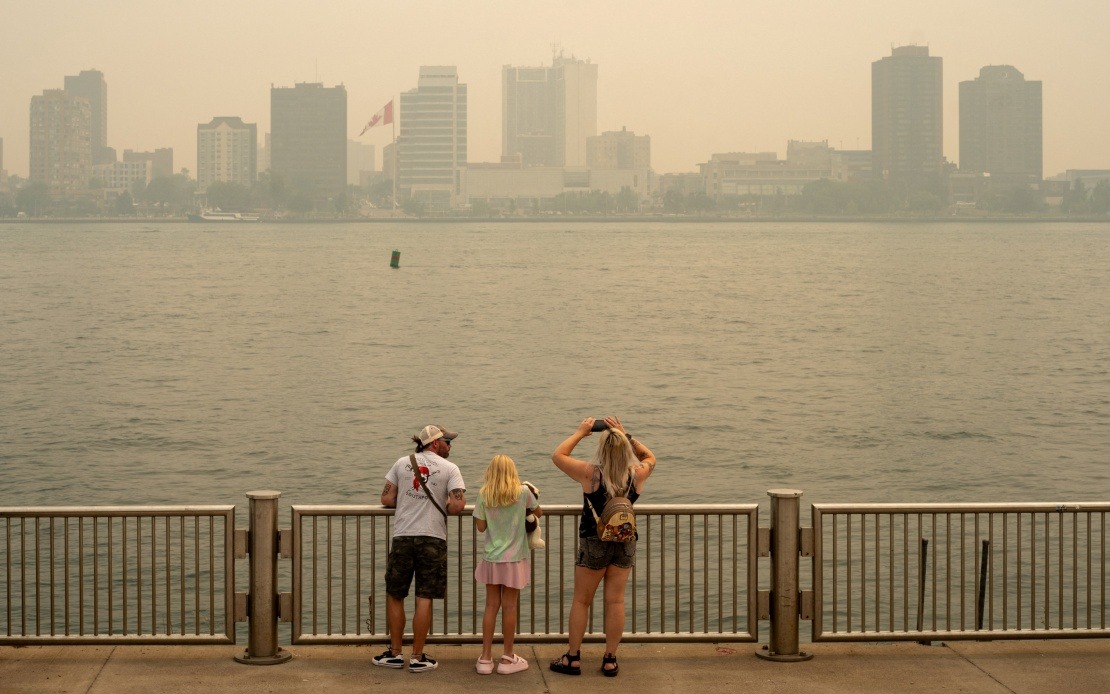
A sprawling wildfire in British Columbia continues to pose a severe threat to communities across the Canadian province, with authorities confirming on Sunday that while the fire's rate of expansion is beginning to slow, it remains fundamentally uncontrolled. The blaze has now consumed an area exceeding 100 square kilometres, displacing more than 20,000 residents from their homes and leaving thousands more under evacuation orders as a precautionary measure. The scale of the emergency underscores the intensity of Canada's wildfire season, which has already affected multiple provinces and drawn international attention to the nation's environmental challenges.
The trajectory of the fire has shifted measurably in recent hours, with the advancing flame front now reaching Okanagan Lake. This geographical boundary represents a significant development in the fire's behaviour, as the water body is expected to impede the rate at which the wildfire can spread eastward. Emergency management officials view this development cautiously, recognising that while the deceleration offers some relief for communities in the path of the flames, containment efforts remain labour-intensive and uncertain. The landscape around the lake presents both tactical advantages and complications for fire crews, who must balance defensive positioning with the unpredictability of wind patterns and fuel availability.
The town of Summerland, home to approximately 12,000 people, has become the focal point of defensive operations as emergency responders work to shield residential areas on the municipality's perimeter. The concentration of personnel and resources in Summerland reflects the town's vulnerability and its status as a critical population centre that authorities are determined to protect. Throughout the region, approximately 10,000 properties remain in the threat zone, a figure that illustrates the sprawling nature of the evacuation zone and the complexity of coordinating relief efforts across dispersed communities. Property owners face an agonising wait as firefighting crews work to establish and maintain defensive lines.
The human cost of the disaster has been significant. Emergency services have conducted helicopter rescues for more than 50 individuals who found themselves cut off by advancing flames, a dramatic reminder of how rapidly wildfires can outpace residents' ability to self-evacuate. More sobering is an ongoing investigation into a suspected fatality related to the fire, though authorities have not yet confirmed the details or circumstances. These casualties highlight the immediate danger posed by the wildfire and the life-or-death decisions faced by residents and first responders working in deteriorating conditions.
Canada's federal government has mobilised substantial resources in response to the crisis. Minister of Emergency Accommodation Eleanor Olszewski announced via social media that a request for federal assistance from British Columbia authorities had been approved, with the government committing to provide housing and support services for evacuated residents. This commitment addresses a critical gap in disaster response, as displaced families face the prospect of extended displacement from their homes. The federal intervention reflects the scale of the emergency and the recognition that provincial resources alone are insufficient to manage the humanitarian dimensions of such a catastrophic event.
The battle against the flames is being waged under extraordinarily challenging meteorological conditions. Persistent heat and drought have created fuel conditions that allow fires to spread with alarming speed and intensity. Thick smoke blanketing the region has degraded visibility, hampering aerial firefighting operations and complicating ground efforts to locate and suppress active fire fronts. These environmental factors represent some of the most significant obstacles facing emergency responders, essentially putting natural forces in direct opposition to human containment efforts. Climate scientists have linked such extreme fire seasons to broader warming trends affecting North America.
Recognising the magnitude of the challenge, authorities have sought international assistance to augment domestic firefighting capacity. Support has arrived from Mexico, Australia, and New Zealand, with trained firefighting personnel and specialised equipment being deployed to British Columbia. This international cooperation reflects both the severity of the emergency and the established networks of mutual aid that exist among Commonwealth and North American nations. The arrival of foreign expertise and resources provides a tangible boost to morale among exhausted local crews, many of whom have been operating at maximum capacity for extended periods.
The provincial government escalated its emergency response on Saturday by declaring a state of emergency across British Columbia. This formal declaration unlocks additional funding mechanisms, streamlines bureaucratic processes, and provides legal authority for emergency measures that might otherwise be constrained by normal regulatory frameworks. The declaration was issued in the context of more than 100 active wildfires burning across the province, with approximately half of these fires classified as uncontrolled. This broader context reveals that the Summerland fire is part of a systemic crisis affecting the entire region, straining provincial resources and emergency services to unprecedented levels.
British Columbia's experience this year mirrors challenges emerging across multiple Canadian provinces. Ontario and Quebec have both encountered major wildfire emergencies during the current season, indicating that the problem is not geographically isolated but rather part of a continental pattern. Regional air quality has suffered dramatically as smoke drifts across provincial borders and into the United States, affecting public health in numerous communities far removed from active fire zones. This cross-border air quality impact has become a significant diplomatic consideration, as smoke from Canadian wildfires regularly affects air quality in northern American states.
The implications of this fire season extend beyond immediate emergency response. Insurance companies, urban planners, and infrastructure managers across Canada and beyond are evaluating whether current preparedness frameworks are adequate for an era apparently characterised by more frequent and intense wildfires. For Malaysian and Southeast Asian observers, the British Columbia emergency serves as a cautionary example of how climate change can overwhelm institutional capacity, even in wealthy, well-resourced nations. The incident underscores the transnational nature of environmental crises and the potential for wildfire emergencies to cascade into humanitarian, public health, and economic disasters that strain governmental systems.

