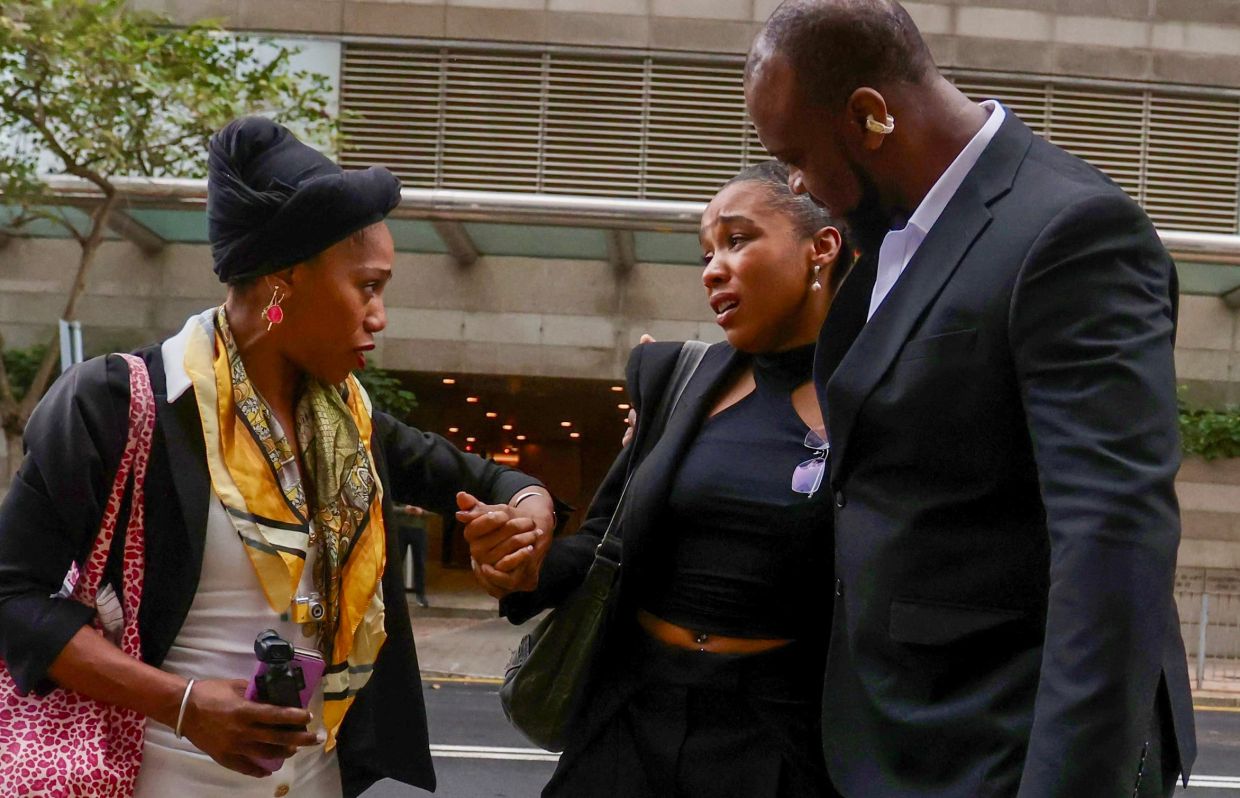
A Hong Kong District Court has handed down a six-year prison sentence to a 26-year-old British woman convicted of attempting to extort £100,000 from a fellow expatriate by leveraging unsubstantiated rape allegations. Isabel Anonia Barbra Eudora Rose, an event management professional based in London, was found guilty on two counts: blackmail and perverting the course of public justice. The case, decided by Judge Adriana Noelle Tse Ching on Wednesday, underscores the serious legal consequences of fabricating criminal allegations while simultaneously highlighting the complexities of consent disputes in cross-cultural encounters.
Rose travelled to Hong Kong on January 31, 2024, ostensibly to meet a man she had encountered during a holiday in Thailand the previous month. According to court records, she arrived at his one-bedroom residence in Central and subsequently made claims that he had sexually assaulted her that evening. The allegations appeared credible enough for authorities to initially arrest and question the accused, but the trajectory of the case shifted dramatically within days as evidence emerged suggesting a coordinated scheme rather than a genuine victim seeking justice.
The digital communications between the pair proved instrumental in dismantling Rose's narrative. Court proceedings revealed that after the alleged incident, the two exchanged messages discussing the encounter and potential financial remedies. In these exchanges, Rose stated "You basically raped me," to which the man responded with apparent distress, saying "That is not what I'm into at all and I feel sick." However, subsequent dialogue painted a markedly different picture. The man explained that he had requested oral sex, which Rose declined, and that he had afterwards apologised for misinterpreting her signals and acting too hastily. Rose then questioned whether his disappointment stemmed from her refusal, and the man indicated he respected her boundary despite feeling somewhat frustrated.
Judge Tse determined that these exchanges fundamentally contradicted Rose's rape allegation, revealing substantial inconsistencies between her claims and the documented conversation. The judge concluded that Rose had fabricated the rape accusation entirely. A forensic medical examination added another layer to the evidence—while bruising was noted on Rose's neck, no genital injuries were detected, further supporting the court's finding that penetrative intercourse had not occurred. Together, these elements convinced the judge that the allegations lacked factual foundation.
What followed was a calculated escalation into explicit extortion. The pair initially discussed compensation for accommodation and travel expenses, with the man agreeing to reimburse £2,000 at Rose's request. She subsequently increased this demand to £5,000, writing in a message: "You've given 10 per cent of what I'm owed, 100 per cent of my soul gone," clearly signalling she anticipated a substantially larger sum. In later exchanges, the man stated "But I don't have £100k, I have no way of paying you that," and Rose responded "You have half of it which can be sent. And the other half tomorrow." Although the explicit £100,000 figure did not appear in the recoverable text records, Judge Tse concluded that Rose had mentioned this amount through disappearing messages and voice communications she subsequently deleted.
The judge found that Rose had threatened to report Rose to police unless the substantial payment was made by a specified deadline. This constituted the formal charge of blackmail. At sentencing, Judge Tse delivered scathing remarks about the defendant's conduct, describing the offence as "cruel and evil." The judge emphasised that Rose had deliberately exploited the man's perceived kindness, social naivety, friendly disposition, and romantic interest to advance her extractive scheme. Rather than arriving in Hong Kong as an innocent victim seeking justice, the court determined that Rose had arrived with predatory intent, identifying a potential target within forty-eight hours and initiating her blackmail plot.
The sentencing framework reflected the gravity with which Hong Kong courts treat such offences. Judge Tse established a starting point of five years' imprisonment for the blackmail conviction alone. An additional one-year sentence for perverting the course of public justice was ordered to be served consecutively, resulting in the six-year total term. In explaining this approach, the judge characterised Rose as someone entirely responsible for her predicament, stating she was "an author of her own wrongdoing." The false police report was particularly condemned as "vengeful and wicked behaviour" designed to punish the man for his refusal to capitulate to her financial demands.
Rose's response to the conviction revealed a starkly different narrative from judicial findings. Following the guilty verdict in March, she broke down emotionally in the courtroom and was remanded in custody pending sentencing. In subsequent comments to the South China Morning Post, she expressed bewilderment at the outcome, claiming she could not comprehend how events had unfolded. "I reported the rape. But within 24 hours, there was no rape any more," she stated, suggesting she believed police had unfairly deprioritised her allegations in favour of investigating the blackmail claim. She also indicated that law enforcement had informed her they would treat the extortion aspect more seriously, which she appeared to interpret as abandonment of her sexual assault complaint.
This case carries significant implications for the broader Southeast Asian region, particularly as Hong Kong continues to process cases involving international residents and visitors. The decision demonstrates that local courts will rigorously scrutinise sexual assault allegations where contradictory communications and forensic evidence suggest fabrication, and that combining false accusations with explicit financial demands triggers severe criminal penalties. For expatriate communities across Asia, the judgment serves as a cautionary reminder that weaponising unsubstantiated allegations for personal gain carries profound legal jeopardy. Courts in the region have shown increasing willingness to prosecute cases of malicious accusation, particularly where evidence demonstrates premeditation.
The intersecting issues of consent, cultural misunderstanding, and bad faith claims within cross-cultural relationships also merit examination. While the judge's conclusions about Rose's culpability appear soundly grounded in documentary evidence, the case underscores the vulnerability that can emerge when individuals from different jurisdictions navigate intimate encounters without clear communication frameworks. The man's description of misreading signals and rushing—language that might in other contexts suggest problematic behaviour—was here accepted by the court as consistent with consensual interaction interrupted by reasonable refusal. This creates a somewhat narrow pathway for genuine victims to credibly report assault if consent disputes involving communication breakdowns form part of their narrative.
For Malaysia and other ASEAN nations, the Hong Kong decision offers institutional perspective on how sophisticated legal systems approach allegations that combine sexual misconduct claims with financial extortion. As regional courts increasingly handle transnational cases and cross-border disputes, they are developing consistent jurisprudence on digital evidence, forensic examination, and the documentation of consent or its absence. The Rose case exemplifies how recovered and deleted messages, forensic findings, and chronological analysis of financial demands can reconstruct intent and premeditation. Malaysian legal practitioners and judges observing this case gain insight into evidentiary standards and burden-of-proof applications that may inform how local courts approach similar scenarios.
Rose will serve her sentence in Hong Kong's prison system, where foreign nationals constitute a small but significant population. Her case has generated discussion within expatriate networks across Asia about legal exposure and the serious consequences of fabricating criminal allegations. While false accusations represent a real problem warranting robust prosecution, the case also highlights the complexities that emerge when intimate disputes escalate into criminal allegations spanning multiple jurisdictions. As Rose remains in custody, she has become a cautionary figure for both the transient professional classes who populate Asia's financial centres and for local authorities tasked with distinguishing between genuine victims and opportunistic accusers within an environment where language barriers, cultural differences, and power imbalances frequently complicate consent narratives.

