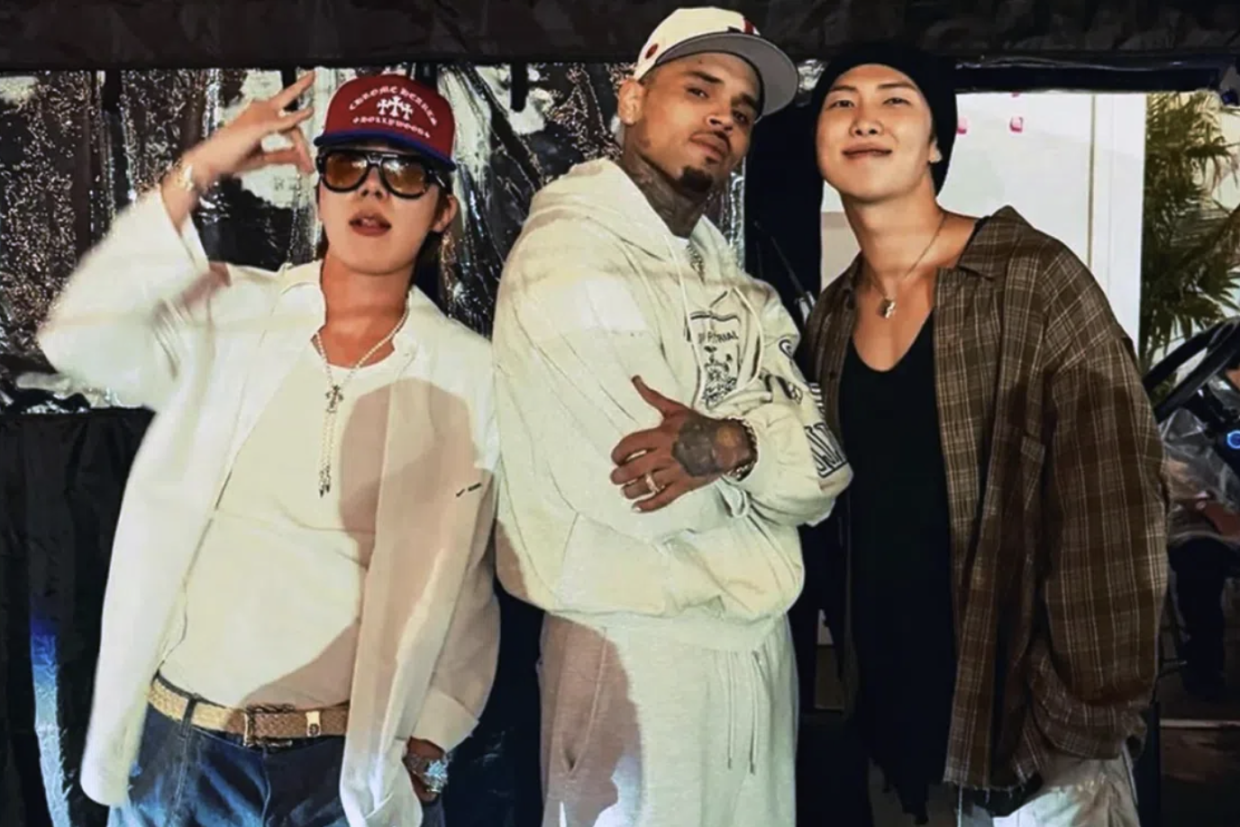
The attendance of two BTS members at a Chris Brown concert in Canada has triggered a substantial divide within the K-pop group's global fanbase, exposing deep tensions around celebrity ethics and the extent to which artists should be held accountable for their social choices. When American musician Chris Brown posted a photograph with BTS leader Kim Namjoon and rapper Jung Hoseok on August 13, the image quickly became a focal point for broader conversations about complicity, moral responsibility, and the duty of influence that comes with commanding a massive international audience.
Chris Brown's history of serious misconduct stretches across more than a decade. In 2009, he was convicted of assaulting his then-girlfriend Rihanna, a crime that remains one of the most widely publicised domestic violence cases in entertainment history. However, the incidents did not end there. The artist faced arrest in 2016 for allegedly threatening a woman with a gun at his Los Angeles residence, and in 2018 he became embroiled in allegations of sexual assault at his home, though the case was eventually settled. The following year, he was detained in Paris following a rape accusation, charges that were subsequently withdrawn. In 2022, a woman alleged that Brown had drugged and assaulted her aboard a yacht in Miami, describing experiences that left her fearing for her safety. Most recently, a Los Angeles jury determined that Brown bore financial liability of US$12.9 million after his dog attacked his housekeeper's sister, adding another layer to a pattern of behaviour that extends beyond the criminal sphere into civil disputes.
The backlash from BTS's fanbase, known as ARMY, reflected a sharp ideological divide about what celebrities owe their audiences and broader society. Some fans articulated that their perception of the group had fundamentally shifted, feeling betrayed that members they admired appeared to be endorsing or normalising an individual with such a troubling record of violence against women. One fan, herself a survivor of sexual assault, articulated the personal nature of this wound. She explained that her identity as a woman superseded her role as a fan, and she struggled to reconcile her respect for the musicians with their apparent disregard for the harm caused by the artist they were supporting. This testimony highlighted how celebrity choices do not exist in isolation but resonate through their fanbase in ways that can reinforce or undermine messages about respect and accountability.
Defenders of BTS members marshalled arguments centred on the distinction between liking an artist's music and endorsing their behaviour, suggesting that attending a concert should not be interpreted as wholesale approval of every action a performer has committed. They argued that celebrities, regardless of their platform, retained the right to enjoy entertainment and pursue personal preferences without every choice being subject to public scrutiny. This perspective positioned the controversy as an overreach of fan expectations, suggesting that demanding moral consistency in every social interaction placed an unrealistic burden on public figures.
However, critics systematically dismantled this defence by reframing the issue around power and influence. They contended that the moral responsibility to avoid supporting abusers increased exponentially with fame rather than diminishing with it. BTS commands one of the largest and most dedicated fanbases globally, with followers who often look to the group for cultural and moral guidance. When members of such prominence attend the concert of someone with a documented history of violence against women, the action carries symbolic weight that extends far beyond personal preference. The artists' visibility transforms their attendance into a tacit endorsement that filters through social media and reaches millions, potentially normalising engagement with an artist whose behaviour has caused documented harm.
Some observers drew parallels to feminist critiques about male silence in the face of misogyny. They noted that complicity does not require active perpetration; it can manifest through the absence of resistance or the appearance of normalcy in interactions with those accused of abuse. By attending Brown's concert and being photographed alongside him, BTS members created imagery that, whether intentionally or not, suggested that such behaviour need not result in social or professional consequences. This argument carries particular weight in an industry where women continue to experience disproportionate rates of violence and harassment, and where public figures wield significant influence over cultural attitudes toward accountability.
The discussion also highlighted the asymmetry of platforms and reach in modern entertainment. One social media user pointed out that defending the group on public posts was unlikely to reach the artists themselves, but would certainly be seen by followers who had experienced domestic violence or survived abusive relationships. This observation underscored how online discourse around celebrity conduct does not occur in a vacuum—it circulates among communities of vulnerable individuals who draw conclusions about social attitudes toward abuse based on how they see influential figures treated by their peers.
Another dimension of the controversy involved the example of singer Zara Larsson, who has collaborated with BTS previously. In a widely shared video clip, Larsson was asked which artists she would never listen to, and she responded by explaining that she has numerous abusers blocked on Spotify, specifically naming Chris Brown as an example. Her approach suggested an alternative model of celebrity behaviour—one where artists actively and visibly curate their professional associations to reflect their stated values regarding women's safety and accountability.
This BTS controversy arrives amid a period of increasing scrutiny around the group's corporate partnerships and social responsibility. Recently, BTS collaborated with Google's artificial intelligence platform Gemini on an advertisement that was displayed on the Las Vegas Sphere. The project was promoted as a showcase of "the new possibilities that technology and art can create," but fan reaction proved highly critical, with many questioning the environmental implications of AI technology and the ethics of lending celebrity credibility to such initiatives. The cumulative effect of these controversies suggests that the group's fanbase is becoming increasingly conscious of the broader implications of the artists' choices, extending their expectations beyond musical output to encompass corporate responsibility and personal conduct.
The debate touches on fundamental questions about how influence should be wielded in an interconnected world. For Southeast Asian and Malaysian audiences particularly, where discussions around gender-based violence and accountability remain active social and political concerns, the incident serves as a prism through which to examine broader cultural attitudes toward celebrity, power, and complicity. The ARMY's division reflects the genuine tension between appreciating artistic talent and demanding that influential figures acknowledge the real harm caused by patterns of abuse.

