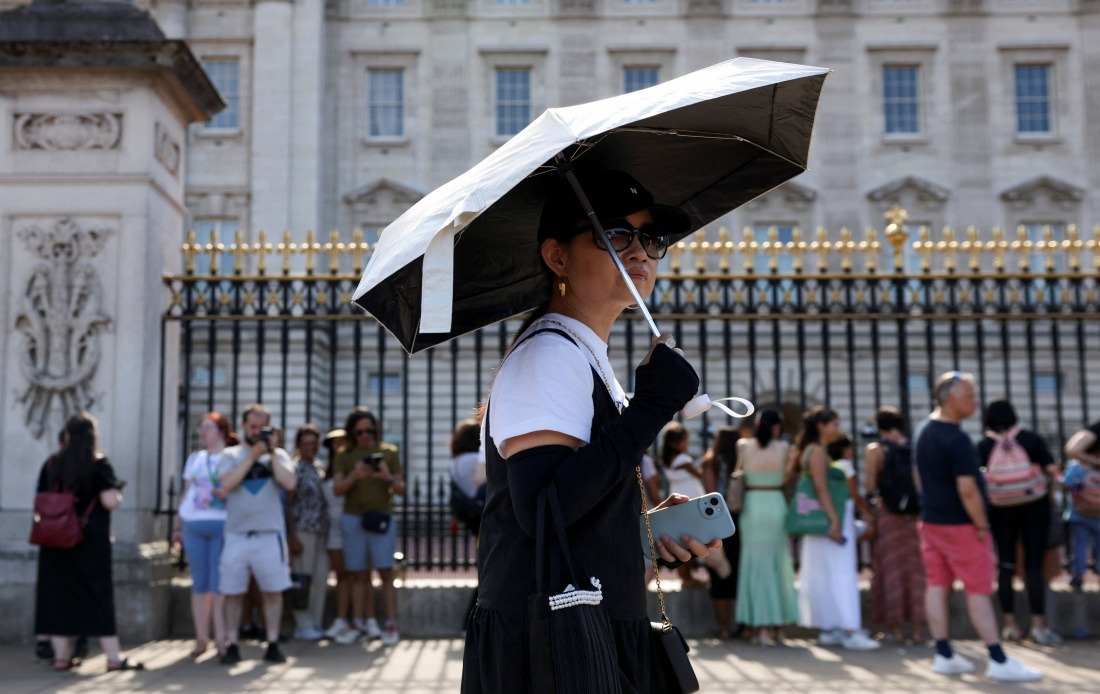
Britain's Household Division has taken the extraordinary step of suspending all ceremonial guard changes at Buckingham Palace, Windsor and London this week, a decision driven by forecasted temperatures that are set to shatter June records across the United Kingdom. The rare cancellation underscores the severity of the heatwave now bearing down on the country, with meteorologists warning of dangerously high conditions that will peak mid-week.
The Met Office, Britain's national weather service, issued a red weather alert on Monday—the highest level of warning in the UK's alert system—covering Wales and large portions of England. This classification indicates that extreme heat poses a genuine risk to public health and safety, triggering precautionary measures across multiple sectors of society. The alert specifically warns of temperatures reaching 39 degrees Celsius on Wednesday and Thursday, with some regions potentially experiencing even higher readings that could approach or exceed previous June records.
The Household Division's announcement reflects a strategic shift in priorities that places the wellbeing of military personnel, animals and public crowds above ceremonial tradition. In a formal statement, the division emphasised that the decision to cancel guard changes in both locations stems from concern for soldiers, the military working horses that feature prominently in these ceremonies, and the thousands of visitors who typically gather to witness these iconic British traditions. The suspension covers Tuesday, Wednesday and Thursday, encompassing the period when temperatures are forecast to be most extreme.
However, the division has not entirely abandoned its ceremonial obligations. The Royal Horse Guards' changing ceremony, normally scheduled for Wednesday with full pageantry, will proceed but at an earlier hour in the morning when conditions are cooler. The modified ceremony will dispense with typical ceremonial elements, allowing the event to be conducted more swiftly and with reduced physical exertion for participants. Additionally, soldiers will be positioned in shaded areas wherever possible and rotated through their duties more frequently to prevent heat exhaustion and related medical emergencies.
The implications of this heatwave extend far beyond palace ceremonies. Across southern England, educational institutions have begun closing preventatively, recognising that school buildings—many of which lack modern air-conditioning systems—become dangerously hot during extreme weather. Somerset's local authority announced that approximately 100 schools would remain closed during the period of peak heat, while Buckinghamshire reported a similar number of closures. Gloucestershire, another county within the red weather warning zone, suspended classes at more than 80 schools. London itself, despite being the nation's capital and typically better equipped with modern infrastructure, saw nearly 10 major schools cancel in-person lessons in favour of remote learning arrangements.
These closures highlight a fundamental challenge facing Britain's infrastructure and institutions as climate patterns shift toward more extreme weather events. Unlike countries in Southeast Asia and other tropical regions where heat management is built into architectural and operational planning, much of British society has traditionally been designed around cooler temperatures. Schools, public buildings and transport systems often lack the cooling systems commonplace in Malaysia, Singapore and other nations accustomed to sustained high temperatures. The current heatwave exposes this vulnerability and raises questions about future preparedness.
The broader context of this weather event is significant for regional readers. As climate change drives more unpredictable and intense weather patterns globally, even traditionally temperate nations are experiencing conditions previously considered exceptional. Malaysia and Southeast Asian nations, already dealing with regular extreme heat and humidity, may observe how developed Western nations adapt their infrastructure and operational protocols. The British response—prioritising human and animal welfare over ceremonial tradition—offers a case study in institutional flexibility during environmental stress.
For the British military specifically, the suspension of guard ceremonies represents a practical acknowledgment that operational readiness depends on personnel remaining healthy and capable. Heat-related illness among soldiers in full ceremonial dress, which includes heavy wool uniforms, could undermine military effectiveness and morale. The decision to modify rather than simply cancel the Royal Horse Guards ceremony demonstrates an attempt to balance cultural significance with safety imperatives.
The military working horses featured in these ceremonies deserve particular consideration. These animals, often wearing additional ceremonial equipment and standing in direct sunlight for extended periods, face serious risk during extreme heat. Horses cannot regulate body temperature as effectively as humans and are highly susceptible to heat stress and fatal conditions like heatstroke. The division's prioritisation of equine welfare reflects modern military and cultural values increasingly cognisant of animal rights and wellbeing.
As Britain endures this extreme weather event, the experience serves as a reminder that no institution, regardless of tradition or symbolic importance, is exempt from environmental constraints. The cancellation of Buckingham Palace ceremonies, an event that has rarely been suspended for weather, underscores the potential scale of climate impacts on daily life and cultural practices in coming decades. For Southeast Asian observers, it reinforces the reality that climate change respects no borders and that even wealthy, technologically advanced nations must continually adapt their systems and expectations to accommodate a warming world.