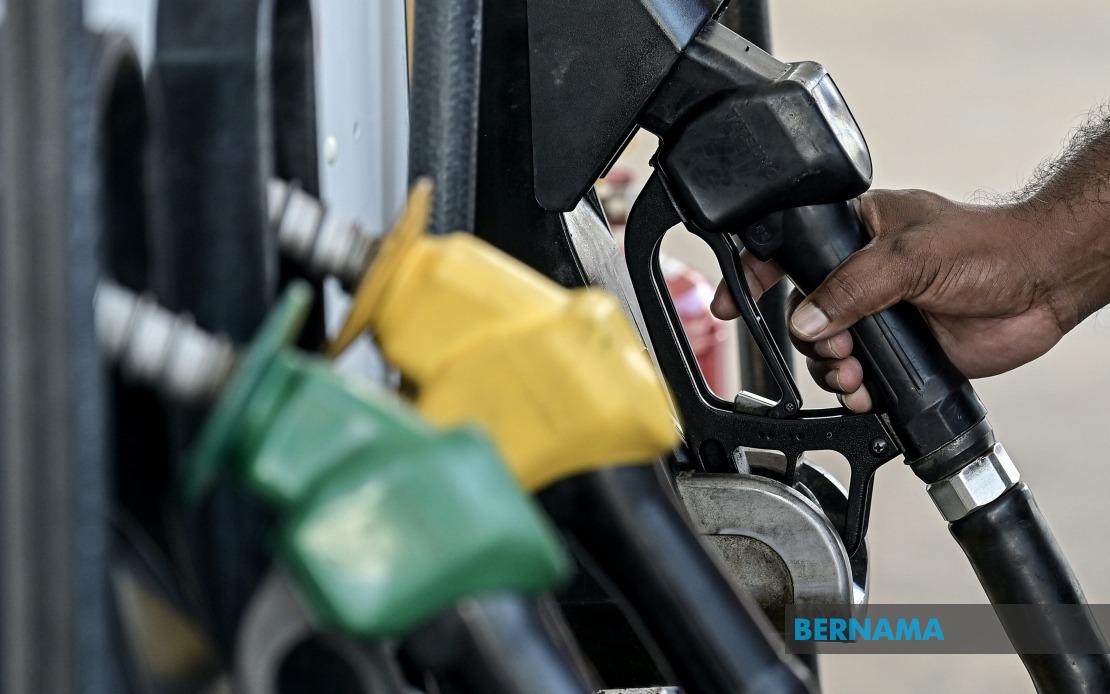
The Malaysian government's revamped fuel subsidy initiative commenced on July 1, extending subsidised diesel to approximately 700,000 private vehicle owners across the country at a capped price of RM2.10 per litre. The Ministry of Finance revealed that the BUDI MADANI Diesel programme represents a substantial scaling up of fuel support mechanisms, with 400,000 eligible drivers in Peninsular Malaysia joining roughly 300,000 beneficiaries in Sabah, Sarawak, and the Federal Territory of Labuan. This expansion substantially surpasses the predecessor BUDI Diesel Individu scheme, which channelled monthly cash assistance to merely 180,000 recipients on the peninsula, demonstrating the government's commitment to broadening the reach of cost-of-living relief across the nation's driving population.
Complementing support for private motorists, the initiative incorporates provisions for commercial operators and transport businesses. Approximately 70,000 vehicles engaged in commercial and goods transport operations in East Malaysia and Labuan now qualify to purchase subsidised diesel at RM2.15 per litre via the SKDS mechanism. Additionally, the Ministry of Finance extended eligibility criteria to encompass company-registered private pickup trucks and jeeps, subject to specified conditions, acknowledging that such vehicles frequently serve dual purposes straddling personal and business use in Malaysia's diverse economy.
The early rollout phase demonstrates the programme's operational readiness. Between the initiative's soft launch on June 27 and noon on June 30, the system processed approximately 80,000 transactions distributing around 3.2 million litres of subsidised fuel valued at nearly RM7 million at the RM2.15 rate. The verification infrastructure proved resilient, with MyKad authentication systems at fuel stations functioning without significant disruption, suggesting the government had adequately prepared technological infrastructure to manage nationwide implementation without the bottlenecks that frequently plague large-scale policy launches in Southeast Asia.
The subsidy framework attempts to address multiple policy objectives simultaneously. By maintaining artificially depressed fuel prices, the government shields vulnerable motorists and transport operators from volatile international crude markets, while simultaneously protecting sectors dependent on affordable fuel access—including public transport operators, logistics companies, and agricultural enterprises. For Malaysian readers and businesses, this represents a direct intervention in household budgets and operational costs, effectively reducing purchasing power losses that would otherwise flow through the economy during periods of elevated global energy prices.
Pickup and jeep owners operating under company registration gained access to an additional 100-litre monthly allowance through the BUDI MADANI portal, subject to compliance with programme terms. Early adoption signals strong interest, with more than 22,000 applications submitted by mid-morning on June 30, indicating that vehicle owners quickly recognized and acted upon the expanded eligibility criteria. This rapid uptake reflects both genuine need for fuel cost relief and the relative transparency of the application process, though it also raises questions about the government's capacity to process submissions and verify eligibility claims across such a substantial cohort.
Recognizing that vehicle ownership structures within Malaysian families frequently involve registration under a single household member despite multiple users, the government introduced a transfer mechanism allowing initial beneficiaries to reassign subsidy eligibility to spouses, parents, children, or siblings. This one-time transfer, contingent upon official verification procedures, acknowledges practical realities of family vehicle-sharing arrangements while maintaining administrative oversight. Nearly 1,000 such transfers had already been lodged by mid-morning on June 30, suggesting considerable demand for flexibility within the programme's framework. Once approved, receiving family members can utilize their own MyKad to purchase fuel within the original owner's monthly quota, simplifying point-of-sale transactions.
To further reduce friction in the transition to expanded eligibility, the government imposed a three-month moratorium on ownership transfer fees for diesel vehicles, waiving charges previously capping at RM100. This measure facilitates regularization of informal family vehicle arrangements, allowing individuals driving family-owned vehicles to formalize registration without incurring costs that might otherwise deter compliance. The Road Transport Department responded by extending weekend operating hours from July 4 through 26, maintaining service windows between 8 am and 5 pm at all state JPJ offices and state UTC JPJ branches, ensuring accessibility for working individuals unable to visit during standard business hours.
The policy's implications for Malaysia's transport sector merit careful observation. By maintaining diesel prices below market rates for broad cohorts of commercial operators and private users, the subsidy preserves cost advantages for road transport relative to other modalities, potentially affecting modal competition and logistics economics. However, the targeted nature of the programme—extending support only to registered owners meeting specified criteria—creates administrative complexity and potential equity concerns regarding operators outside the eligible categories. Neighbouring economies pursuing different subsidy architectures may find Malaysia's approach instructive, particularly in balancing fiscal costs against political pressures to shield voters from energy price volatility.
The verification and quota management systems undergird programme sustainability. Private diesel vehicle owners can monitor eligibility status and monthly quotas through government portals, creating transparency that reduces uncertainty about fuel availability and eligibility maintenance. However, the reliance on MyKad verification at fuel stations potentially creates vulnerabilities around identity fraud or quota abuse, requiring fuel retailers to maintain vigilant authentication procedures across thousands of transaction points daily. The smooth initial experience reported by the Ministry of Finance provides cautious optimism, though scalability challenges typically emerge once systems process volume closer to theoretical capacity.
For consumers and businesses, the immediate benefit manifests as relief from exposure to unsubsidized diesel pricing, currently higher across regional markets. A driver filling a 50-litre tank at RM2.10 per litre pays RM105 rather than market rates potentially exceeding RM150, representing meaningful savings across monthly refuelling cycles. For commercial operators and logistics enterprises, such reductions compound across large vehicle fleets, directly impacting operational profitability and pricing competitiveness. The cumulative fiscal impact on government budgets remains substantial, though policymakers justified the expenditure as necessary for managing cost-of-living pressures and supporting economic growth during uncertain global circumstances.
The programme's expansion reflects broader Malaysian policy trends prioritizing targeted rather than universal subsidies, permitting larger absolute support levels to priority groups while maintaining fiscal discipline. By restricting benefits to registered vehicle owners rather than subsidizing retail fuel broadly, the government narrows beneficiary pools and reduces leakage to non-target populations—though administrative overhead increases proportionally. This approach contrasts with historical fuel subsidy regimes across the developing world, many of which created fiscal crises through universal subsidies, suggesting Malaysian policymakers have incorporated lessons from regional experiences in neighbouring countries.
Looking forward, programme sustainability hinges on multiple factors beyond government control. International crude price movements, exchange rate fluctuations, and geopolitical events affecting energy markets will determine the subsidy's actual fiscal cost and hence political viability. If global crude prices decline substantially, the subsidy's value diminishes and political pressure to expand or modify the programme may ease; conversely, if prices escalate, budgetary pressures may force contraction. The government's capacity to adjust programme parameters without disrupting beneficiary expectations represents an ongoing governance challenge, particularly across Malaysia's diverse population spanning multiple income levels and transport dependencies. For Malaysian observers, the coming months will reveal whether this expanded initiative delivers sustainable relief or represents another costly experiment in energy price management.

