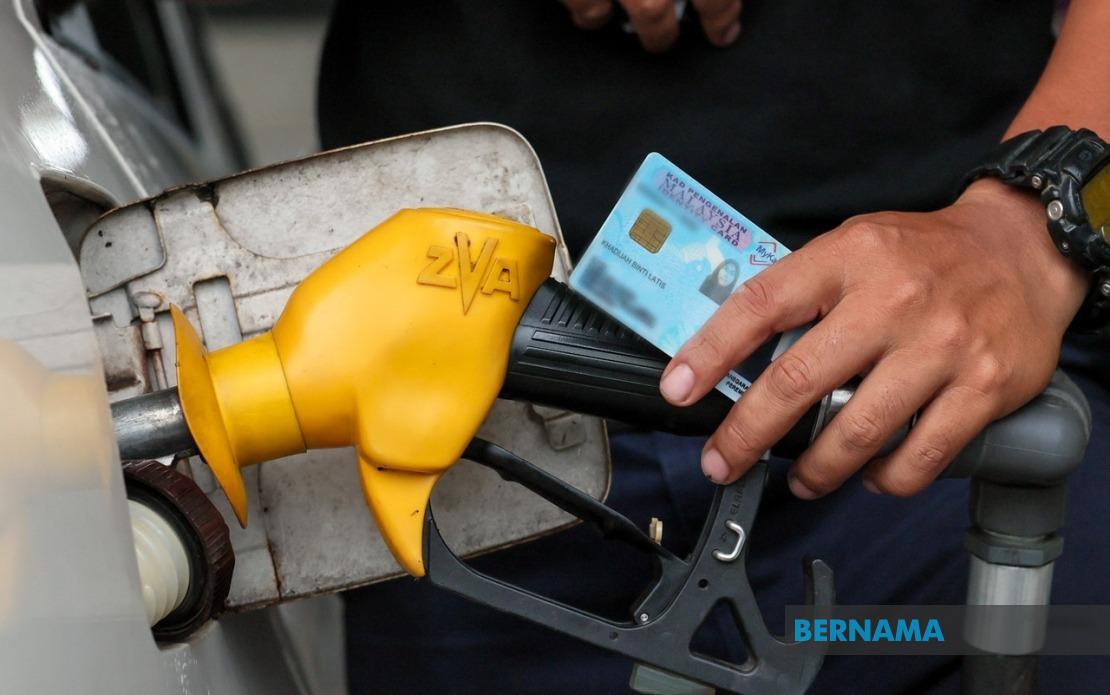
Prime Minister Datuk Seri Anwar Ibrahim announced a significant expansion of fuel subsidies on Malaysia's 69th National Day, restoring and enhancing the BUDI MADANI programme's petrol and diesel quotas in a move that has generated widespread approval from both wage earners and small business operators struggling with mounting transport expenses.
The restructured assistance framework, effective immediately, lifts the basic eligibility quota for RON95 petrol from 200 litres monthly to 300 litres, whilst simultaneously raising the BUDI Diesel quota from 300 litres to 400 litres. These increases represent a meaningful injection of purchasing power for ordinary Malaysians, addressing one of the most visible aspects of household budgeting—the cost of fuel for daily commuting and commercial operations.
For the salaried workforce, the restoration delivers tangible monthly savings. Furzani Ahmad, a 24-year-old private sector employee, exemplifies the typical beneficiary profile. His daily commute spanning approximately 30 kilometres consumes fuel steadily, and the enlarged quota of 300 litres provides sufficient coverage for a full month whilst occasionally leaving surplus capacity. This predictability allows him to reallocate previously dedicated fuel expenses toward other pressing household necessities, a consideration that shapes how working-class families approach their monthly financial planning.
The quotas prove particularly consequential for those whose work demands variable travel patterns. Darwisy Khairudin, aged 23, regularly travels between his home and workplace across a 20 to 25-kilometre distance, but his role occasionally requires him to undertake assignments at different locations, creating uncertainty about whether his fuel allowance would stretch sufficiently. The restoration of BUDI 95 eliminates this anxiety, transforming fuel into a predictable expense rather than a financial wildcard that forces constant recalculation.
The programme's expansion carries especially substantial implications for Malaysia's informal and semi-formal trading sectors, where transport represents a material operational cost. Abdul Manan, a 63-year-old fruit vendor operating in the wholesale distribution chain, depends upon diesel vehicles to transport perishable inventory from distant sources. The increase from 300 to 400 litres monthly meaningfully reduces his logistics expenditure, a factor that directly influences his ability to maintain competitive retail pricing for consumers. Without this subsidy enhancement, such merchants face mounting pressure to pass transportation surcharges to already cost-conscious shoppers, a dynamic that ripples through the broader economy.
The philosophical underpinning of BUDI MADANI reflects a deliberate governmental strategy to target fuel subsidies toward actual users rather than dispersing them indiscriminately. Unlike a blanket subsidy approach that benefits all consumers regardless of need, this programme concentrates assistance upon designated beneficiaries, attempting to balance fiscal responsibility with acknowledgment of genuine hardship among working Malaysians and small traders. The restoration signal indicates official recognition that previous quota levels had become inadequate for genuine subsistence needs across diverse occupational categories.
For the broader Southeast Asian context, Malaysia's recalibration of fuel subsidies warrants attention. The region's energy-dependent economies face persistent inflation pressures, and policy decisions regarding fuel assistance reverberate across neighbouring states that monitor comparable interventions. Malaysia's approach—maintaining targeted subsidies whilst gradually adjusting quantum rather than eliminating programmes entirely—contrasts with more austere fiscal philosophies that argue subsidy withdrawal promotes efficiency. The political feasibility of restoring rather than cutting assistance suggests the government has absorbed public sentiment regarding the cumulative effect of living cost pressures.
The timing of this announcement, delivered during the National Day address, carries symbolic weight beyond mere policy mechanics. Placing fuel relief within the Amanat Perdana framework associates the measure with foundational national values, elevating it from technocratic adjustment to patriotic commitment toward citizen welfare. This rhetorical positioning matters politically, as it frames subsidy expansion as consistent with national purpose rather than fiscally reckless spending.
The immediate reception among affected populations reflects deep anxiety about cost-of-living dynamics that have accumulated over recent years. Workers and traders expressed relief rather than excitement—a telling emotional register indicating that many view this restoration as correction of previous inadequacy rather than generous benevolence. This sentiment underscores how intensely ordinary Malaysians experience transport cost pressures and how substantially such relief impacts monthly household mathematics.
Moving forward, the sustainability question haunts this policy restoration. Fuel subsidies impose genuine budgetary obligations, and whether the government can maintain these expanded quotas amid potentially volatile global petroleum markets remains uncertain. Traders particularly worry about consistency, as discontinuous subsidy reversals create planning difficulties more damaging than stable predictability at lower levels. The political viability of future quota increases or maintenance will depend considerably on broader economic performance and international energy price trajectories beyond Malaysia's control.
For Malaysian readers navigating personal finances, the restoration represents a modest but meaningful relief valve. For those commuting 100-plus kilometres weekly or operating transport-dependent businesses, the difference between 200 and 300 litres monthly carries material significance. For traders like Abdul Manan, sustainable operating margins depend partly on factors such as fuel subsidy levels that lie entirely outside individual enterprise control, making governmental subsidy policy fundamentally consequential to their livelihoods.

