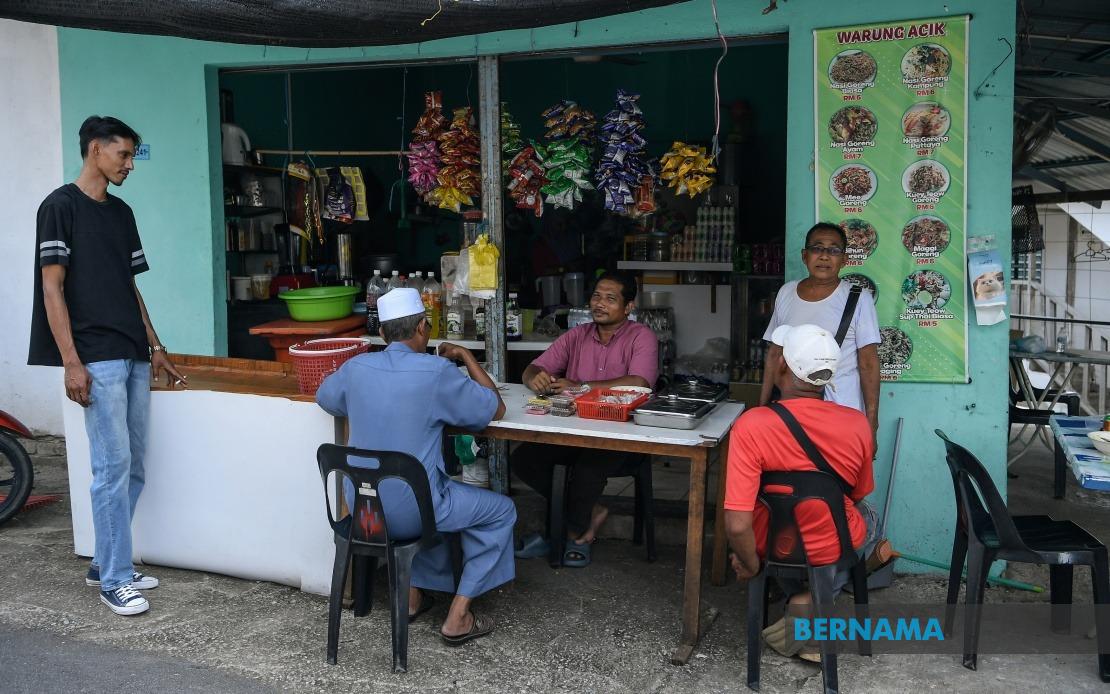
The fishing village of Bukit Malut in Langkawi has become weary of a reputation it says bears no foundation in reality. For years, this modest waterfront settlement has found itself at the centre of speculation whenever news breaks of irregular migration incidents affecting the island, a pattern that community leaders now describe as both damaging and entirely baseless. Speaking this week, the neighbourhood watch chairman and several long-term residents made a coordinated effort to reclaim their community's narrative from what they characterise as misinformation spread primarily through social media channels that have transformed allegation into accepted fact among outsiders.
Moderation of Bukit Malut's public image has become a priority because the constant association with refugee trafficking carries real consequences for those who live there. Mohamad Fadzli Abdullah, chairman of Bukit Malut Neighbourhood Watch (KRT), articulated the frustration plainly: whenever irregular maritime arrivals occur anywhere in Langkawi's waters, his community becomes the default suspect despite possessing no logical connection to the incidents. This reflexive blame reflects a broader Malaysian tendency to anchor anxieties about migration and security onto visible, geographically convenient targets, particularly communities that are economically marginalised or physically isolated. The irony, as community representatives emphasise, lies in Bukit Malut's actual geography and security environment.
The settlement's immediate proximity to three major Malaysian security installations fundamentally contradicts claims that it serves as a haven for clandestine operations. The Malaysian Maritime Enforcement Agency (MMEA), Royal Malaysian Customs Department (RMCD), and Royal Malaysian Navy (RMN) all maintain significant operational presences nearby, making it extraordinarily unlikely that sophisticated smuggling operations could function undetected in those waters. Security agencies maintain continuous surveillance over the waters surrounding Bukit Malut precisely because of its strategic location. The notion that refugee landings could occur repeatedly in an area under such intensive monitoring strains credibility, yet the rumours persist regardless of observable reality.
Perhaps most tellingly, Bukit Malut has generated considerable debate despite its demographic composition being entirely unremarkable for a Kedah coastal community. Approximately eighty-five percent of residents work as fishermen, a profession that naturally clusters in such locations throughout Malaysia's peninsula and island regions. The remainder comprises traders, car rental operators, civil servants, uniformed personnel, and university-educated professionals employed across various economic sectors. This occupational diversity reflects a functioning village economy rather than any purpose-built reception centre for irregular migrants. The professional credentials of many residents—including members of government agencies and armed services—underscore the community's integration into Malaysia's institutional structures.
False perceptions about restricted access to Bukit Malut compound the damage. Community leaders explicitly deny any barriers to public entry, instead pointing to continuous security monitoring as evidence of transparency rather than concealment. The contradiction between narratives suggesting restricted, secretive operations and the reality of open access to residents and visitors reveals the logical inconsistencies embedded in the original allegations. If authorities genuinely suspected illicit activities, they would presumably restrict access; the opposite arrangement prevails here, yet this fact appears largely absent from circulating rumours. This dynamic demonstrates how social media amplification of unverified claims can persist even when contradicted by straightforward observable facts.
The generational impact of this stigmatisation extends beyond adults and into the lives of younger residents. Hasanah Zakaria, who has resided in Bukit Malut for more than two decades, describes how her child experienced social complications at a boarding school in Langkawi simply because of the village's reputation. Rather than accept inaccurate characterisations as inevitable, she urges visitors to develop independent impressions through direct experience. Bukit Malut, by her account, functions as an ordinary village community without the elevated crime or security problems that rumours suggest. The inability of a child to escape the reputational consequences of where their family lives represents a tangible harm created entirely by unsubstantiated claims.
For longer-term settlers like Abas Salam, now sixty-two, the current allegations represent a puzzling inversion of the community's actual history. Among the earliest residents to establish Kampung Tanjung Lembung in Bukit Malut, he witnessed the community's development from its earliest days through manual labour and collective effort. Religious infrastructure, basic housing, and educational facilities were constructed through the initiative and resources of residents themselves, without external assistance at critical junctures. Over his thirty-plus years in residence, Abas maintains that he has encountered no evidence of Myanmar refugees operating within the community. His extended family and descendants have benefited from improved living standards and educational opportunities that developed as the settlement matured. This chronological perspective from someone who experienced Bukit Malut's formative period carries particular weight in contradicting narratives that appear to have little basis in documented community history.
Specific frustration also centres on the persistent suggestion that residents possess connections to Rohingya populations, a claim that Abas directly refutes through reference to his family's longstanding Kedah Malay-Muslim identity and documented Malaysian citizenship. The invocation of ethnicity and religious background in these allegations carries particular sensitivity in the Malaysian context, where such associations can activate broader social anxieties. For residents to find themselves perpetually subject to these particular insinuations—despite legal citizenship, generational roots in the region, and documented occupational integration—represents a failure of the broader information ecosystem to distinguish between actual evidence and circumstantial supposition.
The community's organised response to these allegations marks a shift from passive acceptance of a damaging reputation toward active contestation of falsehoods. By speaking publicly, community leaders and residents seek to establish an alternative narrative grounded in verifiable facts: documented government service among residents, confirmed occupational patterns, physical proximity to security agencies, and historical continuity of settlement development. Whether such coordinated truth-telling can overcome the entrenchment of social media rumours remains uncertain, particularly given how quickly false narratives about migration and security acquire cultural persistence in Southeast Asian contexts. Nonetheless, Bukit Malut's residents have signalled a determination to resist marginalisation and mischaracterisation, insisting on recognition of their legitimate place within Malaysian society and Langkawi's community structure.

