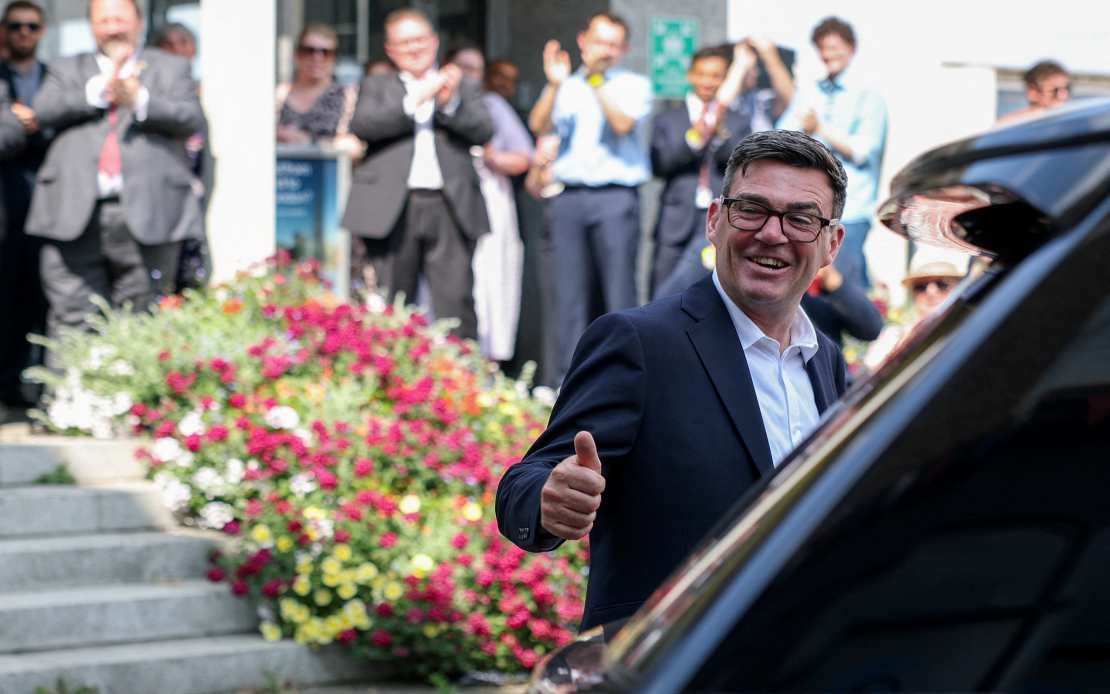
Andy Burnham will assume the office of UK prime minister on Monday with promises to deliver political stability and meaningful relief for ordinary Britons struggling with the cost of living. The former mayor of Greater Manchester, who returned to Parliament only weeks before his elevation to the party leadership, will visit King Charles III to formally accept the position before delivering his first address as premier. His initial speech from Downing Street is expected to strike a tone of reflection and resolve, acknowledging the nation's challenges whilst projecting confidence in Labour's capacity to address them.
The political context surrounding Burnham's accession underscores the severity of instability that has plagued Westminster in recent years. The appointment marks the arrival of Britain's eighth prime minister in the span of a single decade, a turnover that has eroded public trust in government institutions and created policy continuity challenges across Whitehall and beyond. Burnham has explicitly recognised this historical backdrop, indicating that his administration will prioritise establishing the kind of steady, principled governance that voters have found conspicuously absent. This emphasis on stability represents more than mere rhetoric; it reflects a strategic decision to contrast the new government with the fractious politics that preceded it.
The incoming premier's approach to cost-of-living pressures will form a cornerstone of his early agenda. Unlike his predecessor Keir Starmer, whose administration emphasised long-term structural reforms, Burnham has indicated a willingness to deploy immediate interventions designed to ease household budgets and provide tangible breathing room for families. His allies have emphasised that political stability must translate into concrete improvements in living standards rather than remaining confined to rhetorical commitment. This pragmatic stance suggests a recalibration of Labour priorities, moving away from abstract policy frameworks towards measures that directly affect household incomes and expenditure patterns.
One of Burnham's most significant early decisions involves scrapping the digital ID programme that Starmer had championed as a flagship initiative. This move reflects both a substantive policy disagreement and a symbolic assertion of a new direction for the Labour government. By redirecting resources previously allocated to digital identity infrastructure towards cost-of-living support, Burnham signals that his administration views immediate economic relief as a higher priority than technological modernisation. Environmental organisations, however, have raised concerns about aspects of his economic agenda, particularly regarding potential expansion of North Sea oil and gas exploration.
Decentralisation stands as another pillar of Burnham's intended programme. Having built his political reputation through devolved governance arrangements in Greater Manchester, the new premier is committed to dispersing power away from the Westminster centre towards regional authorities. This devolution agenda carries particular significance for Malaysia and other Commonwealth nations monitoring the evolving relationship between central and regional governance structures. Burnham's approach could establish a model for how larger nations redistribute decision-making authority whilst maintaining national cohesion and strategic coordination.
The question of Thames Water nationalisation represents an immediate test case for Burnham's proclaimed commitment to public control of essential services. The water company's deteriorating financial condition—characterised by a £20 billion debt burden and persistent infrastructure failures—has prompted discussion of state intervention. The company's creditors have signalled openness to negotiating with the new government about potential rescue mechanisms, though whether temporary or permanent nationalisation becomes necessary remains to be determined. Burnham's previous rhetoric supporting greater public ownership of critical utilities suggests he possesses ideological sympathy for decisive intervention, yet the fiscal implications of such action constrain his options.
Energy policy will command immediate attention from the incoming administration. Reports suggest that Burnham's team is considering measures to constrain energy bills, potentially through expanded North Sea drilling licences. This approach, however, contradicts Labour's 2024 manifesto commitment against issuing new drilling licences, creating internal tension between campaign promises and governing pragmatism. Environmental advocates argue that expanded fossil fuel extraction would not meaningfully reduce energy costs for consumers, instead perpetuating long-term dependence on volatile commodity markets. This dispute illustrates the complex trade-offs facing the new government between short-term populist measures and long-term strategic objectives.
Burnham's ascension to the premiership occurred through an unusual pathway that involved no contested leadership election. His return to Parliament occurred barely a month before his elevation to the party leadership, resulting in a rapid and unopposed transition to the top position. This compressed timeline has left substantive elements of his governing agenda still largely unelaborated. Unlike predecessors who articulated detailed policy platforms during lengthy campaign periods, Burnham will essentially define his premiership through governance choices rather than pre-electoral commitments. This approach carries risks, as governing realities frequently diverge sharply from theoretical intentions, yet it also provides flexibility for the new administration to respond dynamically to emerging challenges.
The composition of Burnham's cabinet will provide important signals regarding the ideological direction of his government. Particular focus has settled on the position of chancellor, with Energy Secretary Ed Miliband and Home Secretary Shabana Mahmood widely regarded as the leading candidates for this crucial economic portfolio. The choice between these individuals would carry substantial implications for the trajectory of fiscal policy, industrial strategy, and regulatory reform. Miliband's background in energy issues contrasts with Mahmood's public order focus, suggesting different priorities for economic management. The appointment decisions Burnham announces this week will substantially shape investor confidence, policy direction, and the broader tone of his administration.
For Malaysian observers and regional analysts monitoring international political developments, Burnham's premiership merits attention as a case study in how large Westminster-model democracies navigate extended periods of political volatility. The emphasis on restoring institutional confidence after chronic instability resonates with governance challenges faced across the Commonwealth and globally. Furthermore, Burnham's devolution agenda and stated commitment to regional empowerment offer potential lessons for nations grappling with centralised versus distributed governance structures. The practical effectiveness of his proposed reforms—whether they deliver genuine stability and living-standard improvements—will influence broader international assessments of how pluralist democracies can restore public trust following extended periods of institutional dysfunction.

