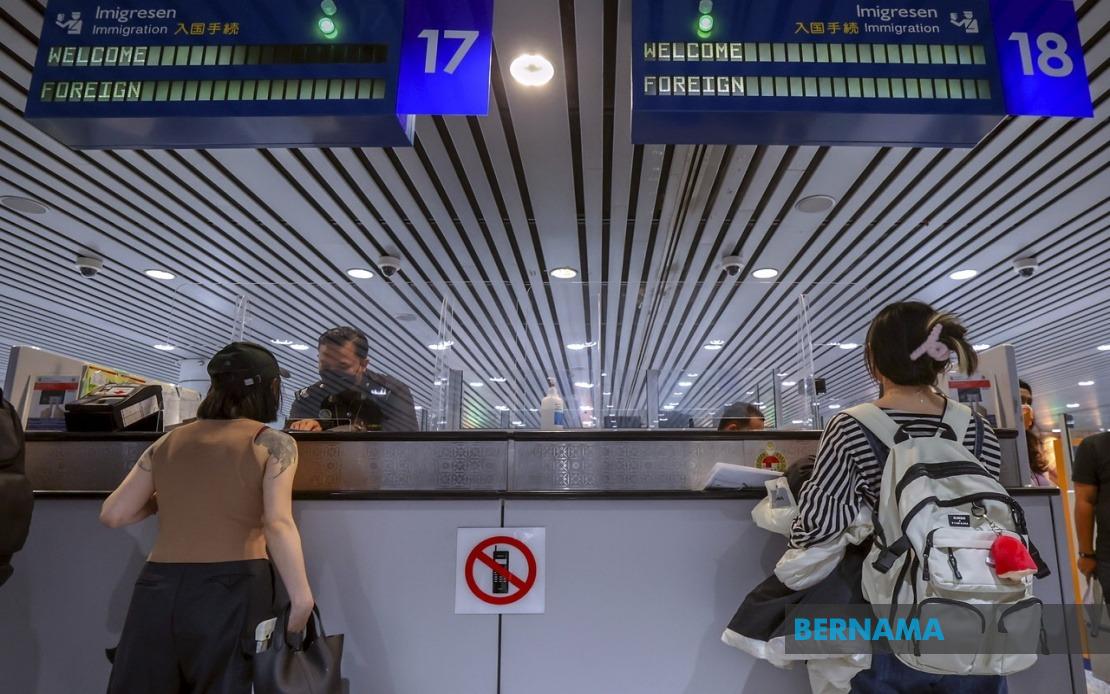
Malaysia's Cabinet has greenlit an ambitious security enhancement programme spanning 17 recommendations designed to fortify screening protocols, risk assessment mechanisms and administrative oversight at Kuala Lumpur International Airport and the country's network of international entry points. The Home Ministry and Ministry of Transport jointly presented the framework at yesterday's Cabinet session, signalling high-level government commitment to closing vulnerabilities that have been exposed by recent high-profile incidents at the nation's borders.
The security roadmap operates across three distinct phases, with immediate actions demanding priority execution over the coming weeks. Six quick-win initiatives form the cornerstone of the short-term strategy, centring on refocused screening protocols that emphasise risk-based intelligence. Rather than applying uniform inspection regimes, authorities will concentrate resources on passengers, aircraft, crew members and baggage marked as presenting elevated risk through intelligence analysis and behavioural profiling.
E-Vetting and access control mechanisms constitute another pillar of the immediate response. This initiative tightens scrutiny of individuals granted entry to restricted airport zones, encompassing flight crew members, airline operational staff, ground handling personnel, airport company employees, maintenance contractors and vendors. The expanded vetting framework recognises that security breaches have historically exploited the trusted-person status accorded to those with legitimate airport access, making this demographic a critical oversight priority.
Drug screening protocols for aviation personnel represent a third immediate measure, mandating pre-employment assessment, routine periodic checks and unannounced random testing for pilots, cabin attendants and associated aviation staff. The measure responds directly to the arrest of a Malaysian pilot at Jakarta's Soekarno-Hatta International Airport discovered carrying approximately 25 kilogrammes of MDMA, an incident that exposed alarming gaps in personnel vetting and prompted urgent governmental review.
The remaining three short-term actions involve increasing visible security personnel deployment throughout airport zones, implementing systematic intelligence-sharing mechanisms between relevant agencies, and establishing a dedicated Home Ministry-Transport Ministry Technical Committee to oversee and coordinate implementation efforts. These administrative reforms address fragmentation that critics argue has permitted security incidents to occur despite overlapping agency mandates.
Medium-term implementation encompasses technology modernisation, asset acquisition and workforce development initiatives designed to build institutional capacity for sustained security operations. This phase acknowledges that technological solutions—enhanced biometric systems, advanced cargo scanning equipment and integrated information platforms—require investment, procurement and specialist personnel training that cannot be compressed into immediate timelines.
The long-term strategic horizon involves systemic transformation emphasising information integration across agencies, governance standardisation and progressive rollout to Malaysia's broader constellation of international gateways. The phased expansion approach recognises that not all entry points face identical threat profiles, permitting authorities to calibrate implementation intensity according to each location's operational circumstances and intelligence assessments.
For Malaysia, a nation positioned as a crucial regional aviation hub with substantial transit traffic and growing security consciousness among international carriers, the Cabinet decision addresses mounting pressures from multiple directions. The pilot arrest incident triggered concern among foreign aviation authorities about Malaysian personnel screening standards, potentially influencing carrier decisions regarding crew repositioning and operational logistics. Tourists and business travellers likewise factor perceived border security into destination selection calculations, making visible government action on this portfolio a matter of competitive positioning within Southeast Asia's aviation market.
The government's public rhetoric emphasises balance between security imperatives and individual rights protections, including explicit commitments to data protection compliance and passenger interests. This framing responds implicitly to potential criticism that expanded screening and access control might impose burdensome compliance obligations on legitimate business operations or impose surveillance intrusiveness on Malaysian citizens and international visitors.
The Home Ministry-Transport Ministry collaboration reflects institutional acknowledgement that airport security spans multiple regulatory domains, requiring coordinated governance rather than siloed agency operations. Previous security incidents arguably reflected communication deficiencies between border agencies and aviation authorities, creating opportunity windows for contraband transit or personnel misconduct to proceed undetected.
KUALA LUMPUR's designation as the implementation pilot site for the comprehensive framework suggests the government intends to demonstrate operational feasibility and effectiveness before requiring compliance from secondary gateways serving destinations including Penang, Johor Bahru and Kota Kinabalu. This sequenced rollout permits refinement of procedures based on practical operational experience before nationwide standardisation.
Malaysia's commitment to this security enhancement programme carries implications for the broader Southeast Asian region, where governance capacity for border management and inter-agency coordination varies considerably. A demonstrably effective KLIA security framework could establish operational templates applicable to other regional aviation hubs, potentially informing Association of Southeast Asian Nations-level discussions regarding aviation security standardisation and information-sharing protocols.
The framework's emphasis on professional implementation conducted within legal and ethical boundaries addresses historical concerns that security measures might occasionally veer toward arbitrary application or rights infringements. This commitment to governance integrity becomes particularly significant given Malaysia's multicultural composition and international reputation considerations, both potentially affected by perception of security operations as discriminatory or excessive.

