Malaysia's Cabinet has thrown its weight behind a constitutional amendment designed to grant Parliament a more decisive voice in selecting the nation's Public Prosecutor. The Legal Affairs Division announced the decision on July 8, signalling the government's commitment to recalibrating the relationship between executive oversight and parliamentary scrutiny in judicial appointments. The move represents a landmark moment in Malaysia's ongoing institutional reform agenda, intended to delineate more clearly the distinct roles of the Attorney General and the Public Prosecutor—historically ambiguous positions that have long sparked debate among legal scholars and civil society watchdogs.
The centrepiece of this reform initiative is the Constitution (Amendment) (No. 2) Bill 2026, which seeks to untangle the overlapping functions of two powerful legal offices. Under the current framework, the Attorney General serves as the Crown's chief legal adviser and policy advocate, while the Public Prosecutor wields prosecutorial discretion in criminal matters. The proposed amendments aim to crystallise this separation, ensuring that prosecutorial decisions remain insulated from political influence while maintaining appropriate democratic accountability. This institutional clarity has become increasingly important as Malaysia navigates broader questions about judicial independence and public confidence in the criminal justice system.
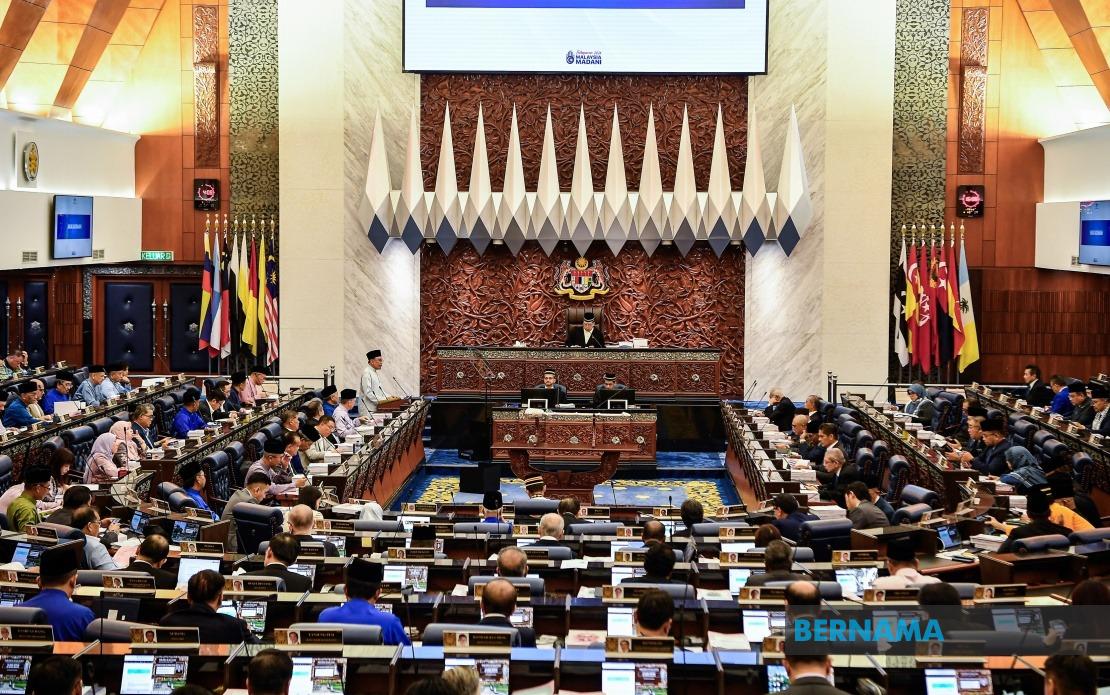
The legislative journey of this amendment has been notably deliberative. Parliament's Dewan Rakyat first encountered the Bill on February 23, 2026, and swiftly referred it on March 3 to a bipartisan Special Select Committee tasked with examining constitutional implications. This committee, composed of eleven MPs drawn equally from government and opposition benches, convened seven formal sessions to dissect the proposed changes. The inclusive parliamentary process reflects a recognition that constitutional amendments affecting core governance structures demand broad political consensus and rigorous scrutiny beyond executive chambers.
The Select Committee's report, tabled on June 22, incorporated feedback from diverse constituencies including government and opposition lawmakers, legal scholars, and civil society organisations. This stakeholder engagement proved particularly significant, as it allowed the committee to assess proposed safeguards against concerns that enhanced parliamentary involvement might itself create political vulnerabilities. The iterative process demonstrates how Malaysia's constitutional framework permits evolutionary adaptation when genuine institutional concerns emerge requiring remedy.
Central to the Cabinet's endorsement is a refined amendment to Article 145A, Clause 18, which recalibrates the appointment mechanism itself. Under the new framework, candidates for the Public Prosecutor position will be submitted to the Speaker of the Dewan Rakyat, who tables them before Parliament. A dedicated Select Committee will then conduct substantive scrutiny of these candidates, examining their qualifications, temperament, and judicial philosophy. Following this parliamentary evaluation, the Dewan Rakyat will issue formal recommendations to the Judicial and Legal Service Commission, which bears constitutional responsibility for advising the Yang di-Pertuan Agong on final appointments.
This layered process introduces multiple checkpoints designed to prevent any single political actor from unilaterally controlling the appointment. By channelling candidates through Parliament first, the framework harnesses legislative legitimacy and plural viewpoints before the matter reaches the advisory commission. The Speaker's gatekeeping role and the Select Committee's deliberative function create transparency and create institutional distance between partisan pressures and prosecutorial independence. For Malaysian readers concerned about judicial impartiality, this mechanism offers tangible procedural safeguards.
The government's framing emphasises alignment with international best practices and public trust restoration. The statement highlights that the reform endeavours to build a prosecution system worthy of public confidence and internationally competitive in standards. This positioning resonates with Malaysia's growing awareness that investors, foreign partners, and citizens themselves increasingly scrutinise the strength of legal institutions and prosecutorial integrity. Countries with transparent, accountable appointment mechanisms often attract better-qualified candidates and project confidence in their rule of law credentials.
For Southeast Asia more broadly, Malaysia's constitutional tinkering offers instructive lessons. Many regional nations grapple with balancing prosecutorial independence against democratic legitimacy. Some systems concentrate excessive power in executive or judicial hands, while others swing toward paralysing fragmentation. Malaysia's approach—vesting scrutiny in Parliament while preserving institutional roles—represents a pragmatic middle path. Neighbouring democracies facing similar challenges may find the Malaysian model instructive as they design or refine their own appointment frameworks.
The amendment's timing also merits attention. The MADANI Government, since assuming office, has prioritised institutional reform as foundational to its governance philosophy. Tackling the Attorney General-Public Prosecutor distinction reflects this broader commitment to clarifying governmental structures muddied by decades of accumulated practice and precedent. By addressing these foundational questions early in its term, the government signals that institutional legitimacy underpins its political agenda.
Parliamentary debate is scheduled for July 13 during the Fifth Session of the 15th Parliament's second meeting. This public airing will permit lawmakers to articulate concerns, propose refinements, and build public understanding of why this constitutional amendment matters. The debate will likely illuminate whether opposition MPs view the mechanism as genuinely protective of prosecutorial independence or merely cosmetic window-dressing. Substantive parliamentary disagreement, if voiced respectfully, ultimately strengthens the final product by forcing government to justify and defend its design choices.
The implications for Malaysia's criminal justice system are substantial. Prosecutorial decisions—charging decisions, sentencing recommendations, appeals strategy—profoundly affect individual lives and public perceptions of fairness. When the public questions whether prosecutorial choices reflect political direction rather than legal merit, system legitimacy erodes. By anchoring the appointment process in parliamentary scrutiny and institutional mechanisms insulating the prosecutor from government control, these amendments attempt to rebuild that trust. The next five years will prove whether the structural changes translate into substantive prosecutorial independence.
Civil society groups, which participated in the committee's consultation phase, will likely monitor implementation closely. Their involvement in designing the framework creates stakeholder buy-in but also establishes accountability benchmarks. If the appointment process appears manipulated or if the selected Public Prosecutor thereafter proves susceptible to political direction, these observer groups possess documented expectations against which to measure actual performance. This transparency creates both opportunity and pressure for genuine institutional change.
Looking forward, this constitutional amendment represents one pillar of Malaysia's broader judicial independence project. Complementary reforms addressing court administration, judicial appointments, and sentencing guidelines will determine whether the prosecutor's independence yields measurable improvements in system fairness. The Cabinet's endorsement of strengthened parliamentary involvement in Public Prosecutor appointments signals genuine institutional commitment, though sustained political will and careful implementation will ultimately determine whether this constitutional aspiration becomes institutional reality.

