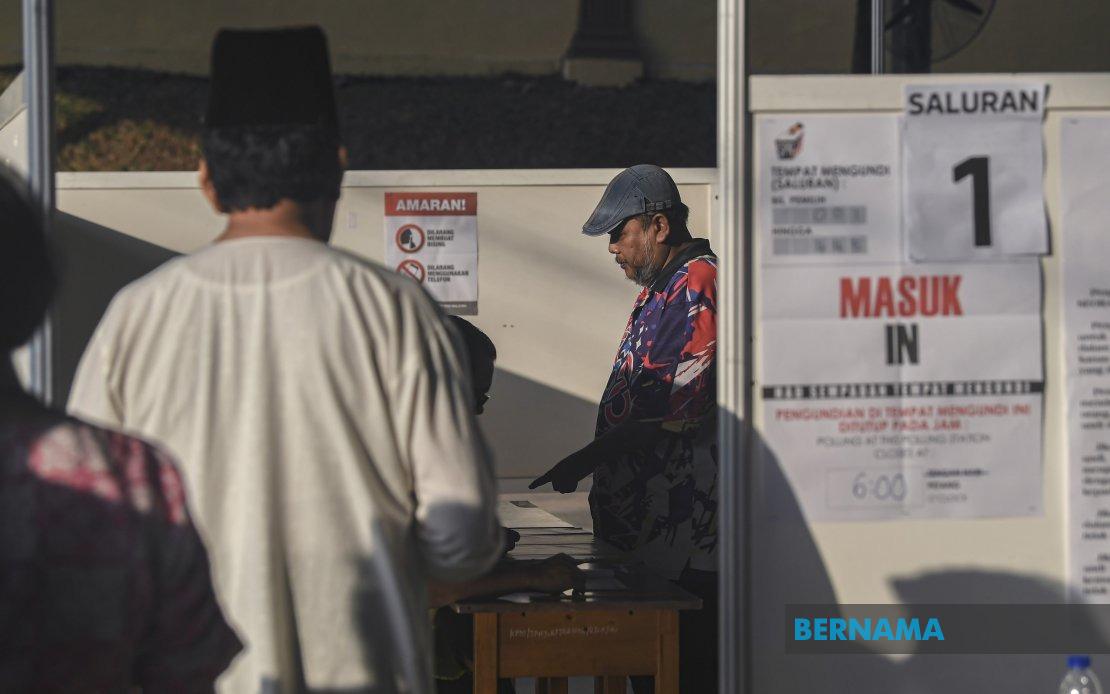
The 16th Johor State Election got underway on July 11 with prominent members of the federal government fulfilling their civic duty at various polling locations across the southern state. Beginning at 8 am, electoral officials oversaw voting at over one thousand locations as the campaign phase concluded and Johoreans prepared to determine their state representation for the coming term. The participation of senior national leaders underscored the significance of the election within Malaysia's broader political landscape, where state-level contests often reflect shifting national sentiment.
Datuk Seri Azalina Othman Said, who heads the Prime Minister's Department portfolio responsible for law and institutional reform, was among the earliest to participate, arriving at Sekolah Kebangsaan Bandar Penawar in Pengerang to cast her vote at 8.15 am. Her swift arrival at the polling station set the tone for ministerial engagement with the electoral process. The deliberate timing of such high-profile votes, often occurring in the morning hours when media attention is typically heightened, demonstrates the messaging value both the government and opposition parties attach to visible civic participation by their leadership.
Defence Minister Datuk Seri Mohamed Khaled Nordin voted at Sekolah Kebangsaan Rinting 1 in Masai at 8.30 am, while Plantation and Commodities Minister Datuk Seri Dr Noraini Ahmad exercised her franchise approximately twenty minutes later at Sekolah Menengah Kebangsaan Dato' Onn in Batu Pahat. The geographical spread of these voting locations across different Johor districts—from coastal Pengerang to the interior regions and Batu Pahat in the south—reflected the distributed nature of electoral participation among the federal leadership. This dispersion also highlighted how ministers with various portfolio responsibilities maintain electoral connections across different parts of the state.
Deputy Works Minister Datuk Seri Dr Ahmad Maslan cast his ballot at Sekolah Kebangsaan Seri Bahagia in Benut at 8.40 am, continuing the pattern of senior government figures engaging directly with the democratic process. Deputy Communications Minister Teo Nie Ching voted slightly later in the morning at Sekolah Jenis Kebangsaan Cina (SJKC) Kulai Besar, arriving at 9.30 am. The participation of a minister representing the communications portfolio carried particular symbolic weight, as such positions typically command significant media engagement and public visibility.
The election infrastructure supported this large-scale exercise in democratic participation through an extensive network of facilities. A total of 1,076 polling centres operated simultaneously across Johor from 8 am onwards, with 4,889 individual polling streams processing voters throughout the day. This scale of operational complexity required careful coordination among election officials, security personnel, and administrative staff to ensure smooth voting procedures and prevent congestion at individual locations.
The 2.7 million registered voters who were eligible to participate represented a significant constituency whose preferences would determine governmental composition for the foreseeable future. This substantial electorate base underscored Johor's importance within Malaysia's federal system—as one of the most populous states, its election results frequently carry implications beyond state boundaries, influencing national political calculations and coalition dynamics. The voting process was scheduled to continue until 6 pm, providing a ten-hour window for voters to cast their ballots.
The conclusion of the fourteen-day campaign period at midnight the previous evening marked the formal end of the candidates' active electioneering. This campaign duration had allowed parties and candidates to present their platforms, engage with communities, and mobilize their supporters. The transition from campaign mode to voting day represented a critical juncture where political activity shifted from persuasion to ballot-counting and result determination.
For Malaysian readers monitoring this election, the ministerial participation offered a visible reminder of how electoral processes operate at the state level, where federal representatives often maintain electoral bases and voter connections. The Johor state election held particular relevance given the state's economic significance, its position as a major southern gateway to Singapore, and its role in broader federal-state political negotiations. The election results would potentially reshape Johor's political trajectory and could influence calculations around future national electoral cycles.
The coordination of voting across such a distributed system—involving millions of voters, thousands of polling locations, and hundreds of thousands of staff and observers—represented a logistical achievement reflective of Malaysia's institutional capacity for managing electoral democracy. The orderly participation of cabinet-level officials alongside ordinary citizens demonstrated the principle that voting operates as a universal right and responsibility, irrespective of position or status. As results began to emerge throughout the evening, they would provide insights into voter preferences and political trends that analysts and policymakers across the region would examine closely.

