The Malaysian Cabinet has imposed a firm two-week deadline for the Ministry of Home Affairs (KDN) and Ministry of Transport (MOT) to deliver a comprehensive strategy for bolstering security measures across the nation's airports. Home Minister Datuk Seri Saifuddin Nasution Ismail made the announcement during a press conference in Sandakan, acknowledging that recent security breaches have raised troubling questions about the effectiveness of existing safeguards and cast an unflattering light on Malaysia's ability to protect its aviation infrastructure.
The directive reflects mounting anxiety within Cabinet circles regarding a series of incidents that have suggested cracks in the airport security apparatus. Officials view these lapses as not merely operational hiccups but as matters of profound concern that undermine public confidence and international perceptions of Malaysian competence. The government's decision to establish this urgent timeframe signals an intent to move swiftly from acknowledgment to concrete remedial action, with multiple agencies expected to contribute expertise and resources to the redesigned security framework.
The renewed focus on airport security has been precipitated by several high-profile cases involving Malaysians in recent weeks. Most notably, a Malaysian pilot was apprehended following the discovery of approximately 25 kilograms of MDMA at Indonesia's Soekarno-Hatta Airport last week, an incident that exemplifies how porous security arrangements can facilitate drug trafficking and other criminal activities. These cases have prompted serious reflection within government about whether current protocols, technologies, and personnel training adequately address contemporary security threats.
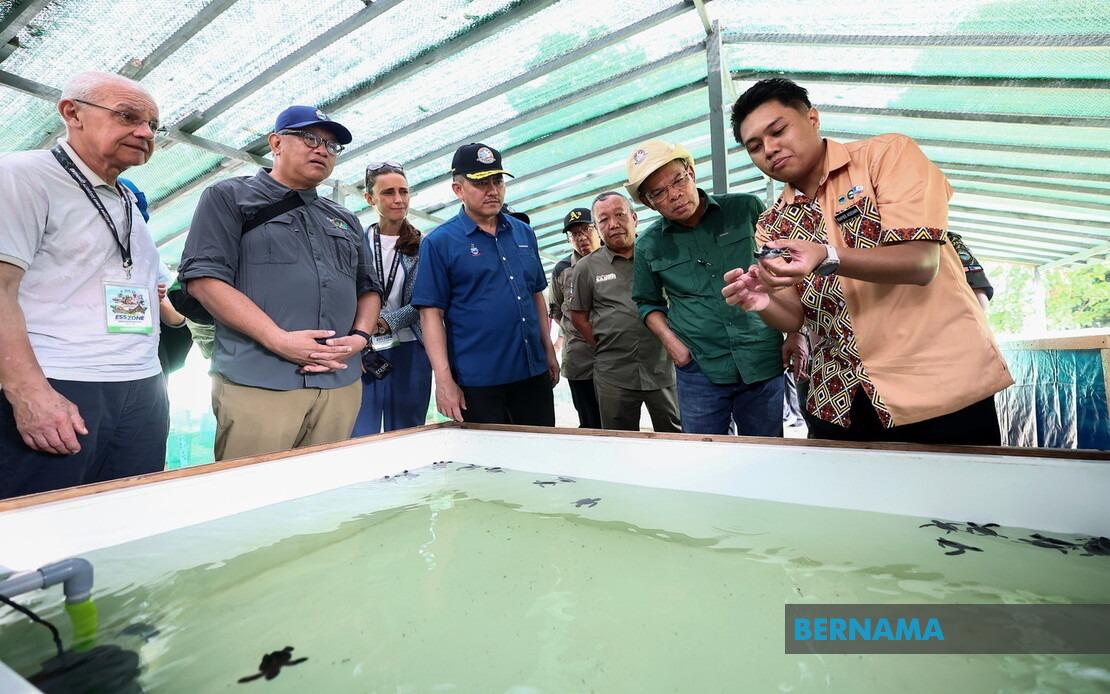
Saifuddin's visit to Sandakan was part of a broader diplomatic mission in which he accompanied foreign diplomats through the Eastern Sabah Security Zone (ESS Zone), accompanied by ESSCOM commander Datuk Victor Sanjos and CEO Datuk Dr Jamaluddin Mohd Ali. This orchestrated tour served a dual purpose: demonstrating to international representatives the genuine improvements in regional security while simultaneously gathering firsthand intelligence about vulnerabilities that require attention.
Parallel to the airport security initiative, the Home Affairs Ministry is pursuing a concurrent campaign to persuade foreign governments to revise their travel advisories for Sabah's east coast. Several nations, including Japan and Switzerland, have already moderated their warnings after receiving sustained briefings and tangible evidence of enhanced stability in the region. This diplomatic effort carries significant economic implications, as restrictive travel advisories deter foreign tourists and investors from a region with substantial tourism potential.
To reinforce this messaging, the government orchestrated a security familiarisation programme involving 14 diplomatic representatives who visited key locations and tourist destinations throughout the ESS Zone. The initiative operates on the premise that direct observation of security conditions and peacetime conditions will encourage these diplomats to transmit more balanced and accurate assessments to their home countries, thereby gradually rehabilitating Malaysia's international image in the aftermath of recent embarrassments.
The operational statistics from the ESS Zone provide tangible evidence of enforcement activity. Between January and June 30, ESSCOM executed 897,293 inspections and resulted in 307 arrests across the designated area. These figures demonstrate intensive monitoring operations, though observers might question whether the volume of activity translates proportionally into enhanced security outcomes or deterrence. Simultaneously, enforcement operations during this six-month window yielded 38 seizures valued at RM23.37 million, primarily through rigorous controls over land borders and territorial waters.
The government's commitment to the ESS Zone extends beyond immediate enforcement measures. The federal administration has invested a cumulative total of RM723 million to the zone over ESSCOM's 13 years of operational existence, funding asset acquisition, day-to-day operations, and logistical support. This substantial financial commitment underscores the strategic importance of maintaining sovereign control over an area historically vulnerable to unauthorised maritime incursions and transnational criminal networks.
The convergence of the airport security initiative and the diplomatic reputational repair effort reflects a government grappling with the reality that security lapses generate cascading consequences extending far beyond immediate operational concerns. When a Malaysian pilot becomes entangled in international drug smuggling, or when security breaches become public knowledge, the damage extends to Malaysia's standing as a reliable partner for international aviation, tourism, and investment. The two-week deadline imposed on KDN and MOT acknowledges this broader imperative to demonstrate rapid, decisive action.
For Malaysian stakeholders, particularly those in aviation, tourism, and international business, the Cabinet's intervention signals that security issues will command elevated attention and resources. Airports will likely experience intensified screening procedures and upgraded technological infrastructure in coming months. The diplomatic outreach simultaneously suggests that the government expects improved travel advisory ratings to translate into increased international visitor arrivals, benefiting hospitality and retail sectors across Malaysia.

