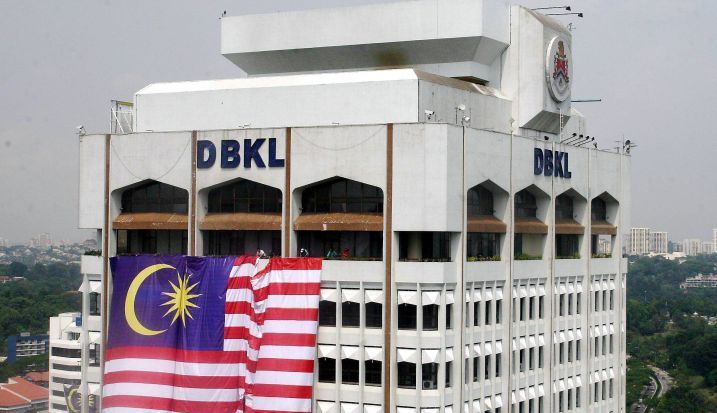
The Cabinet has put the brakes on potential legal reforms to how Kuala Lumpur is governed, instead ordering immediate action to strengthen internal accountability and decision-making processes at City Hall. Minister in the Prime Minister's Department (Federal Territories) Hannah Yeoh announced the directive following the Cabinet's receipt of a comprehensive feasibility study on proposed amendments to the Federal Capital Act 1960, known as Act 190. The move reflects a pragmatic assessment that many of the city authority's operational challenges stem not from legal shortcomings but from procedural deficiencies that can be remedied without rewriting legislation.
The International Islamic University Malaysia conducted the four-month investigation between December 1 last year and March 31, during which researchers examined DBKL's administrative framework, decision-making protocols, service quality, compliance mechanisms and institutional capacity. The study team engaged directly with Kuala Lumpur's federal representatives and senior management at the city hall to understand existing pressures and proposed solutions. This grassroots consultation distinguished the approach from purely academic analysis, grounding recommendations in practical realities facing those who navigate the system daily.
Two competing proposals for restructuring Kuala Lumpur's administration had prompted the feasibility study. The Policy Advisory Committee to the Prime Minister had advocated for creating a Supreme Council to reshape the mayor's office and distribute authority more widely. Simultaneously, several Kuala Lumpur MPs tabled an alternative proposal for a City Council comprising the city's seven federal representatives to provide advisory input to the mayor. These proposals emerged from legitimate concerns about transparency and accountability in how the capital is managed, reflecting broader anxieties about concentrating administrative power in a single corporate entity.
However, the IIUM study cautiously rejected both approaches, warning that introducing a councillor system with formal powers would fundamentally alter Kuala Lumpur's legal status. Under Section 5(1) of Act 190, the city operates as a "corporation sole" where legal authority resides in the mayor's office rather than distributed across a council. Transforming this structure into a conventional local authority could trigger unexpected complications related to Kuala Lumpur's dual role as both national capital and Federal Territory, potentially creating conflicts with the 1974 agreement transferring governance to the Federal Government.
The study identified a crucial diagnostic insight: most of DBKL's administrative problems do not originate from inadequate legal foundations but from the absence of clear operational guidelines, standardised procedures, and transparent rules governing meetings and decision-making. This distinction matters significantly because it suggests remedies lie within management's reach rather than requiring protracted legislative debate. When governance lapses stem from procedural ambiguity rather than legal constraint, organisations can implement corrective measures swiftly through internal directives without navigating the parliamentary process.
The researchers recommended strengthening DBKL's existing Advisory Board rather than establishing a competing body that might duplicate functions or create accountability confusion. They proposed introducing a formal governance framework specifying the professional qualifications and composition criteria for Advisory Board members, including provisions for civil society representation. This framework would also establish explicit procedures for meetings, proposal evaluation, reporting standards and clarify working relationships between the board, the mayor, the Federal Territories minister and DBKL management. Such codification transforms informal arrangements into documented systems that reduce discretion and enhance predictability.
Regarding parliamentary engagement, the study recognised legitimate concerns about democratic input while resisting the creation of formal administrative structures. It proposed strengthening Kuala Lumpur MPs' oversight capacity through regular consultation meetings, monitoring committees, budget review sessions and established channels for residents to raise concerns and development issues. Critically, MPs would retain representational functions without acquiring direct administrative authority or formal appointment powers that could blur distinctions between political advocacy and administrative operation. This careful calibration attempts to enhance accountability without compromising operational efficiency or creating competing power centres.
The study stressed that reforms should unfold through administrative measures rather than legislative amendments, at least initially. Internal directives, standardised guidelines, improved coordination protocols and enhanced operating procedures represent immediate avenues for improvement that do not require Cabinet or parliamentary action. This sequencing acknowledges that institutional culture and procedural discipline often determine effectiveness more than statutory frameworks. DBKL can demonstrate commitment to better governance through visible operational reforms that establish credibility for any future legal amendments requiring stakeholder support.
Yeoh indicated that the Federal Territories Department and DBKL are now developing a comprehensive transformation plan addressing decision-making architecture, internal checks and balances, and overall city authority management. The Cabinet will receive periodic progress updates on implementation, suggesting this remains a monitored priority rather than a shelved issue. For Malaysian observers, this measured approach reflects recognition that Kuala Lumpur's complexity as a capital city requires cautious institutional engineering that respects its constitutional position while improving day-to-day governance.
The decision carries implications beyond administrative detail. It demonstrates government preference for internal remediation before legislative restructuring, a principle applicable to other federal institutions. For residents and businesses in Kuala Lumpur, the focus on operational transparency and clarified decision-making procedures should translate into more predictable interactions with city authorities. For federal representatives, the pathway for enhanced parliamentary monitoring through formal consultation mechanisms offers expanded oversight without requiring the contentious City Council structure that the study rejected.

