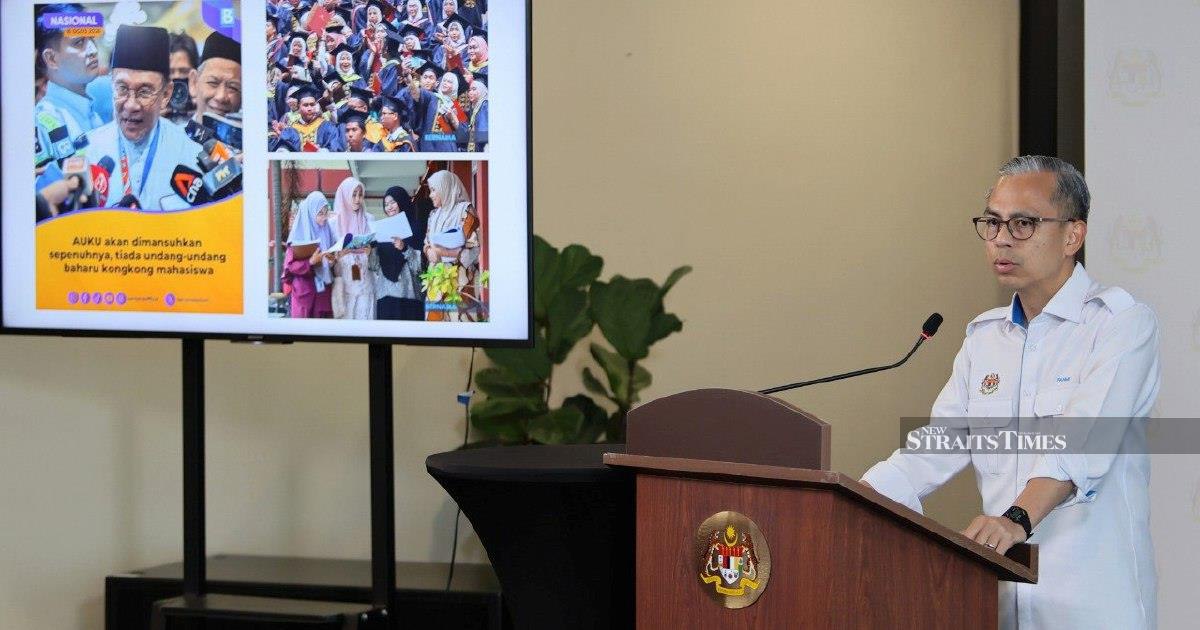
Prime Minister Datuk Seri Anwar Ibrahim's controversial remarks about Taiwan did not become a focal point during cabinet deliberations, government spokesman Datuk Seri Fahmi Fadzil confirmed this week. The clarification came after Taipei reacted sharply to the statements, underscoring the delicate diplomatic sensitivities surrounding cross-strait relations that Malaysia, as a Southeast Asian nation, must carefully navigate.
Fahmi's acknowledgement that the matter did not feature in cabinet discussions suggests the government may be attempting to compartmentalise what appears to be a diplomatic misstep. The absence of formal cabinet-level examination of the comments raises questions about how Malaysia handles statements from its highest office that touch on internationally sensitive issues, particularly those involving China and Taiwan.
Taiwan's strong rebuke of Anwar's remarks reflects Taipei's defensive posture on matters touching its sovereignty and international standing. Any utterance from leaders of countries maintaining diplomatic relations with Beijing regarding Taiwan's status or role invariably triggers scrutiny from the island's authorities, who jealously guard their claim to legitimacy and international recognition despite formal acknowledgement from only a handful of nations.
For Malaysia specifically, the Taiwan question presents an ongoing balancing act. As a country that does not maintain official ties with Taipei but has extensive economic and people-to-people connections, Malaysia must weigh its relationship with China against its pragmatic engagement with Taiwan's government and businesses. Anwar's comments appear to have tilted too visibly in a direction that Beijing would prefer, prompting Taipei's defensive reaction.
The fact that the cabinet did not formally deliberate on the matter also signals something about how Malaysia's cabinet machinery operates when it comes to international relations. Rather than treating controversial statements as requiring collective ministerial review and response calibration, the government appears to prefer allowing such matters to settle without institutional acknowledgement. This approach risks creating inconsistency in Malaysia's diplomatic messaging and leaves room for misinterpretation by other nations.
Regionally, Malaysia's handling of this episode carries implications for how Southeast Asian nations manage their China-Taiwan relations. As a middle power with substantial trading relationships with both China and Taiwan, Malaysia's approach is watched by other ASEAN members wrestling with similar dilemmas. Any perception that a particular Southeast Asian government is leaning too heavily toward Beijing's preferences can trigger concerns about Beijing's influence in the region more broadly.
Anwar's remarks, whatever their specific content, evidently crossed a threshold that warranted a response from Taiwan's leadership. This suggests the statements went beyond routine diplomatic boilerplate to touch on substantive issues of concern to Taipei. The government's decision not to formally discuss the matter at cabinet level may reflect confidence that the situation requires no recalibration, or conversely, a preference to avoid further elevating the profile of an already-sensitive exchange.
Fahmi's statement itself carries diplomatic weight as official clarification. By confirming that cabinet discussions did not include Taiwan, the spokesman effectively de-escalates what could have become an internal Malaysian political issue about how the prime minister's words are reviewed and authorised. The move also reassures Beijing that Malaysia does not intend to make the Taiwan question a subject of sustained institutional debate within government structures.
Looking forward, the episode highlights the occupational hazard facing leaders of nations that must maintain relationships across the Taiwan Strait without official recognition of one side. Statements that seem routine in a domestic Malaysian context can become internationally consequential when they touch on Beijing-Taipei relations. The absence of formal cabinet review mechanisms for such sensitive matters may be something Malaysia's diplomatic establishment needs to reconsider as cross-strait tensions periodically spike.
For ordinary Malaysians, the Taiwan row largely remains a background concern, overshadowed by more immediate domestic preoccupations. Yet the nation's economic ties with both sides of the strait mean that any deterioration in Taiwan-Malaysia relations, or any perception that Malaysia is becoming a tool of Beijing's Taiwan preferences, carries consequences for business, trade, and Malaysia's reputation as an honest regional broker.
The government's handling of the matter suggests a preference for diplomatic understatement and low institutional visibility. Whether this approach ultimately serves Malaysia's long-term interests in maintaining balanced engagement across the Taiwan Strait remains to be seen. For now, Fahmi's confirmation that the cabinet did not address the issue closes one chapter while raising broader questions about how Malaysia manages such delicate international sensitivities going forward.

