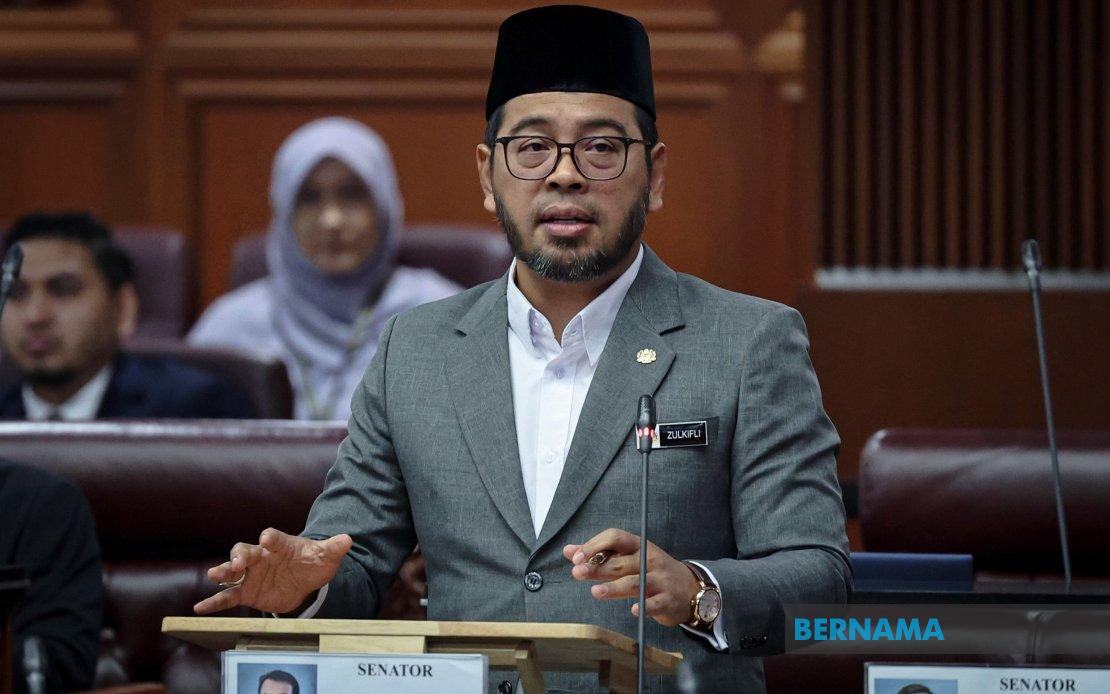
The Malaysian Cabinet is set to deliberate on a proposal to release publicly the final report of the Royal Commission of Inquiry into Tabung Haji, according to Dr Zulkifli Hasan, Minister in the Prime Minister's Department (Religious Affairs). The move comes as the government seeks to address mounting public confusion and accusations surrounding the disposal of Tabung Haji's assets, particularly allegations that the former Treasury secretary-general personally orchestrated the sale of valuable holdings to plug the institution's mounting losses.
Dr Zulkifli categorically rejected claims that Tabung Haji's strategic assets were sold off improperly, characterising such allegations as fundamentally false and misleading. Instead, he framed the entire transaction as a carefully orchestrated bailout designed to rescue a critical Islamic financial institution that had become paralysed by the systematic misappropriation of depositor funds in the years preceding 2018. His statement, made during proceedings in the Dewan Negara, reflects the government's determination to reshape the narrative around one of Malaysia's most significant financial crises affecting Muslim savers.
The crux of the matter centres on the decision to transfer underperforming and problematic Tabung Haji assets to Urusharta Jamaah Sdn Bhd (UJSB), a government-owned special purpose vehicle created for this purpose. Dr Zulkifli emphasised that this transfer was not an isolated action by any single official but rather a collective decision reached by the full Cabinet in 2018, lending it the legitimacy of institutional consensus and collective responsibility rather than individual initiative.
The severity of Tabung Haji's plight in 2018 cannot be overstated. Financial audits conducted by the Auditor-General and stress tests by Bank Negara Malaysia exposed alarming structural weaknesses, revealing that the institution faced an asset-liability deficit of RM10.9 billion. This was no ordinary accounting problem but rather a crisis of existential proportions that threatened the retirement savings and pilgrimage funds of millions of Malaysian Muslims who had deposited their trust and money into the institution.
The panic that ensued was predictable and severe. Within a compressed timeframe, approximately RM6 billion was withdrawn by depositors gripped by fear that their life savings might evaporate. Simultaneously, efforts to secure emergency financing through a standby loan arrangement failed, eliminating what might have been a less disruptive path to stabilisation. The government faced an immediate choice between allowing a systemically important institution to collapse or undertaking aggressive intervention.
The potential liability exposure facing the federal government made immediate action imperative. Had Tabung Haji been allowed to fail, the government would have faced the obligation to honour deposit guarantees totalling approximately RM74.5 billion, a staggering sum that would have imposed severe fiscal consequences and shattered public confidence in Malaysia's Islamic financial sector. This calculation fundamentally vindicated the rescue decision in purely economic terms, setting aside broader considerations about systemic stability and institutional preservation.
The results of the intervention vindicate the government's approach. Tabung Haji has undergone a remarkable financial turnaround since the rescue operation. Depositor confidence, the lifeblood of any financial institution, has been restored and substantially amplified, with total deposits surging from approximately RM69.4 billion in 2019 to more than RM95.1 billion by mid-2025. This recovery demonstrates that the bailout succeeded not merely in arresting decline but in positioning the institution for sustainable growth.
Returns to depositors have also improved dramatically. The profit distribution rate, which had atrophied to 1.25 per cent in 2018 during the crisis, has been restored to 3.5 per cent for 2025, marking the highest return offered in eight years. For Malaysian Muslims planning to undertake the hajj pilgrimage, perhaps the most immediate concern has been the cost of the journey. Despite persistent inflationary pressures eroding purchasing power across the economy, the government has maintained hajj costs at unchanged levels for three consecutive years from 2024 through 2026, providing welcome stability for individuals and families saving for this religious obligation.
The decision to potentially publicise the RCI report reflects broader considerations about institutional transparency and public accountability. By releasing the investigative findings, the government would provide citizens with comprehensive documentation of how and why the crisis occurred, what remedial steps were taken, and what lessons emerged from the experience. Such transparency could help rebuild public understanding of what occurred and counter the more sensational narratives that have circulated.
For Malaysian policymakers and the broader Southeast Asian financial community, the Tabung Haji episode offers important lessons about the management of systemic financial crises, particularly those affecting institutions serving vulnerable populations dependent on savings instruments for retirement security and religious observance. The case demonstrates that swift governmental intervention, when properly structured and transparently justified, can stabilise failing institutions and restore public confidence without requiring complete institutional dismantling.
The Cabinet's forthcoming discussion represents a critical juncture in determining how thoroughly the government wishes to document its crisis response publicly. The political calculus is complex: full transparency could vindicate the government's actions by laying bare the severity of the pre-2018 mismanagement and demonstrating the success of the rescue, yet it might also expose uncomfortable details about how long the problems persisted before intervention occurred. Nevertheless, releasing the report could ultimately serve the government's interests by providing documentary evidence supporting its narrative against the alternative allegations now circulating.

