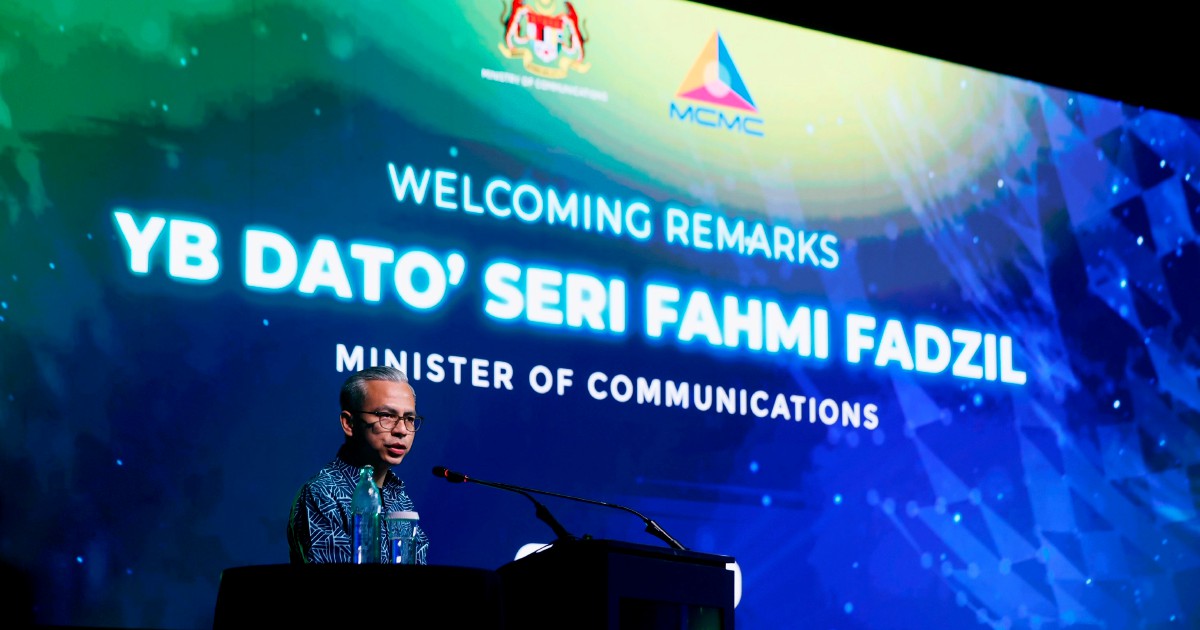
The Malaysian Cabinet remains functionally intact and aligned on core governance matters, Communications Minister Datuk Seri Fahmi Fadzil asserted in Kuala Pilah, pushing back against suggestions that recent policy disagreements signal deepening institutional rifts. The minister's statement comes as a direct response to heightened media speculation following visible tensions among senior government figures over how ministers conducted themselves throughout the Negri Sembilan election campaign.
Fahmi's reassurance that he and fellow Cabinet members had convened informally over a meal underscores a common political practice in Malaysia: using private, unofficial gatherings to smooth over public disagreements and reaffirm collaborative intent. Such interactions, though sometimes overlooked in formal governance structures, often serve as pressure valves during periods of visible friction. The optics of ministers dining together carry particular weight in Malaysian political culture, where public demonstrations of unity or discord frequently shape both legislative momentum and public confidence in administration.
The disciplinary discussions that preceded Fahmi's remarks centered on the conduct of Cabinet officials operating within Negri Sembilan during the recent electoral contest. Electoral campaigns, especially those spanning multiple states, place Cabinet ministers in an awkward dual role: they must serve as government representatives while simultaneously functioning as party campaigners. This inherent tension frequently produces disagreements about where appropriate governmental boundaries lie and what constitutes legitimate partisan activity. Senior ministers sometimes hold differing interpretations of how aggressively state resources or official platforms should be deployed in favour of ruling coalition candidates.
Such public exchanges over ministerial discipline, while potentially destabilizing in fragile coalitions, can also reflect the functioning of legitimate internal accountability mechanisms. When senior government figures openly discuss what acceptable conduct looks like, they demonstrate that institutional norms still carry weight. However, the visibility of these discussions invariably draws media attention and invites speculation about underlying power struggles or ideological divisions that may or may not actually exist. The Malaysian press, attuned to reading political signals from even minor official statements, tends to amplify interpersonal tensions into narratives of systemic conflict.
Negri Sembilan holds particular significance in Malaysian electoral geography and internal coalition dynamics. As a state where the ruling coalition's electoral margins have historically proven competitive, campaign strategy and ministerial involvement carry strategic weight. When multiple Cabinet-level figures operate within the same state during an election cycle, coordination failures and competing priorities inevitably surface. Questions about resource allocation, message consistency, and which senior minister maintains primary influence within the state apparatus frequently emerge from such campaigns and can create temporary friction at the Cabinet level.
Fahmi's explicit framing of informal ministerial gatherings as evidence of continued unity reflects broader patterns in contemporary Malaysian governance. Coalition governments, which have become increasingly common following the complex multi-party arrangements that emerged after 2018, require constant attention to internal relationship maintenance. Ministers must regularly signal that despite tactical disagreements on specific policy matters, fundamental commitment to the broader governing coalition remains unshaken. These public reassurances, while sometimes dismissed by observers as mere theatre, serve genuine stabilizing functions within delicate political structures.
The timing of Fahmi's statement carries relevance beyond Negri Sembilan itself. Malaysian voters across multiple states are increasingly attuned to signals about government stability and ministerial cohesion. When Cabinet-level disagreements become publicly visible, they can influence broader perceptions of whether the current administration possesses sufficient internal unity to deliver effectively on governance priorities. This reality means that even genuine, healthy policy disagreements must be carefully managed to prevent erosion of public confidence in overall government function. Ministers have become particularly conscious of balancing their legitimate right to disagree internally with the necessity of presenting a reasonably unified face to external observers.
The question of ministerial discipline during election campaigns touches on substantive governance questions that extend beyond Negri Sembilan. As Malaysia continues to grapple with the relationship between party politics and state apparatus in an era of competitive electoral contests, establishing clearer norms around ministerial conduct becomes increasingly important. Different states, governed by different coalition arrangements and facing different electoral dynamics, require guidance that maintains consistency with broader national standards while permitting appropriate flexibility. Cabinet discussions about such standards, even when they generate initial friction, represent constructive engagement with institutional design problems.
Looking forward, Fahmi's characterization of the situation likely indicates that senior government figures have managed initial tensions through informal channels and will present a unified front in subsequent public statements. The pattern of public disagreement followed by private reconciliation and coordinated reassurance messaging has become routine within Malaysian coalitional governance. Whether such management truly resolves underlying tensions or merely defers them remains an open question that observers will monitor through coming months. The government's capacity to maintain apparent unity while navigating genuine policy differences will significantly influence its political trajectory and public perception heading toward the next major electoral cycle.

