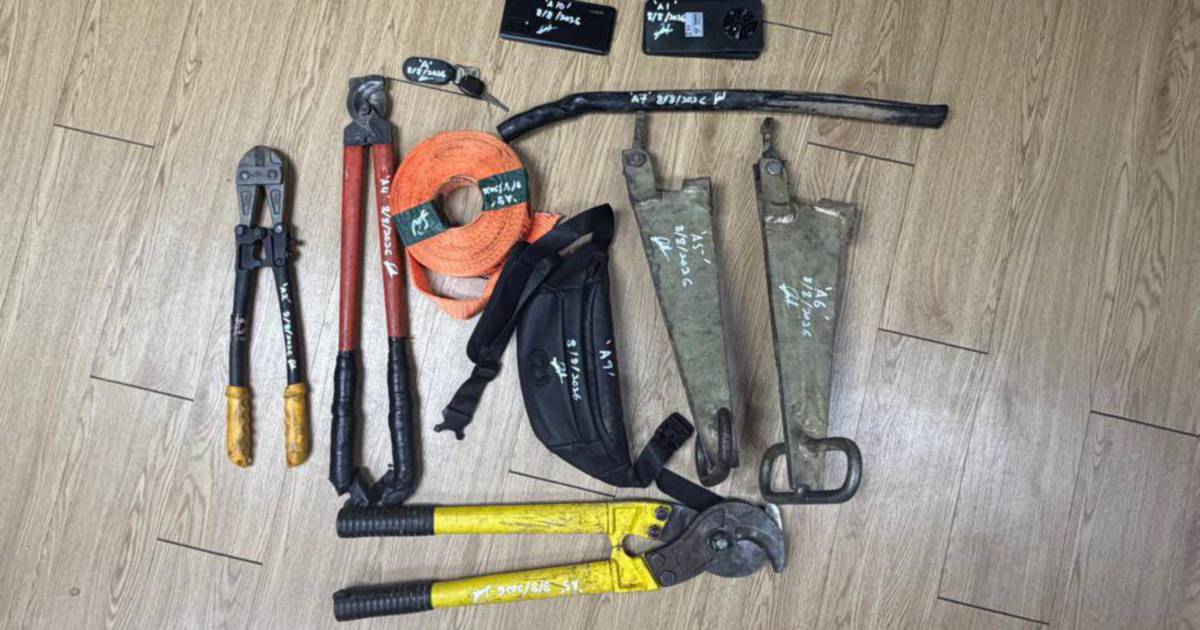
A man suspected of stealing cables was apprehended by police in Melaka following an intense chase that stretched across nearly 50 kilometres before his vehicle collided with a support cable structure in Sungai Chohong, Jasin, during the early hours of today.
The pursuit represents another incident in the ongoing problem of cable theft across Malaysia, a crime that has persistently disrupted telecommunications and electrical infrastructure in multiple states. The extended nature of this particular chase underscores both the determination of law enforcement and the challenges they face in pursuing suspects who attempt to evade authorities after allegedly committing infrastructure crimes.
Cable theft has emerged as a significant concern for infrastructure operators and service providers throughout the country. Copper and aluminium cables, often targeted for their scrap metal value, are essential components of Malaysia's telecommunications, electricity distribution, and utility networks. When stolen, these incidents can leave communities without communications services or power supply for extended periods, creating substantial inconvenience and potential safety risks for residents and businesses relying on these systems.
The incident in Jasin is emblematic of the cat-and-mouse dynamic that frequently develops between police units and suspects involved in organised infrastructure crime. The suspect's decision to flee rather than comply with police signals transformed what might have been a routine investigation into a high-speed chase through Melaka state, requiring significant police resources and operational coordination.
The collision with the support cable during the final stages of the pursuit raises questions about the suspect's vehicle control and decision-making under pressure. Such crashes often result in additional charges beyond the original suspected offence, as drivers may face charges related to dangerous driving, traffic violations, and damage to property depending on the circumstances and jurisdiction.
Melaka has faced particular challenges with cable theft in recent years, with multiple arrests and prosecutions related to infrastructure crime. The state's strategic location and proximity to industrial areas have made it a focal point for these activities. Local authorities have progressively ramped up patrols and coordination efforts to combat organised theft rings that target copper and cable infrastructure.
The investigation into this case will likely extend beyond the initial arrest to examine whether the suspect operated as part of a larger network. Cable theft syndicates frequently involve multiple individuals with distinct roles—those conducting the actual theft, those facilitating transportation, and those arranging the sale of stolen materials to scrap metal dealers. Law enforcement agencies typically seek to dismantle these networks rather than simply addressing individual incidents.
From a broader Southeast Asian perspective, cable and metal theft represents a transnational challenge. Stolen materials often move across borders through established smuggling networks, with some destined for smelting operations or export as raw materials. This regional dimension means that tackling the problem effectively requires cooperation between Malaysian authorities and neighbouring countries' law enforcement agencies.
The cost implications of cable theft extend far beyond the value of the stolen material itself. Utility companies and telecommunications providers must budget for replacement infrastructure, emergency repairs, and service restoration efforts. These expenses are often passed along to consumers through service charges and premiums, effectively distributing the cost of crime across the broader user base.
For residents in affected areas, cable theft creates real disruptions to daily life. When telecommunications cables are targeted, businesses lose connectivity, remote workers are disconnected, and emergency services may face communication challenges. Similarly, electricity cable theft can leave neighbourhoods without power for hours or days while repairs are completed, affecting hospitals, schools, and residential households.
Police efforts to combat this crime have gradually become more sophisticated, incorporating intelligence gathering, surveillance operations, and coordinated roadblocks like those that apparently led to today's apprehension. The 50-kilometre pursuit suggests that officers maintained pressure on the suspect over an extended period and multiple jurisdiction boundaries, requiring sustained operational tempo and inter-agency coordination.
The outcome of this investigation will likely influence how authorities approach similar cases in future. Successful prosecutions and convictions help establish case law and sentencing precedents that can act as deterrents. However, enforcement alone has proven insufficient to eliminate the problem entirely, suggesting that complementary strategies addressing the demand side of scrap metal markets may be necessary for more substantial progress.
Looking ahead, the case highlights the need for continued investment in infrastructure security measures and police resources dedicated to combating organised theft. As Malaysia continues developing its digital and electrical infrastructure to support economic growth and urbanisation, protecting these systems from criminal activity becomes increasingly critical to national development objectives.

