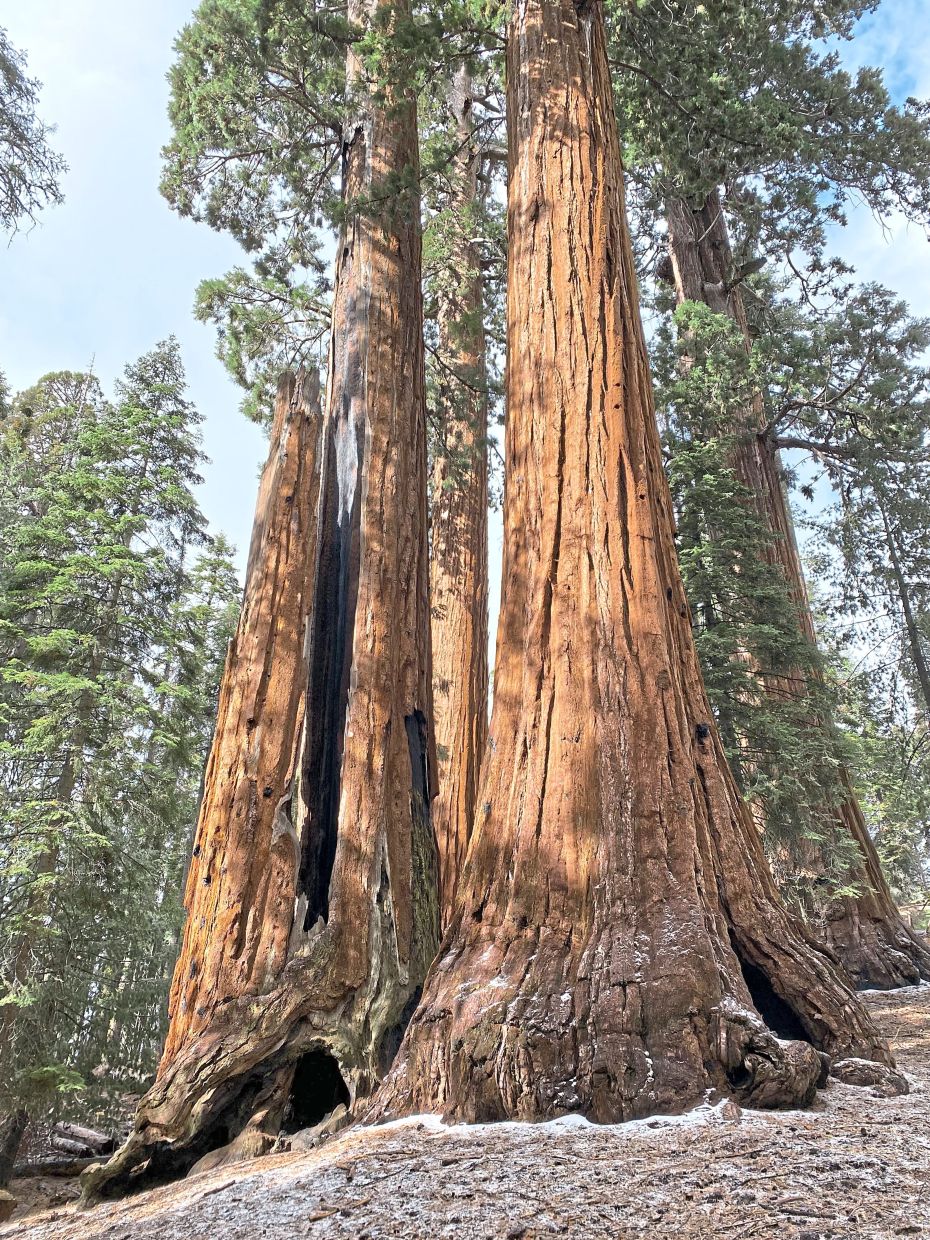
A determined rescue operation is underway in California's Sierra Nevada mountains to save the world's largest trees by volume from the mounting threat of catastrophic wildfires. The restoration initiative comes five years after multiple fires swept through the region in 2020 and 2021, destroying nearly one-fifth of all existing giant sequoias—trees that can tower 91.5 metres high and persist for three millennia. The emotional toll of that environmental disaster sparked an unprecedented collaboration between government agencies, environmental organisations and scientific institutions to prevent similar losses in the future.
The 2020 and 2021 fire seasons exposed a critical vulnerability in one of the world's most iconic ecosystems. Fires burned through Sequoia National Park, Sequoia National Forest and surrounding areas with previously unseen intensity, raising urgent questions among land managers and conservationists about what preventative measures could have been taken. For Kevin Conway, the state forests programme manager at Cal Fire, the losses prompted profound reflection on past management decisions and the urgent need for systemic change across how California approaches forest stewardship in the age of climate-driven mega-fires.
The collaborative response crystallised into the Giant Sequoia Lands Coalition, an umbrella organisation that brings together eight primary members representing diverse stakeholder interests across the region where California's 94 remaining giant sequoia groves are located. The coalition comprises Cal Fire, California State Parks, the National Park Service, Tulare County, the Tule River Indian Tribe of California, UC Berkeley, the US Forest Service, and the federal Bureau of Land Management. An additional nine organisations contribute scientific expertise, research capability and financial resources, creating a coordinated approach that spans the 240-kilometre corridor from Tahoe National Forest to Bakersfield where these ancient trees persist.
Since launching their coordinated efforts in 2022, coalition members have demonstrated measurable progress in reshaping forest conditions. Teams have completed fuel reduction work—thinning dense thickets of smaller trees and brush—across 44 of the 94 giant sequoia groves. The coalition has also conducted controlled burns following techniques developed and refined by Indigenous tribes over centuries, and replanted more than 682,000 sequoia seedlings in areas ravaged by the 2020 and 2021 fires. In total, this work has reduced fire risk across 9,409 hectares over the past four years, according to a report released in early May. These figures represent tangible progress, yet coalition leaders caution that the scale of the challenge remains immense.
The scientific foundation underlying this restoration approach lies in understanding how giant sequoias evolved to coexist with fire. Before European settlement and the Gold Rush of the 1850s, lightning-ignited and Indigenous-managed fires swept through giant sequoia groves naturally every ten to twenty years. The cones of these trees contain resin that requires fire's heat to open and release seeds, and their distinctive spongy bark—which can grow to roughly 60 centimetres thick—acts as highly effective insulation protecting the living tissue within. However, a century of fire suppression policies beginning around 1920 fundamentally altered this evolutionary balance. By extinguishing every flame, fire crews inadvertently allowed understory vegetation to accumulate to unnatural densities, creating tinderboxes of white fir, red fir, incense cedar and dead timber that burn with unprecedented ferocity when wildfires inevitably arrive.
Climate change has intensified this predicament considerably. Rising temperatures have desiccated soils and vegetation across the Sierra Nevada, lowering the threshold at which fires transition from merely intense to catastrophically severe. The droughts of 2012-2016 and 2020-2022 killed millions of surrounding trees, especially large sugar pines and ponderosa pines, adding further fuel to the forest floor. When the 2020 and 2021 wildfires swept through these fuel-laden landscapes, they burned with unprecedented severity and heat, killing ancient sequoias that had survived for millennia. As Kristen Shive, a fuels and forest specialist with UC Berkeley's Cooperative Extension Program, observed, witnessing these ancient giants perish due to human mismanagement rather than natural causes delivered a profound shock to the conservation community.
The restoration strategy now being implemented focuses on removing the excess smaller trees and accumulated deadwood that transform fire from a beneficial ecological process into a destructive force. Coalition teams use chainsaws to fell white fir, red fir, incense cedar and drought-killed pines that crowd around giant sequoia groves. Where economically feasible—particularly on private lands and Cal Fire-owned demonstration forests—larger timber is sold to lumber mills, partially offsetting the substantial costs of thinning operations. The remaining debris is largely piled and burned during controlled burn operations conducted outside the peak fire season, mimicking the low-intensity burns that Indigenous peoples conducted for centuries before European contact disrupted those management practices.
This thinning work provides multiple ecological benefits beyond simply reducing fire intensity. By removing competing vegetation and creating more open forest canopy, sunlight reaches the forest floor where giant sequoia seedlings struggle to establish themselves in densely shaded conditions. The restored forest structure also allows water to percolate more effectively through soil to tree roots, improving resilience during the extended droughts becoming more frequent under climate change. As Conway emphasises, the objective is not to create an artificial managed landscape, but rather to restore forests to conditions resembling their natural pre-suppression state—open, relatively thin canopies where giant sequoias can persist as dominant features and remain resistant to the combined stresses of drought, fire and disease.
Yet restoration efforts have faced legal obstacles that highlight the complexity of implementing large-scale forest management in the United States. In 2022, the Earth Island Institute filed suit against the National Park Service seeking to halt fuel reduction projects at Merced Grove within Yosemite National Park, arguing that insufficient environmental review had preceded the proposed work. A federal district court dismissed the challenge, and in 2023 the Ninth Circuit US Court of Appeals upheld that dismissal, allowing work to proceed. Merced Grove has faced six separate wildfires in the preceding fifteen years, underscoring the urgency of the intervention. Thinning operations and controlled burn work commenced last year and are expected to continue into the current fire season, demonstrating commitment to the restoration timeline despite earlier legal barriers.
For Southeast Asian observers, California's giant sequoia crisis offers instructive parallels to forest management challenges across the region. Malaysia and other tropical nations face comparable tensions between fire suppression policies and the ecological necessity of allowing low-intensity burns in certain forest types. The California experience demonstrates how well-intentioned fire exclusion policies, when applied across decades without adaptive management, can inadvertently create conditions for ecosystem collapse. The collaborative, multi-stakeholder approach pioneered through the Giant Sequoia Lands Coalition also models institutional frameworks that could benefit forest management efforts in Malaysia, where competing interests among federal governments, state authorities, Indigenous communities and conservation organisations require similarly coordinated approaches.
Steve Mietz, recently appointed president of Save the Redwoods League and former superintendent of Redwood National Park, characterises the restoration initiative as fundamentally a race against time. Acknowledging the mathematical certainty that more catastrophic fires will strike California's forests, Mietz expresses cautious optimism grounded in the coalition's demonstrated understanding of effective interventions. The knowledge exists; the partnerships are forming; the work has commenced. Yet the magnitude of the undertaking—treating thousands of additional hectares, replanting millions more seedlings, conducting controlled burns across vast territories—will require sustained political will, funding commitment and institutional coordination. As another fire season approaches, the giant sequoias stand poised between recovery and potential extinction, contingent on humanity's ability to reshape its relationship with fire in these ancient forests.

